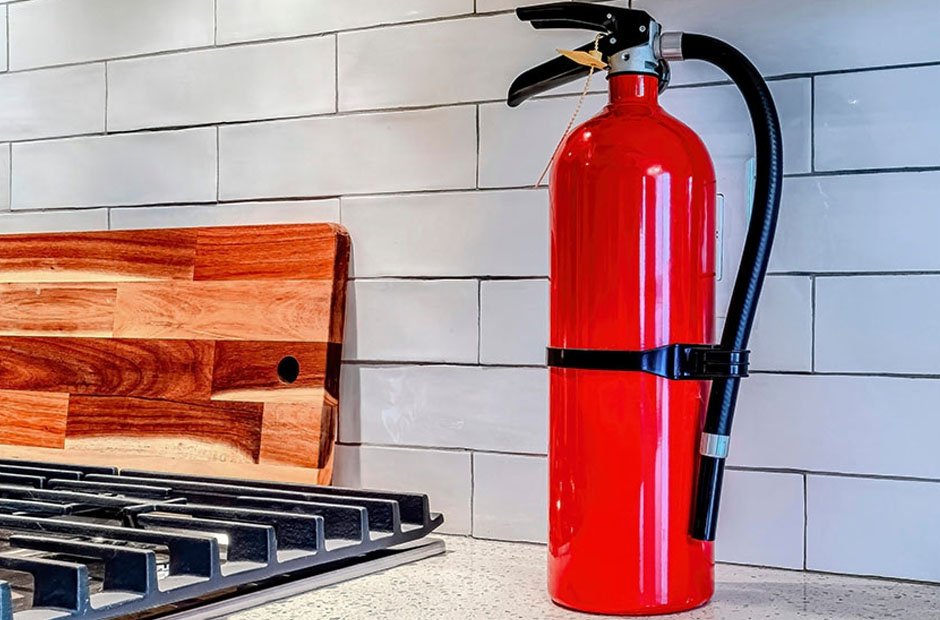
Fire safety at home is a serious matter. But what to do when you don’t know anything about it? Your first instinct is probably to buy fire extinguishers. It’s not a bad start – you definitely do need at least one. Fire extinguishers aren’t exactly something people get excited about buying, but having the right one at home can make a huge difference in an emergency. The good news? You don’t need specialist training or a safety manual the size of a novel. Once you understand the basic types and what they’re for, choosing and using a fire extinguisher becomes surprisingly straightforward.
Why Different Types Exist
Fires start in different ways — cooking oil, faulty wiring, a candle knocked over onto fabric, a wooden shelf catching heat from a heater. Because of that, extinguishers are designed for specific kinds of fires. Using the wrong one doesn’t just make it less effective; in some cases (like with burning oil), it can make the situation worse. So a quick overview helps.
Here’s the simple breakdown.
1. Water Extinguishers (Class A Fires)
Best for:
- Paper
- Wood
- Fabric
- Everyday household “solid” fires
Not for:
- Electrical fires
- Oil or grease fires
These are the classic red extinguishers most people picture. They’re great for things that burn in a straightforward, predictable way — furniture, cardboard boxes, fire pits, etc. But they should stay far away from anything involving electricity or oil.
2. Foam Extinguishers (Class A & B Fires)
Best for:
- Wood, paper, textiles
- Flammable liquids (like paint thinners, petrol, spirits)
Not for:
- Oil/fat fires in kitchens
- Live electrical equipment (unless specifically marked as safe)
Foam smothers the surface of a fire and stops it from reigniting. They’re a handy “all-rounder” but still not suitable for grease fires or anything involving electricity unless they’re labelled as safe for it.
3. CO₂ Extinguishers (Class B & Electrical Fires)
Best for:
- Electrical fires
- Small flammable liquid fires
Not for:
- Kitchen grease/oil
- Anything involving textiles or wood
CO₂ extinguishers push out oxygen around the fire so the flames die off. They’re perfect for home offices, gaming setups, or anywhere with a lot of electronics. They don’t leave residue, which is great — and also a good excuse not to spray powder all over your computer.
4. Dry Powder Extinguishers (Class A, B, C Fires)
Best for:
- Most types of fires including electrical
- Gas fires
Not ideal for:
- Indoor use (they create a huge cloud of powder)
- Kitchens, unless specifically designed for it
Think of these as the “works on nearly anything” extinguisher — but they’re messy. Very messy. They’re effective, but you’ll be finding powder in corners of your house for years, so they’re more common in garages, workshops, or cars.
5. Wet Chemical Extinguishers (Class F – Cooking Oils & Fats)
Best for:
- Chip pan/grease fires
- Deep-fat fryers
- High-temperature oils
Not for:
- Most other fire types
These are the kitchen specialists. If you cook a lot with oils — frying, wok cooking, or deep-frying — this is the extinguisher meant to handle those high-temperature fires that water would make ten times worse.
So Which One Should a Home Have?
Most homes do well with two extinguishers:
- A multi-purpose extinguisher
A dry powder or foam unit covers the majority of everyday risks.
- A kitchen-safe option
If you cook with oils, a wet chemical extinguisher or even a fire blanket is worth having nearby.
Small flats or minimal kitchens may be fine with a fire blanket and a compact multi-purpose extinguisher.
Better Safe Than Sorry
Choosing a fire extinguisher doesn’t need to feel technical or intimidating. Once you know what each type is for, it’s mostly a matter of matching the extinguisher to the places you need it — kitchen, living room, workshop, or office. With the right one on hand, you’re better prepared without having to dive into complicated safety manuals.