Key Takeaways
- Learning ABA terms builds your confidence in team meetings and Individualized Education Program (IEP) discussions. When you recognize terms and concepts, you’ll find it easier to clarify your concerns and express your child’s needs effectively, ensuring that their educational and therapeutic plans remain individualized and robust.
- Clear communication with therapists can help set shared goals and expectations for your child’s development. By speaking a common language, you reduce the risk of misunderstanding and build productive relationships with everyone involved in your child’s care.
- Using ABA concepts at home helps reinforce strategies, making learning more consistent for your child. The ideas introduced in therapy can be applied to daily life if parents know when and how to implement them, leading to smoother routines and improved skill retention.
Applied Behavior Analysis (ABA) is a highly regarded and scientifically validated approach used to help children with autism and other developmental disorders reach their full potential. As a parent, navigating the world of ABA can feel overwhelming at first, especially when you encounter a host of unfamiliar terminology and acronyms during meetings or therapy sessions. By building familiarity with ABA terms, you set yourself up for more meaningful discussions with therapy providers and a deeper involvement in your child’s growth and development. This glossary aims to break down the most common ABA therapy terms so you can better communicate with your child’s care team and confidently support your child’s progress at home and beyond. These terms are essential tools that clarify expectations and help you interpret recommendations from professionals.
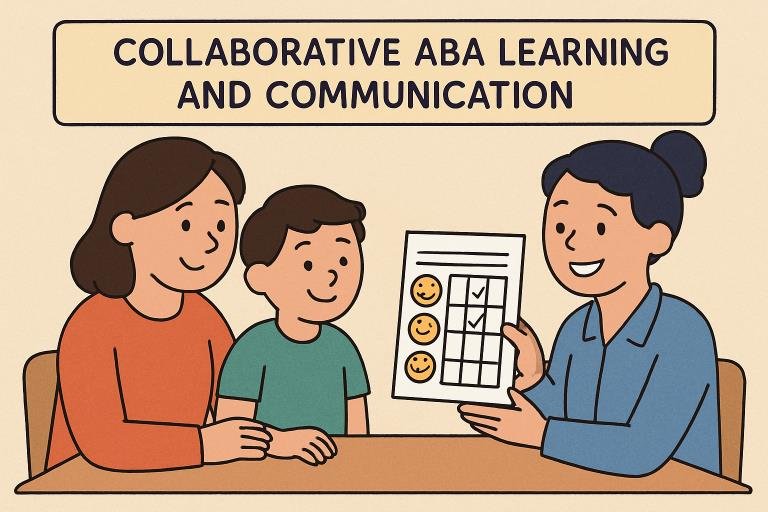
Understanding the language of ABA empowers you to advocate for your child and work collaboratively with professionals. Mastery of these concepts ensures you are not just a bystander but an active participant in your child’s therapy journey. This involvement plays a key role in fostering greater success and generalization of skills. It also enables parents to see the “why” behind specific strategies, making it easier to continue productive routines and reinforce learning outside of structured therapy hours.
Parent involvement is a crucial part of effective ABA. When you understand the therapeutic approach, you can more easily identify meaningful progress, ask informed questions, and collaborate with teachers and therapists to achieve better outcomes. Practically, mastering ABA terminology allows you to translate technical recommendations into real-life actions that benefit your child. Suppose you want to explore ABA in more detail. In that case, resources like the CDC’s treatment overview for autism spectrum disorder offer additional context about evidence-based interventions and what families should expect from a high-quality ABA program.
Standard ABA Terms and Their Meanings
- Applied Behavior Analysis (ABA)
ABA is an evidence-based practice focused on understanding and improving meaningful human behaviors. By carefully examining the relationships between specific actions and the environment, ABA practitioners design structured programs to teach new skills, build independence, and reduce behaviors that interfere with learning or social interaction. The approach relies on data collection and analysis to continually refine interventions, which can be tailored to the unique strengths and needs of each child.
- Behavior
In the context of ABA, behavior means anything a person does that can be observed and measured, making it objective and trackable over time. This includes verbal actions (like asking for help), physical actions (like picking up a toy), or social interactions. Tracking these behaviors allows therapists and parents to understand patterns, see what motivates change, and monitor progress as skills improve or challenges diminish.
- Antecedent
An antecedent is the event or trigger that occurs immediately before a behavior. Recognizing antecedents is key for both prevention and intervention. By identifying these triggers, parents and therapists can often anticipate challenges or encourage positive behaviors. For example, a request to clean up toys might serve as the antecedent to a child’s refusal, while offering a warning or setting a timer could change the outcome. Tweaking antecedents is a common strategy for promoting smoother transitions or reducing problem behaviors.
- Consequence
A consequence is what happens immediately after a behavior and can influence whether that behavior is likely to occur again in the future. Consequences can either discourage problematic behaviors (such as ignoring tantrums or using a calm voice) or encourage positive behaviors (like giving praise or granting access to a favorite activity), depending on how they’re structured. Understanding consequences helps parents choose responses that teach valuable lessons and reinforce desired actions.
- Reinforcement
Reinforcement is a central concept in ABA, referring to anything that strengthens a behavior and increases its likelihood of occurring in the future. Positive reinforcement involves adding something enjoyable—such as praise, tokens, or a preferred activity—after a desired behavior is exhibited, while negative reinforcement involves removing something unpleasant—like stopping a difficult task—once the desired behavior is demonstrated. Identifying what motivates a specific child is essential for reinforcement to be effective and personalized.
- Prompt
A prompt is a cue or assistance that encourages a desired action. Prompts come in many forms, including verbal (“Say thank you”), gestural (such as pointing or nodding), physical (such as lightly guiding a hand or body), or visual (using pictures or written instructions). In ABA, the goal is to systematically fade prompts as a child becomes more independent, ensuring that learned skills are truly mastered and not reliant on constant support.
- Generalization
Generalization refers to the ability to apply learned skills in new environments or with different individuals, beyond the specific context in which the skills were initially taught. Effective ABA programs are designed with generalization in mind, so children can apply what they’ve learned at home, in school, with friends, and throughout the community. Ensuring generalization is crucial for achieving meaningful progress that lasts over time and across various situations.
- Functional Behavior Assessment (FBA)
An FBA is a systematic approach for identifying the reason or “function” behind a specific behavior, especially those that are disruptive or challenging. By observing what happens before and after a behavior, therapists develop hypotheses about why it occurs—such as seeking attention, escaping demands, fulfilling sensory needs, or gaining access to something they want. Understanding function enables the development of targeted, respectful, and more effective intervention plans.
Why Understanding ABA Terms Matters
Mastering ABA vocabulary equips you to be your child’s best advocate. With this understanding, you can:
- Build strong partnerships with your child’s therapy team and educators by using shared language and focusing on mutual goals.
- Support meaningful learning outside of therapy hours by reinforcing strategies and using consistent techniques in daily life at home, which leads to stronger outcomes for your child.
- Request clarifications or suggest adjustments with confidence during IEP meetings, progress reviews, or other meaningful discussions about your child’s education.
The more familiar you become with these terms, the easier it is to observe your child’s achievements, actively collaborate on therapy plans, and ensure continuous support across home, school, and clinical settings. This shared understanding strengthens your voice and allows for a smoother exchange of ideas when working with your child’s support team. For those interested in legal context and special education terminology, the IEP and Special Education Glossary from Wrightslaw is a helpful resource for parents navigating the broader world of educational supports and rights.
Additional Resources
To expand your understanding, the Applied Behavior Analysis (ABA) resource page from Autism Speaks offers practical tips, success stories, and more in-depth explanations of the principles that guide modern ABA practices. Exploring credible, up-to-date resources ensures you remain informed about the latest evidence-based practices, which can benefit your child at every stage of their development.
Investing time in learning ABA terms is an investment in your child’s future—paving the way for confident, informed decisions, better communication, and stronger outcomes throughout their developmental journey. Whether you’re new to ABA or refining your understanding, fluency in these terms equips you to support your child’s learning in meaningful, lasting ways.