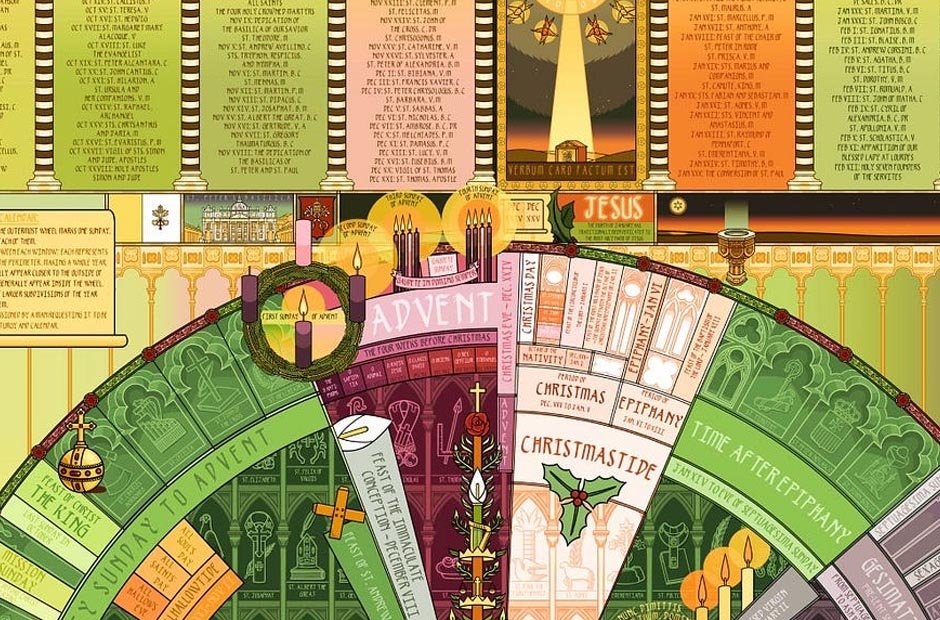
For Catholics, a structured form of spiritual guidance and reflection is often found in the rhythm of the church year, as outlined in a catholic calendar. This annual cycle is not just about marking important dates but is a journey through the mysteries of the faith.
Understanding the Liturgical Year
The Catholic liturgical year is divided into distinct seasons: Advent, Christmas, Ordinary Time, Lent, and Easter. Each one of these periods holds distinct themes and calls for specific types of reflection and preparation among faithful adherents. This cyclical calendar fosters continuous growth and renewal in faith.
The Role of Advent
Advent marks the beginning of the liturgical year. It is a period of four weeks preparing for Christmas, the celebration of Jesus Christ’s birth. Advent encourages Catholics to prepare spiritually through prayer and reflection.
Christmas: Celebrating the Birth of Christ
Following Advent, the Christmas season begins, celebrating the Nativity of Jesus. This joyous time extends beyond the day of December 25th, continuing until the Baptism of the Lord in January. Celebrating this period as part of the liturgical calendar emphasizes the importance of Christ’s coming in a personal and communal faith journey.
Significance of Ordinary Time
Ordinary Time may initially seem unremarkable as it does not celebrate a specific aspect of the mystery of Christ. However, it is a crucial time for deepening faith through reflection on Jesus’s life and teachings. The colour green, symbolizing hope and life, is typically used during this period in the church.
The Lenten Journey
Lent is a solemn time of conversion and reflection in preparation for the Easter season. It begins on Ash Wednesday and lasts for 40 days. The catholic calendar guides the faithful in observing this period through fasting, prayer, and almsgiving.
Celebrating Easter
Easter is the heart of the liturgical year, celebrating the Resurrection of Jesus Christ. It is a period of great joy and renewal that lasts 50 days, culminating in Pentecost. Through the Easter celebrations, Catholics are reminded of the central tenet of their faith: the victory over sin and death.
Feasts and Saints’ Days
Aside from these seasons, the catholic calendar also highlights numerous feasts and saints’ days throughout the year. These celebrations provide opportunities to remember the lives of the saints and their contributions to the faith. St Columban’s Mission Society, for example, is named after a saint whose life is studied for its missionary zeal.
Enhancing Daily Faith with a Catholic Calendar
A catholic calendar does not only guide through seasons and significant days, but it also inspires daily reflection. By aligning personal spiritual practices with the liturgical framework, individuals experience continuous faith development.
Integrating Prayer into Daily Life
Daily reflections and dedicated prayer times can be greatly enriched by utilizing resources like a catholic prayer book. These resources offer a selection of prayers relevant to each liturgical season, aiding in maintaining a steady rhythm of devotion.
Community Building and the Liturgical Calendar
Participation in community events in accordance with the liturgical calendar not only binds individuals to their faith but also strengthens communal ties. Masses, processions, and parish gatherings are ways to actively engage with the faith and each other.
Educational Opportunities
Parishes and dioceses often provide educational programmes that align with the liturgical calendar. Engaging in such programmes facilitates a deeper understanding of the faith and its history, enhancing spiritual growth.
The Impact on Personal Spirituality
Using the catholic calendar can significantly impact personal spirituality by encouraging a more intentional approach to faith practices. It serves as a framework for setting spiritual goals and assessing growth over time.
Building a Stronger Connection with Christ
The structured nature of the catholic calendar empowers individuals to build a closer relationship with Christ by mirroring his life and teachings. This journey helps in understanding the Gospel and its application in today’s world.
Conclusion
The catholic calendar is an invaluable tool for anyone seeking to deepen their faith throughout the year. By highlighting the major liturgical seasons, feasts, and saints’ days, it offers countless opportunities for reflection, education, and community engagement. Whether through the use of a calendar or resources from St Columban’s Mission Society, embracing this rhythm can transform and invigorate one’s spiritual journey.