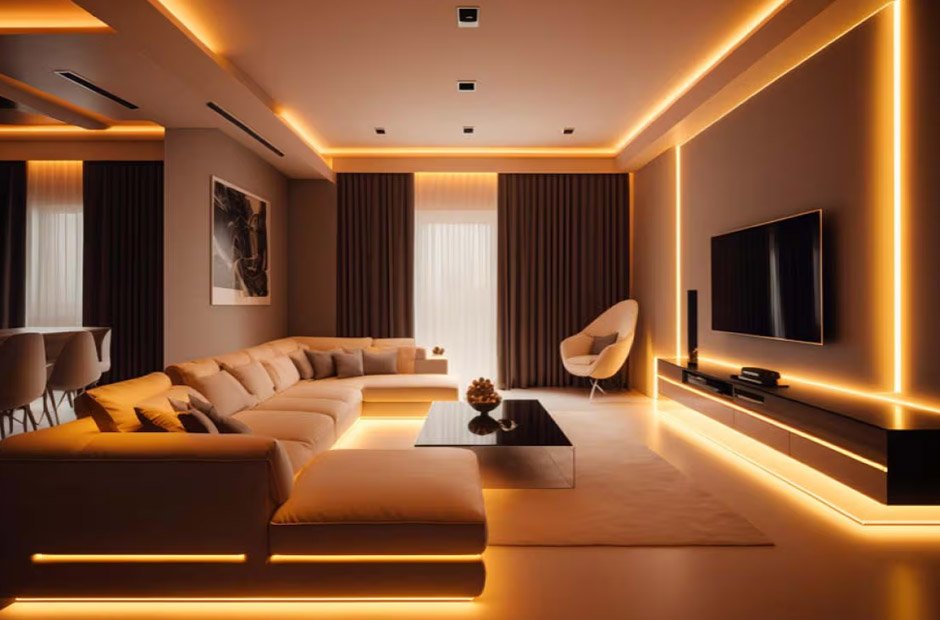
Lighting has quietly evolved from a basic utility into a powerful design and functional tool. In homes, businesses, public spaces, and industrial environments, light now influences mood, efficiency, branding, and even behavior. Among the many innovations driving this shift, LED strip lighting stands out for its flexibility and adaptability. When customization enters the picture, the role of a Custom LED strip lights supplier becomes central to turning abstract ideas into practical, high-impact lighting solutions.
One of the defining advantages of LED strip lights is their versatility. Unlike traditional fixtures with fixed shapes and outputs, LED strips can be cut, bent, extended, and integrated into almost any surface. Customization takes this a step further by tailoring specifications such as length, color temperature, brightness, voltage, waterproof rating, and control systems to the exact needs of a project. This level of precision allows designers and engineers to move beyond compromise and create lighting that fits both form and function seamlessly.
In architectural design, customized LED strip lighting has become a core element rather than an afterthought. Modern buildings often emphasize clean lines, hidden light sources, and layered illumination. Custom LED strips can be embedded into ceilings, walls, staircases, and façades to highlight structure without overwhelming it. A Custom LED strip lights supplier works closely with architects to ensure that the lighting complements materials like concrete, glass, wood, or metal, while meeting technical requirements such as heat dissipation and long-term reliability. The result is lighting that feels intentional, integrated, and timeless.
Retail and commercial environments rely heavily on lighting to shape customer experience. The color and intensity of light can influence how products are perceived and how long customers stay in a space. Customized LED strips allow retailers to fine-tune these variables. For example, warm tones can make hospitality spaces feel inviting, while cooler, brighter light enhances clarity in electronics or fashion stores. With programmable options, lighting schemes can change throughout the day or during promotional events. In these scenarios, a reliable supplier is not just providing products, but supporting brand identity and commercial strategy.
The hospitality industry offers another compelling example of the value of customization. Hotels, restaurants, and entertainment venues often require lighting that balances aesthetics with durability and efficiency. LED strips customized for humidity resistance, dimming compatibility, or specific color-rendering properties help create distinctive atmospheres while maintaining operational stability. Subtle accent lighting under bar counters, along corridors, or behind headboards can transform a space without drawing attention to the light source itself. This kind of understated sophistication is only possible when lighting is designed specifically for its environment.
Industrial and workspace applications highlight a different side of customized LED strip lighting. Here, performance, safety, and consistency take priority over decorative appeal. Custom LED strips can be designed to deliver uniform illumination along assembly lines, shelves, or inspection areas, reducing eye strain and improving accuracy. Factors such as glare control, color temperature consistency, and resistance to dust or vibration are critical. A Custom LED strip lights supplier with technical expertise can help businesses select or design solutions that meet regulatory standards while improving productivity.
Smart technology has further expanded the role of Commercial LED strip lighting. Integration with sensors, mobile apps, and building management systems allows lighting to respond dynamically to its environment. Customized LED strips can be configured to adjust brightness based on occupancy, change color according to time of day, or synchronize with audio-visual systems. In smart homes and offices, this adaptability enhances comfort and energy efficiency. The supplier’s role extends into software compatibility and system integration, ensuring that hardware and control platforms work together smoothly.
Sustainability is another driving force behind the demand for customized lighting solutions. Energy efficiency, long lifespan, and reduced maintenance make LED strip lights an environmentally responsible choice. Customization further improves sustainability by ensuring that lighting output matches actual needs, avoiding over-illumination and unnecessary energy consumption. For large-scale projects, working with a supplier who understands material sourcing, production efficiency, and compliance with environmental standards can significantly reduce a project’s overall footprint.
Customization also supports creative freedom. Artists, exhibition designers, and event planners increasingly use LED strips as expressive tools. From immersive installations to temporary displays, customized lighting enables precise control over color, rhythm, and intensity. LED strips can be programmed to interact with movement, sound, or visual content, turning light into a dynamic medium rather than a static backdrop. In these contexts, the supplier acts as a collaborator, helping translate creative concepts into reliable, scalable solutions.
As demand grows across industries, the market for LED strip lighting continues to mature. Off-the-shelf products still serve basic needs, but complex projects increasingly depend on customization to stand out and perform effectively. Choosing the right Custom LED strip lights supplier becomes a strategic decision, influencing not only product quality but also design flexibility, installation efficiency, and long-term performance.
In a world where spaces are expected to be smarter, more sustainable, and more emotionally engaging, lighting plays a role far greater than illumination alone. Customized LED strip lighting sits at the intersection of technology, design, and human experience. When thoughtfully designed and expertly supplied, it has the power to shape how spaces look, feel, and function—quietly transforming environments one line of light at a time.