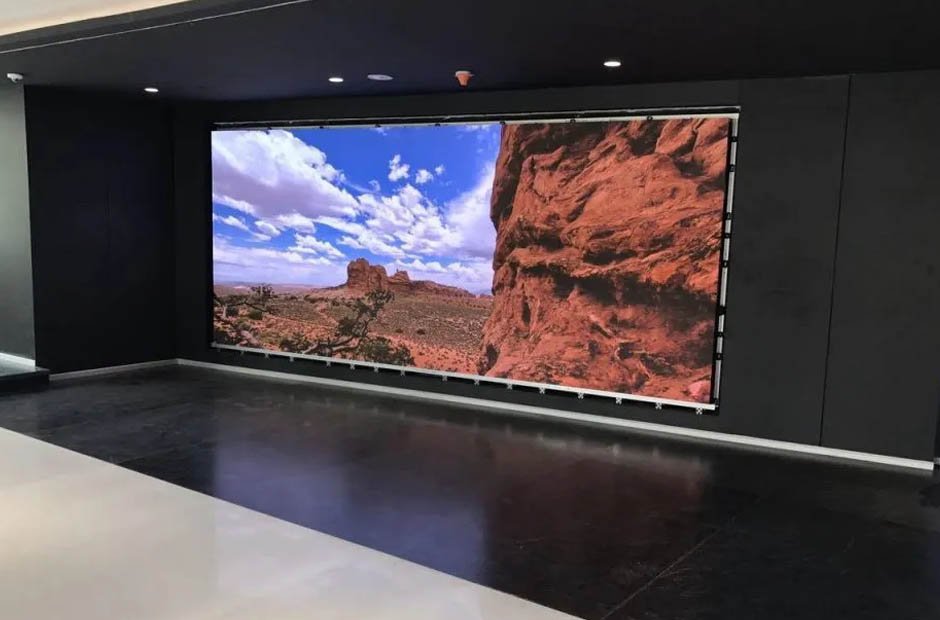
Every Miami event planner shares a common goal: to create an unforgettable, high-impact experience that captivates attendees from the moment they arrive. In today’s visually driven world, high-impact technology is no longer a luxury—it’s a core component of success. LED video walls have become a powerful tool for achieving this, capable of transforming any space with dynamic, vibrant visuals that command attention.
The value of this technology is clear. A staggering 90% of event marketers believe that technology can have a major positive impact on the success of their events. This investment pays off in tangible ways; using event technology can increase attendance by 20% and productivity by 27%. The right visual display doesn’t just show content; it creates an atmosphere, reinforces branding, and delivers your message with unparalleled impact.
This article is your clear, jargon-free guide to navigating the world of LED displays. We’ll walk you through every step, from defining your needs to understanding the tech specs that matter, ensuring you can confidently choose the right LED display rental for your specific Miami event.
3 Core Questions to Ask Before You Rent
Before you get lost in technical specifications, the most crucial step is to define the fundamental needs of your event. Answering these three questions will provide a clear roadmap and prevent you from overpaying for features you don’t need or, worse, choosing a screen that underwhelms your audience.
- Who is my audience and how will they see the screen? The size of your audience and their distance from the screen are the most important factors. A massive screen at a festival will be viewed from hundreds of feet away, while attendees at a trade show booth might be standing just a few feet from the display. This viewing distance directly influences the required screen size and, most importantly, the pixel pitch needed for a clear image.
- What is my venue and environment? Consider the setting. An indoor conference room at a Brickell hotel has controlled, artificial lighting. An outdoor stage at Bayfront Park, however, must compete with the intense Miami sun. This distinction is critical, as it determines the required screen brightness and weather resistance. An indoor-rated screen will be completely washed out and unviewable in direct sunlight.
- What is my content and its purpose? Finally, what will you be displaying? Are you showing a detailed financial presentation with small text and intricate charts? Or are you playing atmospheric video loops and dynamic brand visuals behind a DJ? The former requires a high-resolution screen with a low pixel pitch for maximum clarity, while the latter can be effective with different specifications focused on color and impact.
Determining the perfect combination of these factors can be complex. To simplify this, using an online video wall configuration tool can give you a clear, customized starting point for the best Miami LED display rental based on your unique parameters.
Decoding the Tech Specs: What Really Matters for Your Event
Once you’ve defined your “why,” you can start looking at the “what.” The world of LED technology is full of jargon, but for an event planner, only a few key specs truly impact the final result. Here’s what you need to know.
Pixel Pitch (Clarity)
Pixel pitch is the distance, measured in millimeters, between the center of one LED pixel and the center of the next. A smaller number, like 2.9mm, means the pixels are packed more closely together.
This directly translates to image clarity based on viewing distance. The lower the pixel pitch, the closer someone can stand to the screen and still see a sharp, seamless image without distinguishing the individual dots. For a trade show booth where guests are up close, a low pixel pitch (like 2.9mm) is essential. For a large concert where the audience is far from the stage, a higher pixel pitch (like 5.9mm or more) is perfectly acceptable and more cost-effective.
Screen Size & Resolution (Impact & Detail)
It’s a common mistake to think a physically large screen is automatically a high-resolution one. Screen size is the physical dimension, while resolution is the total number of pixels on that screen. A 20-foot screen can have a lower resolution than a 10-foot screen if its pixels are spaced further apart.
The key is to match your content’s resolution (e.g., Full HD 1920×1080 or 4K) to the screen’s native resolution. Displaying low-resolution content on a high-resolution screen can look blurry or pixelated. Always consider your venue’s physical constraints—like ceiling height and stage width—when deciding on the optimal screen size to create maximum impact without overwhelming the space.
Brightness (Nits) & Environment (Visibility)
Screen brightness is measured in a unit called “nits.” For any Miami event, understanding nits is non-negotiable. An indoor event in a ballroom with controlled lighting might only require a screen with 1,000-1,500 nits to look vibrant.
However, an outdoor event is a different beast entirely. To compete with South Florida’s direct sunlight, you need a screen with extremely high brightness. Choosing an indoor-rated screen for an outdoor event is a recipe for disaster; your content will be completely washed out and invisible to your audience.
Matching the Screen to the Scene: Your Event Type Blueprint
Now, let’s connect the technical specs to real-world Miami event scenarios. The right screen is always the one that best serves the specific goals of your gathering.
| Event Type | Key Priority | Recommended Pixel Pitch | Brightness |
| Corporate/Trade Show | Text Clarity, Branding | Low (e.g., 2.9mm) | Standard (Indoor) |
| Concert/Festival | Visibility, Durability | Medium to High | High (Outdoor) |
| Gala/Private Event | Aesthetic Integration | Low to Medium | Standard (Indoor) |
For Corporate Events & Trade Shows
In a professional setting, clarity is king. Whether you’re presenting quarterly earnings, showcasing a new product, or displaying sponsor logos, the information must be crisp and legible, even for attendees in the front row. This demands a low pixel pitch. Furthermore, accurate color reproduction is essential to maintain brand consistency across all visual assets. For trade show booths, consider unique configurations like tall vertical banners or custom-shaped video walls to stand out on a crowded floor.
For Concerts & Music Festivals
For large-scale outdoor events, the priorities shift. Extreme brightness is the most critical factor to ensure visuals cut through the daylight. Just as important is a high IP rating (like IP65), which certifies the panels are dust-tight and protected against rain—a must for Miami’s unpredictable weather. Because the audience is typically far from the stage, a slightly higher pixel pitch is often a practical and budget-friendly choice. These events also require rugged, tour-grade panels and secure rigging from a professional trussing system to ensure safety and stability.
Beyond the Screen: Installation and Logistics
A brilliant screen is useless without proper installation and content management. These logistical details are just as important as the hardware itself and should be discussed with your rental partner early in the planning process.
Mounting & Rigging Options
There are two primary ways to set up an LED wall:
- Ground-Supported (Ground-Stacked): This is the most straightforward method, where the LED panels are built from the ground up on a secure base. It’s a great option for stages or any flat, stable surface.
- Flown (Truss-Mounted): For a more dramatic, “floating” look, panels can be flown or hung from an overhead truss structure. This is ideal for creating large backdrops, freeing up valuable stage space, and is a common requirement for large concert productions.
Discuss your venue’s capabilities and your desired aesthetic with your rental provider to determine the best and safest mounting solution.
Content & Connectivity
Getting your visuals onto the screen should be simple. Most professional rental companies provide a standard video input, typically HDMI, allowing for easy plug-and-play connection to a laptop, media player, or live video switcher.
Before the event, confirm the screen’s native resolution and aspect ratio with the rental company. Sending content that doesn’t match these specs can result in distorted, stretched, or letter-boxed images. Also, clarify who will be responsible for running the content during the show—will you provide an operator, or will a technician from the rental company manage the cues?
Choosing the Right Miami Rental Partner
The quality of the rental company you choose is just as important as the quality of the LED screen. A great partner provides more than just hardware; they deliver peace of mind.
Look for a company that offers full-service support, including delivery, professional setup by certified technicians, and on-site operation during your event. Prioritize providers with a strong local reputation in Miami, a portfolio of past events similar to yours, and verifiable client reviews. A top-tier partner acts as a consultant, guiding you through the selection process to ensure you get the right gear for your needs and budget. They help you avoid common pitfalls rather than just taking an order.
Conclusion
Choosing the right Miami LED display rental doesn’t require you to become an audio-visual expert. It’s about understanding your event’s unique needs and asking the right questions. By following a clear process—defining your “why” (audience, venue, content), decoding the essential tech (pixel pitch, brightness, resolution), and matching the screen to your event type—you can make an informed and confident decision.
With this guide, you are now equipped to select a visual solution that not only works flawlessly but also elevates your event, engages your audience, and creates a stunning, memorable experience for every single guest.