Key Takeaways
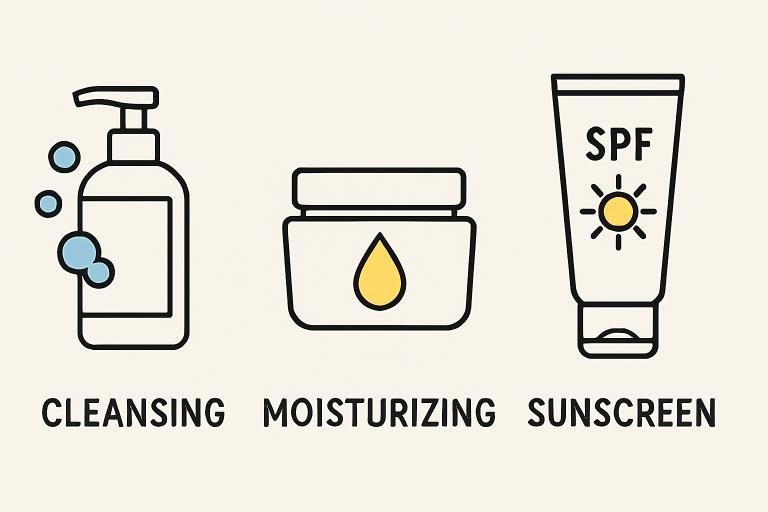
- A basic skincare routine consists of cleansing, moisturizing, and sun protection.
- Consistency is crucial for achieving and maintaining skin health.
- Choose products suited to your specific skin type and concerns.
Creating a skincare routine does not have to be complicated or time-consuming. By sticking to the essentials, you can see visible improvements in your skin’s health and radiance. Selecting products that suit your skin type and concerns is a foundational step on this journey. As more people seek gentle solutions, the advantages of all-natural skincare are becoming widely recognized for their effectiveness and minimal irritation.
Developing a regimen that incorporates the right habits helps maintain the skin’s natural barrier and supports long-term skin health. Whether you are just starting out or looking to simplify your current routine, focusing on proven methods delivers consistent results. Finding balance and avoiding unnecessary steps will ensure your routine remains sustainable and uncomplicated. Keep in mind that the right skincare routine should fit seamlessly into your daily life, helping your skin look and feel its best.
Alongside carefully chosen cleansers and sunscreen, selecting the appropriate moisturizer is paramount for those with sensitive skin. For additional guidance, you can explore options for a moisturizer for sensitive skin to support hydration without irritation. Consistency is key, as even the simplest routine can produce noticeable results over time. Listening to your skin’s needs and adjusting products accordingly ensures ongoing comfort and effectiveness. Finally, pairing your routine with healthy lifestyle habits, such as proper hydration and balanced nutrition, enhances the overall benefits for radiant, resilient skin.
Understanding Your Skin Type
Before you start building your skincare routine, knowing your skin type is essential. Skin types include normal, oily, dry, combination, and sensitive. Each type has different needs and responds uniquely to various product ingredients. Normal skin is balanced with minimal imperfections, oily skin appears shiny due to excess sebum, and dry skin tends to feel tight or rough and may flake in certain areas.
Combination skin displays characteristics of both oily and dry areas, most commonly with oiliness on the forehead, nose, and chin. Sensitive skin is easily irritated and requires careful product selection. Accurate identification of your skin type allows you to avoid unnecessary irritation and select the most effective products, keeping your skin comfortable and healthy.
Step 1: Cleansing
Cleansing is the bedrock of any skincare routine. It removes sweat, oil, dirt, and other impurities that gather on your face throughout the day and night. The ideal cleanser maintains skin balance without over-drying or leaving residues. For normal or combination skin, opt for a gentle foaming cleanser that refreshes without stripping natural oils. Those with oily skin benefit from gel-based cleansers that remove excess oil and prevent clogged pores.
If your skin is dry, choose a hydrating cream cleanser to replenish lost moisture. Individuals with sensitive skin require mild, fragrance-free formulas to minimize the risk of stinging or redness. Dermatologists recommend washing your face twice daily: once in the morning and again at night. This prevents dirt buildup and helps other products absorb more effectively.
Step 2: Moisturizing
After cleansing, moisturizer supports your skin’s hydration and acts as a protective barrier against environmental damage. Oily skin types often fare best with light, non-comedogenic gel formulas that avoid clogged pores while replenishing moisture. Dry skin thrives on richer, cream-based moisturizers that provide long-lasting hydration and help prevent moisture loss.
Combination skin needs a balanced formula for even hydration. Sensitive skin, which is sensitive to many standard ingredients, requires soothing moisturizers free of artificial colors or fragrances. Apply moisturizer both in the morning and at night to consistently maintain optimal hydration. Keeping your skin moisturized strengthens its natural barrier, reducing the likelihood of irritation and environmental damage. Moisturizer is essential, even if your skin feels oily, to prevent compensatory sebum overproduction.
Step 3: Sun Protection
Daily sun protection is crucial year-round, regardless of cloud cover or season. Exposure to UVA and UVB rays accelerates skin aging and increases the risk of sunburn and skin cancers. Use a broad-spectrum sunscreen with at least SPF 30 as the final step in your morning routine. It should be reapplied every two hours when outdoors, after swimming, or sweating. Sunscreen shields the skin from damage and helps maintain youthful resilience.
Optional Steps
Exfoliation
Regular exfoliation removes dead skin cells, revealing a brighter complexion. However, over-exfoliating can cause irritation, so limit this step to once or twice weekly. Choose gentle exfoliants, such as lactic acid or enzyme-based scrubs, to avoid abrasion.
Serums
Serums are concentrated formulas designed to target specific concerns such as hyperpigmentation, fine lines, or uneven skin tone. Apply serums after cleansing but before moisturizing for best results.
Eye Cream
The skin around the eyes is thinner and more delicate, making it susceptible to dark circles and puffiness. A lightweight eye cream can address these concerns. Tap the product gently around the orbital bone instead of rubbing.
Consistency and Patience
Developing a consistent routine and allowing time for changes to take effect are paramount for successful skincare. It may take several weeks to see improvements, especially when addressing issues like dryness, breakouts, or uneven tone. Avoid the temptation to swap products frequently, as this disrupts your skin’s equilibrium and can lead to irritation.
Practicing patience allows your skin to adapt to new products and establishes a stable baseline from which to evaluate progress. Trust the process, focus on daily habits, and celebrate gradual improvements as they appear.
Common Mistakes to Avoid
- Over-cleansing:Cleansing more than twice a day or using harsh ingredients can strip necessary oils, leading to dryness and irritation.
- Skipping Sunscreen:Omitting sun protection puts your skin at risk for premature aging and sunburn, regardless of the weather.
- Using Too Many Products:Over-complicating your regimen can overwhelm your skin, increasing sensitivity and the chance of breakouts or irritation.
Conclusion
Establishing a simple and effective skincare routine improves skin texture, enhances radiance, and supports overall skin health. By understanding your individual skin needs, remaining consistent, and prioritizing sun protection, you create a sustainable foundation for long-term results. Follow these steps and let your skin’s natural beauty shine through every day.