Key Takeaways
- Channel letters offer businesses enhanced visibility and brand recognition.
- Advancements in LED technology have made channel letters more energy-efficient and customizable.
- Incorporating modern design trends into channel letters can significantly impact customer engagement.
Understanding Channel Letters
Businesses seeking to stand out in crowded commercial districts often rely on eye-catching signage, with channel letter signs leading the way in terms of visibility and customization. Channel letters consist of three-dimensional, individually fabricated characters mounted to building exteriors and are a staple for retail, hospitality, and service industries that depend on high foot traffic and instant recognition.
The combination of bold typography, internal lighting, and customizable colors allows channel letters to reinforce a company’s brand identity while serving as a beacon for potential customers, both during the day and after dark. Their versatility makes them a preferred choice, as businesses can match their signage to brand standards in terms of shape, finish, and illumination style.
Recent trends in architectural design and city planning mean that thoughtfully designed channel letters can help businesses not only comply with local regulations but also enhance the overall streetscape. With technological advances, these signs are now more energy-efficient and eco-friendly than ever before, making them an appealing option for companies with sustainability goals.
Modern channel letters are also easier to install and maintain compared to traditional signage, reducing long-term costs. Additionally, their durability and resistance to materials help businesses avoid frequent replacements, offering a better return on investment for outdoor applications.
Types of Channel Letters
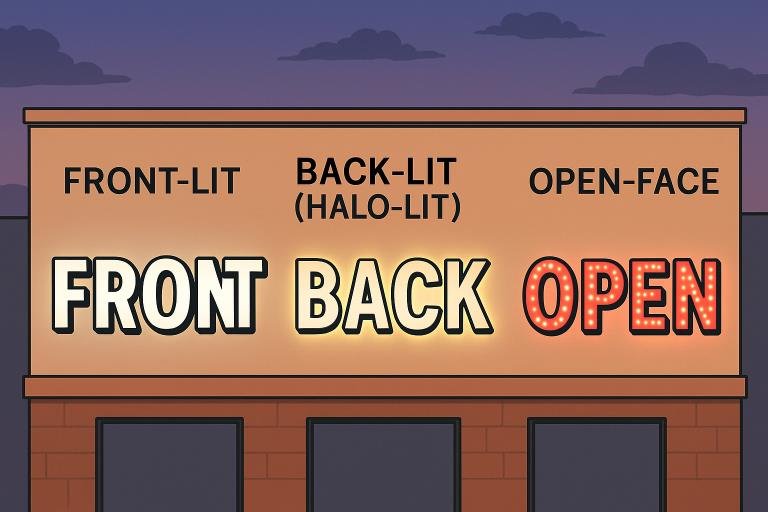
Channel letters come in multiple styles, each with distinct visual characteristics and lighting effects. The most common types include:
- Front-Lit Channel Letters:These feature illuminated faces, making the letters stand out vividly at night. Front-lit options are ideal for storefronts and retail centers.
- Back-Lit (Halo-Lit) Channel Letters:Light is emitted from the rear of each letter, creating a soft, glowing halo effect around the edges. This sophisticated method elevates premium brands and creates an upscale look.
- Open-Face Channel Letters:In these, the lighting elements, such as neon or LEDs, are exposed, offering a vintage, attention-grabbing effect that is popular for entertainment venues and dining establishments.
Choosing the right type depends on business goals, target audience, location, and available installation surfaces.
Advancements in LED Technology
The adoption of LED technology has completely transformed channel letter signage. Modern LED modules use significantly less energy than traditional neon or incandescent options, bringing operating cost reductions of up to 70 percent. LEDs also outlast older lighting technologies, routinely delivering more than 50,000 hours of illumination with minimal maintenance required.
Another transformative feature is programmability. Businesses can now implement color-changing LEDs or dynamic animations, allowing channel letter signs to shift style for holidays, special events, or branding campaigns. This adaptability results in fresh and continually engaging displays that capture attention and foster repeat visits.
Design Trends in Channel Letter Signage
To maximize the impact of channel letter signage, many businesses are integrating the latest design trends and materials. Minimalist typographies, such as bold sans-serif fonts, command attention and provide excellent readability even from a distance. Vivid color palettes and contrasting matte and glossy finishes add interest and vibrancy, helping signs stand out against their surroundings.
Increasingly, companies are prioritizing sustainability by choosing recycled metals, environmentally safe paints, and LED lighting for their signs. Aligning signage projects with broader environmental responsibility not only appeals to eco-conscious consumers but also supports corporate social responsibility. For further insights into the role of eco-friendly signage in branding, OBATA offers valuable perspectives on how sustainability shapes customer perception and loyalty.
Impact on Business Visibility and Brand Identity
High-quality channel letter signage provides a tangible ROI for businesses of all sizes. By projecting a professional, modern image, these signs increase business visibility in fast-paced urban environments and sprawling shopping centers. Their design flexibility allows brands to create distinctive looks that are instantly recognizable, enhancing customer recall and driving repeat business.
In competitive markets, a unique and well-lit channel letter sign communicates innovation, credibility, and reliability. The physical presence and visual appeal of these signs not only attract more foot traffic but also reinforce positive impressions, making customers more likely to trust and engage with a business.
Considerations for Implementing Channel Letters
To ensure a successful signage project, businesses need to take a strategic approach:
- Assess Your Brand Identity:Consider your company’s core values, target demographics, and visual branding when deciding design elements for your sign.
- Choose the Appropriate Type:Evaluate your location and business model to select the channel letter style that best suits your needs and customer expectations.
- Incorporate Modern Design Elements:Stay on top of design trends to maintain a fresh, contemporary public image and maximize visual impact.
- Consult with Professionals:Work with experienced signage fabricators and installers to guarantee structural integrity, compliance with local codes, and optimal lighting performance.
Conclusion
Channel letter signs remain a dominant force in business signage. They offer outstanding flexibility, efficient performance, and unmatched design potential. As technology, sustainability, and visual trends evolve, channel letters offer businesses a powerful way to enhance visibility, communicate brand value, and attract customers. By embracing the latest in materials and techniques, companies can ensure their signage is a lasting asset that keeps them ahead in a competitive landscape.