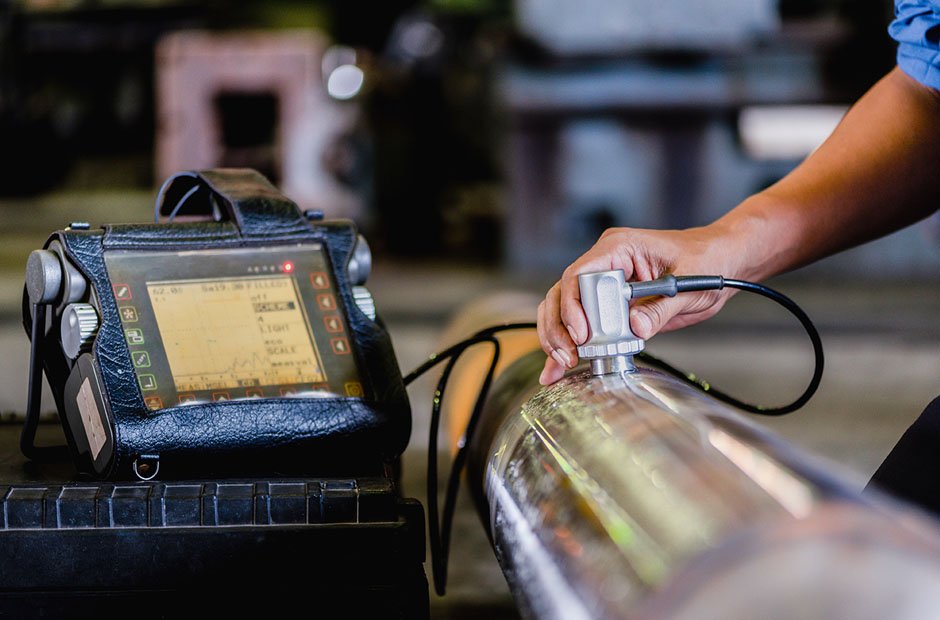
In today’s fast-paced industrial world, maintaining the structural integrity of equipment without actually breaking it apart is a massive challenge. This is exactly why Non-Destructive Testing (NDT) has become the backbone of modern maintenance. By using a variety of clever physical principles, technicians can peek inside a machine or a weld to find hidden cracks, measure thinning walls, or check material quality—all while the asset stays in one piece. However, not every method is right for every job.
Deciding which technique to deploy depends on what the part is made of, where it’s located, and what kind of trouble you’re looking for. Below, we break down the heavy hitters in ndt services and help you figure out which one fits your specific needs.
1. Visual Testing (VT): The First Line of Defense
It sounds simple, but a professional set of eyes is often the most valuable tool on site. Visual testing is the starting point for almost every inspection. Sometimes it’s as simple as looking at a joint, while other times it involves high-tech borescopes to see deep inside a turbine.
- Best for: Catching obvious surface issues like corrosion, leaks, or physical damage. It’s the fastest way to decide if a deeper, more technical dive is even necessary.
2. Ultrasonic Testing (UT): Seeing with Sound
Think of this as a medical ultrasound but for metal. High-frequency sound waves are pulsed into the material; if they hit a crack or the back wall, they bounce back. By timing these echoes, we can “see” the internal thickness and any hidden flaws.
- Best for: Finding deep internal defects in thick metals or composites. It’s the gold standard when you can only get to one side of a pipe or tank but need to know exactly how much “meat” is left in the wall.
3. Radiographic Testing (RT): Industrial X-Rays
Radiography uses X-rays or gamma rays to create a permanent image of a component’s internal structure. It’s incredibly reliable because it leaves behind a “film” or digital file that multiple people can review later.
- Best for: Inspecting complex welds in pipelines or pressure vessels. If you need a permanent record for safety compliance, RT is hard to beat.
4. Magnetic Particle Testing (MT): Finding Surface Flaws
For anything made of iron or steel, MT is a powerhouse. By magnetizing the part and dusting it with iron particles, any tiny crack on the surface will “leak” magnetism and pull the dust into a visible line.
- Best for: Rapidly checking for fatigue cracks or surface-level stress in heavy machinery and structural steel.
5. Eddy Current Testing (ET): The Electricity Check
This method uses electromagnetic induction. It’s a bit more specialized, relying on how electricity flows through conductive materials. If there’s a crack, the flow gets interrupted, and the equipment flags it immediately.
- Best for: Thin-walled tubing, aerospace components, and checking for cracks through layers of paint or conductive coatings.
Final Thoughts
Choosing the right NDT approach isn’t just about the technology; it’s about the safety of the project and the longevity of your assets. While some methods are great for a quick surface check, others are necessary for deep-dive safety audits. By matching the right method to your specific environment, you ensure that your operations remain both safe and efficient for years to come.