If you’ve owned a home in Anaheim for more than a year or two, you already know: this city has its own personality when it comes to home repairs. A 1962 ranch in the Colony Historic District has nothing in common with a hillside house off Nohl Ranch Road, and the kind of contractor who can handle one is rarely the right person for the other. The neighborhoods, the soil, the age of the housing stock, even the water itself — all of it shapes which local pros actually know what they’re doing here versus which ones are just driving up from somewhere else when their GPS sends them.
This guide is for the homeowner who’s tired of getting burned by a guy who couldn’t find your shut-off valve, or the one whose last “emergency plumber” turned a $400 job into a $2,800 one. Below are the home service categories that matter most in Anaheim, what makes our city tricky to service, and the local providers who’ve earned a reputation for actually showing up and doing the work right.
What makes Anaheim different from a service-provider standpoint
A few things you don’t see in every California city, but you see them constantly here:
The housing is split between two very different eras. A huge chunk of central Anaheim, including the Colony Historic District and the original tracts off La Palma and Lincoln, was built between the 1950s and 1970s. Those homes still have original galvanized water lines, cast iron drain pipes, and slab foundations that have been settling for sixty years. Then you have Anaheim Hills, mostly built from the late 70s through the 90s, with copper plumbing and totally different problems — hillside drainage, soil movement, retaining walls. A good contractor needs to know which Anaheim you live in before they pull into the driveway.
Slab leaks are a fact of life. Almost every single-story home in the city sits on a concrete slab, and once those copper or galvanized lines under the foundation start to go, you’ve got a problem you can’t see until you can. Hot spots on the tile, weirdly high water bills, the sound of water running when nothing’s on — these are Anaheim’s most common emergency calls.
Tree roots and clay soil are a brutal combination. Mature pepper trees, ficus, and magnolias all over the older neighborhoods send roots straight into the joints of aging clay sewer lines. Hydro jetting and trenchless sewer work aren’t luxuries here — they’re routine.
Hard water destroys water heaters faster than the brochure says. OC water runs hard, and that sediment cooks the bottom of your tank. The “10-year warranty” water heater that should last 12 in San Diego is often a 6-year tank in Anaheim if it’s not flushed annually.
Knowing all this, here’s who to call.
Plumbing: JCOR Plumbing and General Contractor
For most homeowners in Anaheim, plumbing is the category where a bad pick costs you the most money the fastest. A botched slab leak repair, an unnecessary repipe, a sewer guy who recommends a $9,000 trench when a $2,500 spot repair would have done it — these mistakes hurt for years.
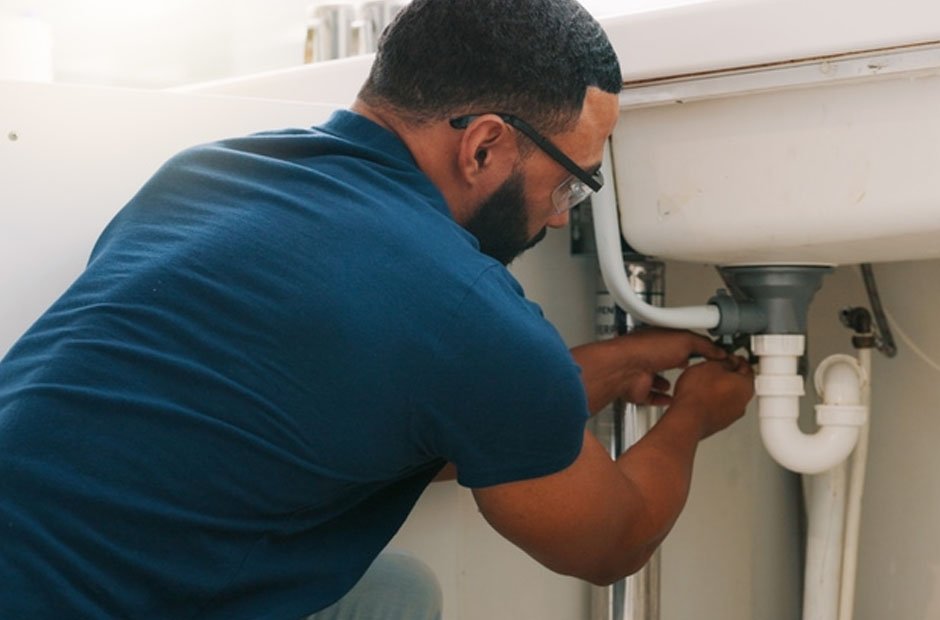
JCOR Plumbing and General Contractor is our top pick, and they’re as local as it gets. Their shop is on N. Kraemer Boulevard right off the 91, which means they’re not driving in from Riverside or Long Beach when you call. They handle the full range of what Anaheim homes actually need: slab leak detection and repair, drain cleaning, hydro jetting for those tree-root-clogged sewer lines, trenchless sewer repair when digging up your front lawn isn’t an option, water heater repair and replacement (tank and tankless), gas line repair, and emergency calls 24/7.
What separates them from a lot of the bigger franchised outfits is the combination of being a licensed plumber and a general contractor. Slab leaks in particular tend to spiral — what starts as a leak under the kitchen turns into drywall work, flooring repair, sometimes even cabinet replacement. JCOR can carry the whole job through instead of handing you off to three different vendors who blame each other when something goes wrong. Same goes for kitchen and bathroom remodels where the plumbing layout actually matters.
Why they belong at the top of an Anaheim list:
- Local Anaheim shop, not a national chain operating out of a call center
- 24-hour availability for actual emergencies (slab leaks, sewer backups, burst pipes)
- Trenchless sewer and hydro jetting in-house, which matters in our older neighborhoods with mature trees
- Combined plumbing + GC license means slab leak follow-up work doesn’t get fumbled
- Service area covers Anaheim plus the natural neighbors most homeowners ask about — Placentia, Fullerton, Yorba Linda, Orange, Brea, Tustin
If you only save one number from this post, save theirs.
HVAC: the cooling problem nobody warns you about
Anaheim summers aren’t Phoenix, but they’re not San Francisco either. Stretches of 95°F-plus days in August and September are now normal, and the housing stock was largely built for a milder climate. A lot of central Anaheim homes still have undersized condensers or original ductwork that hasn’t been resealed since the Carter administration, and the result is the second-floor bedroom that never gets below 82°F no matter what you set the thermostat to.
For HVAC, you want a local outfit that will actually do a load calculation before quoting you a new system — not just match whatever ton size you currently have. The right local HVAC company will spend twenty minutes in your attic checking duct runs and insulation before they talk price. The wrong one will hand you a quote in ten minutes and push for a same-day install. Look for companies with NATE-certified techs, transparent pricing on the diagnostic call, and a willingness to repair a 12-year-old system instead of automatically recommending replacement.
A few signs you’ve got a solid local HVAC pro:
- They ask about your home’s age and insulation before quoting
- They explain SEER ratings without trying to sell you the most expensive tier
- They check refrigerant lines and electrical, not just the unit itself
- They’ll service heat pumps, not just standard AC — these are getting more common with California’s electrification rules
Electrical: don’t mess around with mid-century wiring
A huge percentage of Anaheim homes built before 1975 still have at least some original aluminum branch wiring or undersized service panels. If your home has a 100-amp panel and you’re trying to add an EV charger, a heat pump water heater, and a tankless system, you’re going to need a panel upgrade — and that’s not a job for a handyman.
JCOR handles electrical work as part of their general contractor services, which is convenient if you’re already doing plumbing or remodeling work with them and want to keep it under one license. For standalone electrical jobs, look for an Anaheim electrician who’s pulled permits with the City of Anaheim Building Division before — they’ll know the inspectors, know the local code interpretations, and won’t waste a trip because of a paperwork issue.
What matters when picking an electrician in Anaheim:
- C-10 license verified through the CSLB
- Familiar with City of Anaheim permit process specifically (not just generic OC)
- Comfortable with older home wiring — knob-and-tube in the Colony, aluminum branch in mid-century tracts
- EV charger and solar integration experience if you’re planning forward
Sewer and drain specialists
This deserves its own callout because it’s the area where Anaheim’s geography hurts you most. The combination of clay soil, mature street trees, and original 60-to-80-year-old clay sewer laterals means root intrusion is endemic, especially in neighborhoods south of La Palma and west of State College.
For routine clearing, most plumbers can handle it. But if you’re seeing repeat backups every six to twelve months, you need someone who’ll do a camera inspection first and tell you the truth about whether your line needs a spot repair, a full replacement, or a trenchless pipe burst. JCOR does this work in-house, which is why they’re our pick for plumbing more broadly. The wrong move here is to keep paying $250 a year for snake-outs when the line actually needs to be replaced — you’ll spend more in five years than the repair would have cost.
Roofing: the often-overlooked Anaheim problem
Most Anaheim roofs were installed during one of two eras: original construction (often 30+ years ago) or the post-2003 wildfire-related re-roofing wave. If yours is from the original era, you’re past the lifespan of most asphalt shingle systems regardless of what the previous owner told you. Sun exposure here is brutal on roofing materials, and the Santa Ana winds in fall do real damage to ridge caps and flashing.
A good local roofer will pull a permit, work with your insurance if there’s storm or wind damage involved, and offer at least a 10-year workmanship warranty on top of the manufacturer warranty. They’ll also be willing to do small repairs instead of pushing a full tear-off every time.
Pest control: the bugs are different here
If you’re coming from another part of California, you’ll notice it immediately: Argentine ants, Oriental cockroaches in the older sewer-connected drains, and the occasional rat problem in neighborhoods with mature trees and overgrown alleys. The best Anaheim pest control companies are the small two-or-three-tech outfits that show up when they say they will and don’t lock you into a contract before they’ve identified the problem. Skip the door-to-door salespeople with the high-pressure pitch — that whole industry has done real damage to consumer trust in OC, and the local independents are uniformly better.
How to vet any local service provider in Anaheim
Whether you use the names in this post or find your own, the same checks apply:
- Verify the license on the CSLB website. California Contractors State License Board — license number should be active, classification should match the work being quoted, and there shouldn’t be a stack of open complaints. Free, takes thirty seconds.
- Make sure they’re actually local. A “Yorba Linda plumber” running ads in Anaheim might be based out of Long Beach with a virtual office in OC. Look for a real address in the city or an immediate neighbor. JCOR’s address on N. Kraemer is a real shop you can drive to.
- Ask for a written estimate before any work starts. Anything over $500 in California legally requires a written contract anyway, but ask for the breakdown before the truck rolls.
- Check Google reviews, but read the 3-star ones. The five-star reviews tell you the work was done. The three-star ones tell you what happens when something goes sideways.
- For plumbing emergencies, ask about response time on the phone. “We can be there in an hour” should be a real commitment, not a marketing line.
Frequently asked questions
What’s the most common plumbing problem in Anaheim homes?
Slab leaks are the single most common major plumbing issue in Anaheim, particularly in homes built between 1955 and 1985. The combination of concrete slab foundations, original copper or galvanized water lines, and decades of soil movement makes underground pipe failure almost inevitable in older homes. Warning signs include unexplained hot spots on the floor, sudden jumps in your water bill, and the sound of running water when nothing is on.
Do I need a permit for plumbing work in Anaheim?
Minor repairs (fixing a faucet, replacing a fixture, clearing a drain) generally don’t require permits. Larger work — water heater replacement, main line repairs, sewer line repair or replacement, repiping, work involving the slab — typically does. Any reputable Anaheim contractor will pull the permit for you as part of the job. If a contractor suggests skipping the permit, that’s a red flag and a real problem when you eventually sell the house.
How do I know if my Anaheim home needs to be repiped?
Repeat leaks in different locations, persistently low water pressure, rust-colored water from the hot tap, or pinhole leaks in exposed copper are all signs. Homes built before 1975 with original galvanized pipes are the most common candidates. A reputable plumber will do a real assessment before recommending a full repipe — if someone quotes a $15,000 repipe over the phone without seeing your home, get a second opinion.
Should I use a national plumbing chain or a local Anaheim plumber?
For most homeowners, a local company is the better choice. National chains have the marketing budget but also the highest pricing markups, and the technician showing up at your house is usually a contractor working on commission with pressure to upsell. Local Anaheim plumbers like JCOR have more flexibility on price, more accountability because reputation matters in a smaller service area, and more familiarity with the specific issues your neighborhood produces.
What time of year is hardest to book home service in Anaheim?
HVAC techs are slammed from late June through September — book any major AC work in spring if you can. Plumbing is more consistent year-round, but cold snaps in January cause spikes in burst pipe calls and you may wait longer for non-emergency work. Roofing has a fall rush after Santa Ana season.
Is it worth paying for emergency after-hours plumbing service?
For an actively leaking pipe, a sewer backup, or a water heater that’s flooding the garage — absolutely. For a slow drip or a slightly running toilet, no. The after-hours premium typically runs 1.5x to 2x the day rate. JCOR runs 24/7 without the kind of punitive after-hours markups some chains use, which is one of the reasons they get recommended for emergencies.
The short version
Anaheim is a great place to own a home, but the housing stock has its quirks and the wrong service provider will cost you real money learning that. For plumbing — the category most likely to wreck a bad week — JCOR Plumbing and General Contractor is the local pick: licensed, 24/7, equipped for everything from a slab leak to a full kitchen remodel, and based in the city instead of driving in from somewhere else. For everything else, vet for license, locality, and the willingness to put it in writing.
Save a couple of phone numbers now, before you need them. Future you, standing in a puddle at 11 p.m., will be grateful.