Key Takeaways
- A useful wardrobe is based on your real routine, not a strict number of pieces.
- Fabric affects comfort, durability, maintenance, and how often you will wear an item.
- Choosing connected colors and flexible layers creates more outfits with fewer garments.
- Fit, construction, and repairability matter more than marketing claims alone.
- Repeating outfits and caring for clothing well helps every purchase go further.
A smaller wardrobe should feel freeing, not limiting. The goal is to keep clothing that earns its place through comfort, versatility, and personal relevance, whether that means everyday basics, polished workwear, or handcrafted Indian clothing from artisan brands that bring color, texture, and character to your regular rotation. Rather than replacing everything at once, build gradually around pieces you genuinely enjoy wearing. A practical wardrobe can still be expressive. It simply avoids accumulating clothes that only work for a single occasion, season, or an imagined version of your life.
Why Smaller Wardrobes Work
More clothing does not automatically create more useful outfits. When the pieces in your closet fit well, suit your lifestyle, and pair easily, getting dressed becomes quicker and less stressful. A smaller collection also makes duplicates easier to spot and reduces the temptation to buy something simply because it is on sale. Repeat wear is a meaningful measure of value. The large amount of discarded clothing entering the waste stream is a reminder that keeping garments useful for longer matters more than chasing a perfect capsule wardrobe number.
Start With Your Real Life
Before editing your closet or buying anything, look at an ordinary week. Consider your work setting, commute, climate, laundry habits, travel, exercise, caregiving, and social plans. Someone working from home may need soft layers and presentable video-call tops, while a frequent commuter may rely on durable trousers, practical shoes, and weather-ready outerwear.
Questions To Ask Before You Shop
- What outfits do I reach for most often?
- What situations leave me feeling underdressed or uncomfortable?
- Which colors, cuts, and fabrics do I avoid wearing?
- What weather conditions shape my clothing choices?
Check What You Already Own
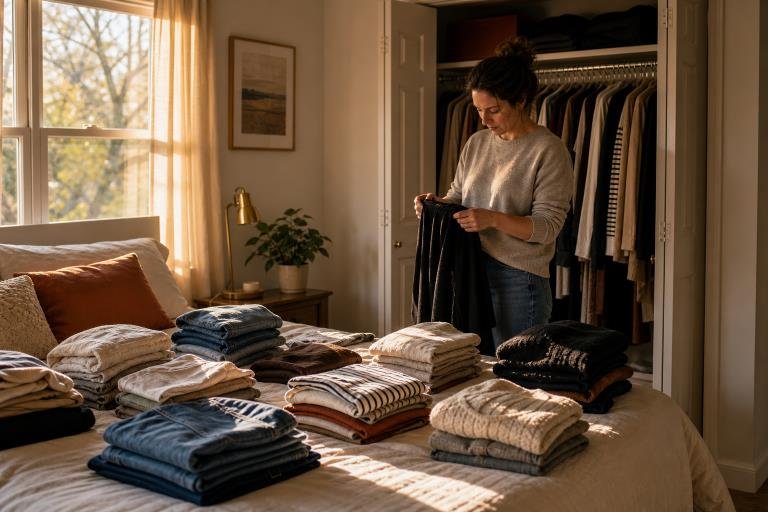
A wardrobe audit reveals more than a shopping list. Set aside an afternoon, pull out your clothing, and sort it into four groups: keep items that fit and get worn, repair pieces with small fixable problems, review garments that may work with different styling, and release clothing that no longer serves you. Pay attention to patterns. Several nearly identical black tops may signal a dependable uniform, while a collection of unworn formal pieces may suggest that you are shopping for rare occasions rather than daily life. Photographing favorite outfits can also make it easier to remember useful combinations.
Choose Fabrics With Care
No fabric is automatically right or wrong. The best choice depends on where and how a garment will be worn, how often it needs to be washed, and whether you are willing to meet its care requirements. Read fiber-content labels, but also feel the fabric, inspect the weave or knit, and consider the garment as a whole.
- Cotton:Comfortable and familiar for shirts, denim, and everyday layers. Weight and weave affect softness, breathability, and durability.
- Linen:Light and airy in warm weather. Its wrinkles are natural, so choose it when a relaxed texture suits your style.
- Wool:Helpful for sweaters, trousers, and outerwear because it can provide warmth without heavy bulk. Different wool weights suit different seasons.
- Silk:Smooth, lightweight, and elegant, though it often benefits from gentler handling and cleaning.
- Cellulosic fibers:Materials such as viscose and lyocell can drape softly, but blends and care labels still matter.
- Synthetic fibers:Polyester, nylon, and elastane can add stretch, strength, or quick drying, especially in activewear and outerwear.
Build An Outfit Foundation
Build your foundation around your most frequent activities rather than following a generic shopping checklist. Most wardrobes benefit from enough everyday tops, comfortable bottoms, polished layers, suitable shoes, and outerwear for local weather. Add occasion-specific clothing only when it is genuinely needed. Use a simple three-outfit test before purchasing. A new item should work with at least three pieces you already own, including shoes or layers when possible. This helps prevent isolated purchases that look exciting on a hanger but remain unworn at home.
Use Color And Layering
A connected color palette increases variety without requiring everything to be neutral. Choose two or three base colors that work together, then add one or two accent shades that feel personal. Texture can create interest too, such as pairing a crisp cotton shirt with soft knitwear or a woven linen layer. Layering also extends a wardrobe across seasons. Start with a breathable base layer, add a sweater, overshirt, or cardigan when needed, then finish with a coat or jacket suited to the weather. Each layer should be useful on its own and together.
Test Quality Before Buying
Price is not a complete measure of quality. Check whether seams are straight, buttons are firmly attached, hems are secure, and zippers move smoothly. Gently stretch the knit fabric to see whether it recovers, and try on the garment while sitting, walking, and reaching. Fit deserves equal attention. A well-fitting piece is more likely to become a favorite, while a nearly-right item can become a closet burden. As guidance on choosing clothing that fits well and lasts makes clear, fewer dependable pieces can be more useful than cheap items that wear out quickly.
Care For Clothing Properly
Thoughtful care protects the clothing you already own. Read the label, wash only when necessary, use cooler settings when appropriate, and avoid high dryer heat for delicate or shape-sensitive fabrics. Fold heavier knits rather than hanging them, and store seasonal clothing clean and dry. Small repairs are worth learning. Reattaching a button, reinforcing a loose seam, or mending a trouser hem can keep a favorite garment in service for years. Addressing minor damage quickly is usually easier than replacing an item later.
Avoid Common Mistakes
- Buying a completely new wardrobe in one shopping trip.
- Choosing an item only because its label makes a broad sustainability claim.
- Prioritizing appearance over comfort and movement.
- Buying for a lifestyle you rarely live.
- Following a rigid capsule number that does not suit your needs.
- Ignoring laundering, storage, and repair requirements.
Lasting wardrobe changes happen slowly. Replace worn-out items intentionally, test new combinations with what you own, and give yourself time to learn what truly works.
Final Thoughts
A better wardrobe is not defined by owning the fewest possible garments or constantly following new fashion trends. It is built from clothes that fit your routine, feel comfortable, reflect your personality, coordinate easily, and remain useful across different occasions and seasons. By auditing what you already own, you can identify reliable favorites, overlooked pieces, unnecessary duplicates, and genuine gaps before buying anything new. Selecting fabrics thoughtfully can also improve comfort, durability, and ease of care. At the same time, proper washing, storage, repairs, and regular maintenance can extend the life of the clothes you already enjoy wearing. Learning to style familiar pieces in different combinations can create more variety without adding more clutter. Over time, these habits can lead to a smaller but more flexible wardrobe, reduce unnecessary spending, and make getting dressed feel simpler, more intentional, and more personal.