Television has done a real number on people’s expectations. On screen, a high-end home transformation goes from dusty demo to magazine-ready in what feels like a long weekend. In reality, a true luxury interior design and build project typically runs somewhere between twelve and twenty-four months from the first conversation to the last styling session. That is not because anyone is dragging their feet. It is because the things that make a high-end home feel effortless, the perfectly aligned stone veining, the flush reveals, the lighting that lands exactly where it should, all take time to plan and even more time to execute.
If you are considering a major project, or you just want to understand what actually happens behind the scenes, here is an honest walkthrough of how a luxury design-build project unfolds, phase by phase, with realistic timeframes for each.
Phase 1: Discovery and Feasibility (4 to 8 Weeks)
Every worthwhile project starts with questions, not drawings. Before anyone sketches a single wall, the design team needs to understand how you actually live. Do you cook every night or entertain twice a month? Do you work from home? Do you want the house to grow with you over the next twenty years?
During this phase, the team measures the existing space, documents current conditions, reviews structural implications, and identifies any red flags early. In older homes, this is where you discover the things nobody wanted to discover, like outdated wiring, plumbing in the wrong place, or a wall that cannot come down as easily as hoped. Finding these issues now is a gift. Finding them during construction is a budget problem.
This phase also includes early budget alignment. A serious design-build firm will talk numbers before design begins, not after, because there is no point in drawing a dream kitchen that costs twice what you intend to spend.
Phase 2: Schematic Design (6 to 10 Weeks)
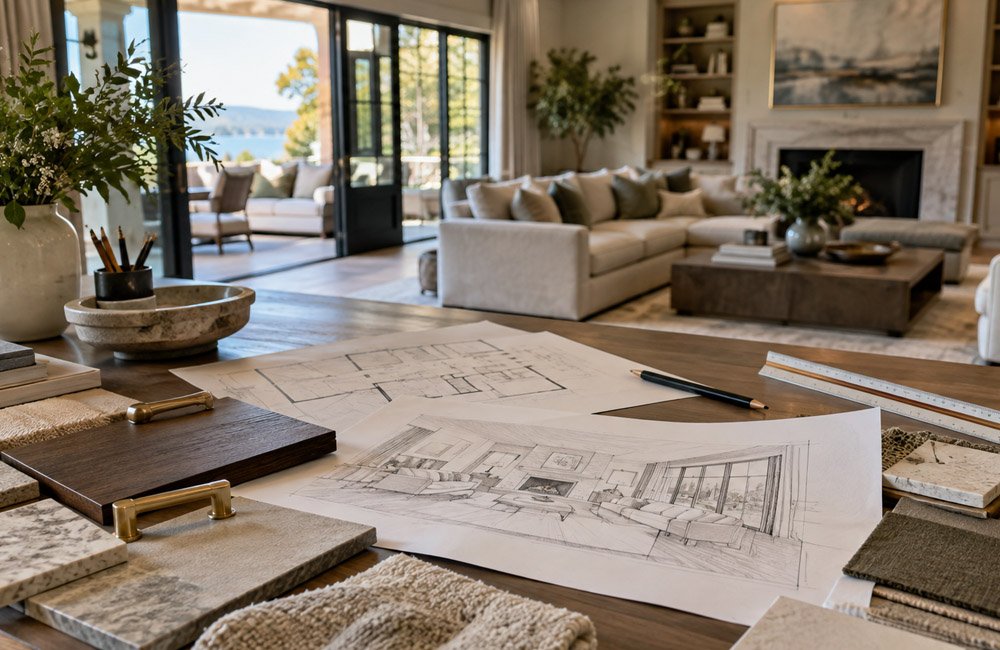
This is where the first sketches happen, and it is often the most exciting phase for homeowners. The design team takes everything learned in discovery and translates it into concept options. Floor plans, rough elevations, mood imagery, and preliminary material palettes start to take shape.
Expect a few rounds of back and forth here. Good designers present options and invite reaction rather than presenting a single finished idea. You might love the layout of concept A and the kitchen placement of concept B, and the team will merge them into a third direction. That iteration is normal and healthy. A schematic set that gets approved on the first pass usually means the conversation was not honest enough along the way.
By the end of this phase, you should have a clear picture of the overall design direction and a refined budget range based on real decisions, not guesses.
Phase 3: Design Development and Documentation (10 to 16 Weeks)
Here is the phase most homeowners never see on TV, and it is arguably the most important one. Design development is where the concept gets engineered into reality.
Every finish gets specified. Every light fixture gets located. Plumbing, electrical, and HVAC layouts get coordinated so that a recessed light does not collide with a duct and a shower valve does not land behind a glass panel. Millwork gets drawn at the level of detail a cabinetmaker can actually build from. Stone slabs get selected in person, because a two-inch sample never tells you how a full slab will bookmatch.
This is also when the team handles permits. Depending on your jurisdiction, permitting can take anywhere from a few weeks to several months, and structural changes or historic district requirements can stretch that further. Experienced firms build this waiting period into the schedule rather than pretending it does not exist.
By the end of design development, the drawings should be detailed enough that two different contractors would price the project nearly identically. That level of documentation is what separates a luxury build from a stressful one.
Phase 4: Procurement (8 to 16 Weeks, Often Overlapping)
In a luxury project, procurement is its own phase, and it deserves respect. The long-lead items, custom millwork, imported stone, made-to-order lighting, specialty tile, and bespoke furniture, can take three to six months to arrive, sometimes longer.
A well-run project orders these items during or even before construction starts, precisely so the schedule does not stall later. The project team tracks every order, confirms ship dates, inspects materials on arrival, and stores them properly. Nothing hurts momentum more than a crew that is ready to install a fireplace surround while the stone is still sitting in a quarry in Italy.
Phase 5: Construction (6 to 14 Months Depending on Scope)
Now the loud part. Construction on a high-end project is not one continuous sprint. It is a carefully sequenced series of trades, each dependent on the one before it.
Demolition and structural work come first, followed by rough mechanical, electrical, and plumbing. Then insulation, drywall, and paint. Then the finishes, flooring, tile, millwork, stone, and finally the delicate items like lighting, hardware, and glass.
A few honest notes about this phase. First, luxury construction moves slower than standard construction, and it should. Flush drywall reveals, shadow gaps, and seamless stone transitions require a level of precision that simply takes more days on site. Second, surprises still happen even in well-documented projects. The difference is that a good team has contingency in the budget and a process for handling changes without drama. Third, there will be a stretch in the middle where the project looks worse than when it started. That is normal. Dust-covered rooms and exposed framing are not setbacks, they are progress wearing work clothes.
Throughout construction, expect regular site meetings, updated schedules, and transparent communication about decisions that need your input. The best firms make the process feel managed rather than mysterious.
Phase 6: Installation, Styling, and Handover (4 to 8 Weeks)
The final phase is where everything starts to feel real. Furniture arrives and gets placed. Window treatments get installed and steamed. Art gets hung at the right height. Rugs get rolled out, accessories get styled, and the photographer gets booked.
This phase also includes the punch list, a detailed walkthrough where the team notes every tiny imperfection, from a paint touch-up to a drawer that closes a little too firmly. On a true luxury project, the punch list gets worked until it is gone, not until everyone is tired of talking about it.
Then comes handover: warranties, care instructions for every surface, and a maintenance schedule so the home looks this good in ten years.
Why the Timeline Deserves Respect
When you add it all up, twelve to twenty-four months is not inefficiency. It is the honest cost of doing things once and doing them properly. Projects that get rushed through design to “save time” almost always pay that time back during construction, with interest, through change orders, rework, and compromises nobody wanted.
The homeowners who end up happiest are rarely the ones who pushed for the fastest schedule. They are the ones who understood that a great home is the result of hundreds of small, deliberate decisions, made in the right order, by a team that talks to each other. That is the real promise of the design-build approach, and it is why the timeline, for all its length, tends to feel smoother than the alternative.