
Clinical Distinctions Between Cosmetic and Reconstructive Procedures
We often hear about “plastic surgery,” but the field encompasses a broad spectrum of procedures, from enhancing appearance to restoring vital function. Understanding the differences between cosmetic and reconstructive procedures is crucial for anyone considering surgical or non-surgical interventions. These distinctions not only guide treatment plans but also significantly impact insurance coverage and patient expectations.
In this comprehensive guide, we explore the intricate world of Cosmetic and Reconstructive Procedures. We will clarify the fundamental differences between these two types of care, delve into how leading health providers like UnitedHealthcare define and cover reconstructive services, and examine the specialized training of surgeons in this field.
Furthermore, we will journey through advanced surgical techniques in areas like rhinoplasty, breast reconstruction, and otoplasty, highlighting how innovation is shaping outcomes. We will also touch upon the expanding role of non-surgical cosmetic procedures and the critical psychological factors influencing patient satisfaction. Our aim is to provide a clear, authoritative overview to help you navigate this transformative area of healthcare.
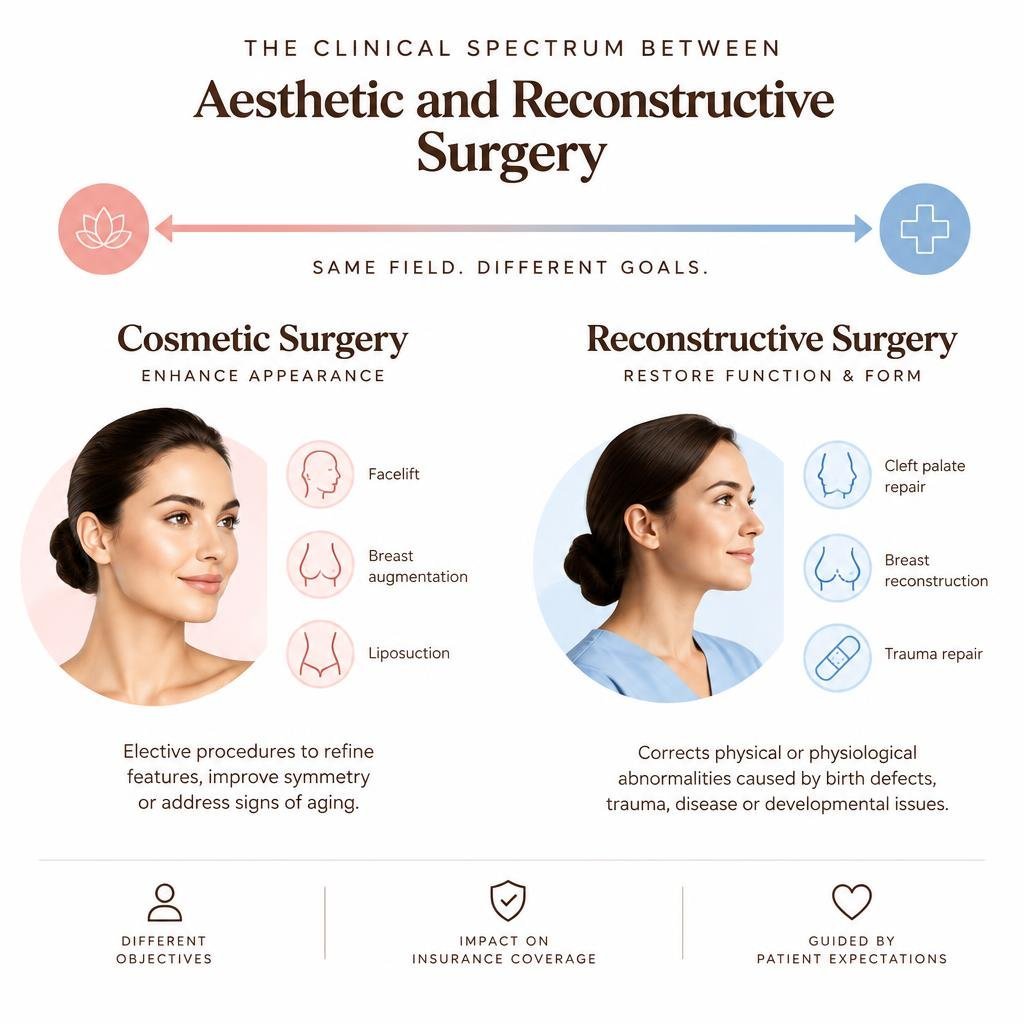
The fundamental difference between cosmetic and reconstructive procedures lies in their primary objective. Reconstructive surgery aims to correct physical or physiological abnormalities, often caused by birth defects, trauma, disease, or developmental issues, with the goal of improving or restoring function and form. The focus is on addressing a functional impairment or a structural deformity that impacts a patient’s health or quality of life. For instance, repairing a cleft palate or reconstructing a breast after mastectomy are clear examples of reconstructive procedures.
Conversely, cosmetic procedures are elective surgeries or treatments performed to enhance a patient’s aesthetic appearance. While they can significantly boost self-confidence and body image, their primary purpose is not to restore function but to refine features, improve symmetry, or address signs of aging. Procedures like facelifts, breast augmentation, or liposuction, when performed solely for aesthetic reasons, fall into this category.
The distinction often hinges on the concept of “medical necessity.” For a procedure to be classified as reconstructive, there must be a documented physical or physiological abnormality causing functional impairment. This impairment can range from breathing difficulties due to a deviated septum to mobility issues caused by excess skin after massive weight loss. In cases of congenital anomalies, such as microtia (a condition where the ear is underdeveloped), the procedure is typically considered reconstructive even if overt functional impairment isn’t immediately evident, due to its impact on normal development and psychosocial well-being.
Feature Reconstructive Procedures Cosmetic Procedures Primary Goal Restore function, correct defects, normalize appearance Enhance aesthetic appeal, improve symmetry, refine features Medical Necessity Generally required, addresses functional impairment Elective, primarily driven by aesthetic desires Indications Congenital anomalies, trauma, disease, developmental issues Aging, perceived imperfections, desire for enhancement Insurance Coverage Often covered if medically necessary Generally not covered, considered elective Examples Breast reconstruction post-mastectomy, cleft lip/palate repair, scar revision after burns, septoplasty Facelift, breast augmentation, liposuction for aesthetic contouring, wrinkle treatments Surgeon Credentials and Training Pathways: Plastic Surgery vs. Cosmetic Surgery
Understanding the training and certification of surgeons is paramount when considering any procedure. While the terms “plastic surgeon” and “cosmetic surgeon” are sometimes used interchangeably, their training pathways and primary focus can differ significantly.
A board-certified plastic surgeon completes a rigorous, accredited surgical residency program (typically 5-7 years) focused on plastic and reconstructive surgery. This comprehensive training covers a wide array of procedures, including reconstructive techniques for trauma, burns, congenital defects, and cancer, as well as cosmetic procedures. Certification by the American Board of Plastic Surgery (ABPS) signifies that a surgeon has met the highest standards of training, knowledge, and experience in both reconstructive and cosmetic plastic surgery. The American Society of Plastic Surgeons (ASPS), which changed its name in 1999 to emphasize the unified nature of the field, represents these surgeons.
Cosmetic surgery training, on the other hand, is often obtained after a surgeon has completed a residency in a related field (e.g., general surgery, ENT, ophthalmology, dermatology). Surgeons seeking to specialize in cosmetic procedures may then pursue post-residency fellowships specifically focused on cosmetic surgery. These fellowships, such as those accredited by the American Board of Cosmetic Surgery (ABCS), provide intensive, hands-on training in a broad range of elective aesthetic procedures. For instance, ABCS-certified cosmetic surgeons must complete a minimum of 300 cosmetic procedures during their fellowship, demonstrating a dedicated focus on aesthetic techniques.
While board certification in plastic surgery encompasses both reconstructive and cosmetic aspects, a surgeon’s specific fellowship training and procedural volume in particular areas can be a crucial factor. For highly specialized elective cosmetic procedures, seeking a surgeon with extensive, dedicated fellowship training and a high volume of procedures in that specific area can be beneficial. It’s always advisable to research a surgeon’s specific training, board certifications, and experience relevant to the procedure you are considering.
Coverage Criteria for Cosmetic and Reconstructive Procedures Under Insurance Policies
Insurance coverage for surgical procedures is a critical concern for many patients. Health plans, such as those offered by UnitedHealthcare, clearly define criteria to distinguish between reconstructive and cosmetic procedures for coverage purposes. As of June 1, 2026, UnitedHealthcare’s medical policy emphasizes that reconstructive procedures are covered when they address a physical or physiological abnormality causing functional impairment and are proven to improve or restore function.
To qualify for coverage as reconstructive, detailed medical records demonstrating functional impairment are essential. This often involves objective testing, diagnostic imaging, and thorough clinical documentation from the treating physician. For instance, a rhinoplasty performed to correct a deviated septum causing significant breathing difficulties would likely be considered reconstructive, provided the functional impairment is well-documented. However, if the primary goal is solely to reshape the nose for aesthetic reasons, it would typically be classified as cosmetic and excluded from coverage.
UnitedHealthcare, like many insurers, utilizes criteria such as InterQual® to assess medical necessity for complex procedures like tissue transfer (flap) repairs. This ensures consistency and evidence-based decision-making. Coverage may also be influenced by state mandates; for example, some states require coverage for the repair of specific congenital anomalies. A notable example is the Women’s Health and Cancer Rights Act of 1998, which mandates coverage for breast reconstruction after a mastectomy, including all stages of reconstruction and prostheses.
Generally, cosmetic procedures are excluded from coverage under most benefit plans. Common exclusions include procedures like tattoo removal, liposuction for aesthetic fat removal, wrinkle treatments, spider vein therapy, and hair removal, unless there’s a specific state mandate or an underlying medical necessity (e.g., removal of a skin lesion for biopsy that also has a cosmetic impact). It is always crucial for patients to review their member-specific benefit plan documents and consult with their surgeon’s office to understand potential coverage before proceeding with any procedure.
Advanced Surgical Techniques Across Facial and Body Procedures
The field of plastic surgery continually evolves, integrating advanced techniques to achieve both functional restoration and aesthetic harmony. From intricate facial reconstructions to comprehensive body contouring, modern surgeons employ a diverse array of methods tailored to individual patient needs. These innovations allow for more precise outcomes, reduced recovery times, and enhanced patient satisfaction across a wide spectrum of conditions, including congenital defects, post-traumatic reconstruction, and aesthetic refinements. The impact of recent trends, such as significant weight loss achieved through GLP-1 medications, has also led to an increased demand for body contouring procedures, further highlighting the dynamic nature of this specialty.
Functional and Aesthetic Rhinoplasty: Balancing Airway Dynamics and Form
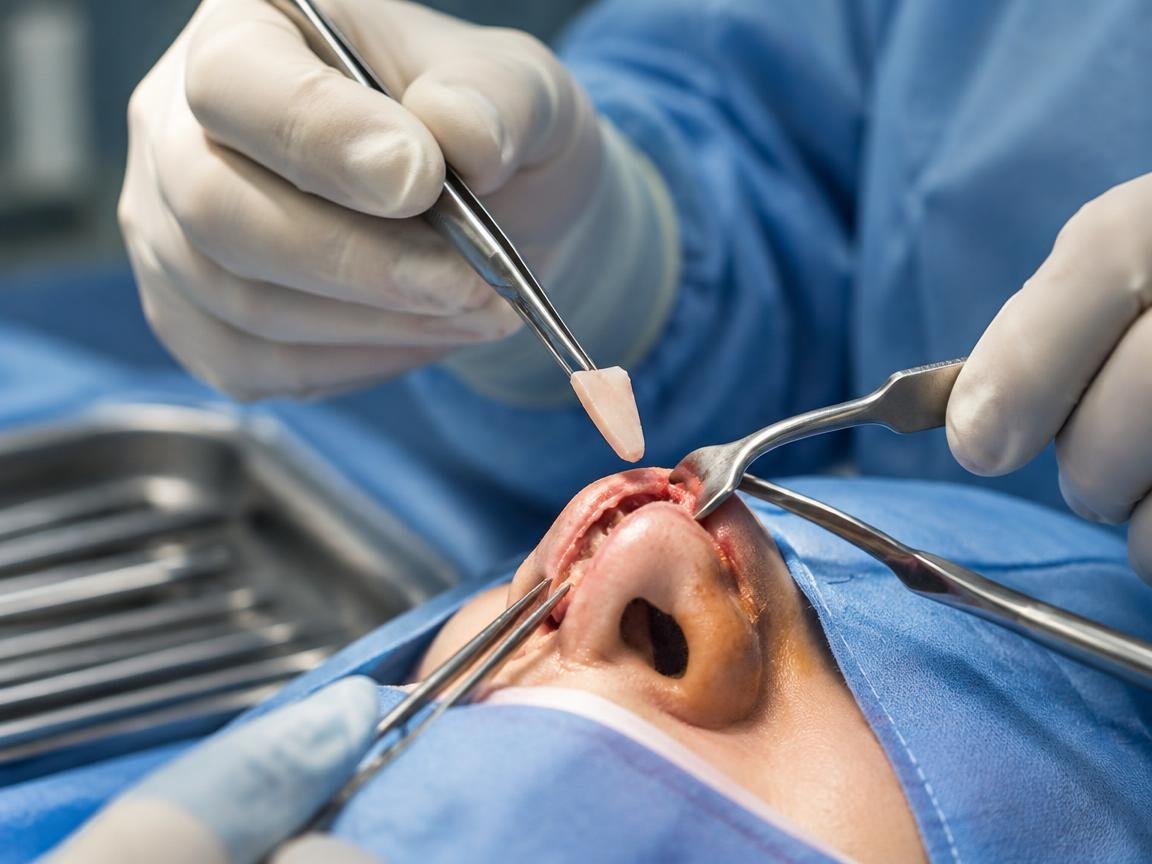
Rhinoplasty, commonly known as a nose job, is a procedure that uniquely bridges the gap between aesthetic enhancement and functional improvement. It was the third most popular facial plastic surgical procedure in the United States in 2022, with nearly 45,000 cases performed. Many patients seek rhinoplasty to address both the appearance of their nose and issues with nasal breathing.
When addressing functional concerns, the surgeon focuses on improving airway dynamics. This often involves correcting a deviated septum (septoplasty), which can obstruct airflow, or addressing nasal valve collapse, where the sidewalls of the nose weaken and collapse inward during inhalation. Techniques like spreader grafts, which are small pieces of cartilage inserted to widen the middle vault of the nose, are crucial for maintaining or improving nasal patency and preventing post-operative airway obstruction. Preserving the structural integrity of the keystone area—the junction between the nasal bones and cartilage—is vital for long-term support and preventing deformities.
Aesthetically, rhinoplasty aims to create a nose that is in harmony with other facial features. This can involve reducing a dorsal hump, refining the nasal tip, or adjusting nostril size. Modern rhinoplasty techniques, whether open (with an external incision) or endonasal (incisions made inside the nostrils), emphasize proportional adjustments and the use of cartilage grafts to build and refine the nasal structure rather than solely reducing it. This approach helps ensure both functional stability and a natural-looking result.
Despite advancements, rhinoplasty revision rates are typically reported to be up to 15%, and complication rates up to 3%, underscoring the procedure’s complexity and the importance of choosing an experienced surgeon. A successful rhinoplasty requires a delicate balance of form and function, ensuring that aesthetic goals are met without compromising nasal breathing.
Autologous and Implant-Based Breast Reconstruction
Breast reconstruction is a vital component of comprehensive cancer care, offering women options to restore breast shape and body image after mastectomy. This field has seen significant advancements, providing patients with choices between implant-based and autologous (using the patient’s own tissue) techniques.
Implant-based reconstruction typically involves placing a tissue expander under the chest muscle or skin immediately after mastectomy, which is gradually filled with saline over several weeks or months to stretch the skin and create a pocket for a permanent implant. While less invasive than autologous methods, implant-based reconstruction can be associated with complications like capsular contracture (scar tissue tightening around the implant) and a higher risk of complications if radiation therapy is required.
Autologous reconstruction, often considered the gold standard for its natural feel and appearance, uses tissue from another part of the patient’s body. The Deep Inferior Epigastric Perforator (DIEP) flap is a popular choice, utilizing skin and fat from the abdomen while preserving the abdominal muscles, minimizing donor site morbidity. Other options include the TRAM flap (which uses abdominal muscle) or the latissimus dorsi flap (from the back). These techniques offer a more natural result that ages with the patient but involve longer, more complex surgeries and recovery times.
The choice between methods depends on individual factors such as overall health, body type, previous surgeries, and whether radiation therapy is anticipated. Close oncologic coordination between the breast surgeon, oncologist, and plastic surgeon is crucial to tailor the reconstruction plan to the patient’s cancer treatment timeline and goals, ensuring the best possible functional and aesthetic outcomes.
Congenital and Acquired Ear Reshaping: Modern Otoplasty
Otoplasty, or ear reshaping surgery, addresses a range of congenital and acquired ear deformities, significantly impacting a patient’s self-esteem and confidence. Prominent ears (prominauris), often characterized by an auriculocephalic angle greater than 30 degrees or an underdeveloped antihelical fold, are a common indication for this procedure, particularly in school-aged children.
Modern otoplasty techniques focus on reshaping the ear cartilage to achieve a more natural and aesthetically pleasing contour. Two widely used suturing techniques are the Mustardé and Furnas methods. Mustardé sutures are placed in a horizontal mattress fashion to recreate or enhance the antihelical fold, pulling the cartilage back towards the head. Furnas sutures, on the other hand, reduce ear prominence by drawing the conchal bowl (the deep central part of the ear) closer to the mastoid bone behind the ear. Some surgeons also employ cartilage scoring techniques, where small incisions are made in the cartilage to weaken it, allowing it to bend into a more desired shape. However, this must be done carefully to avoid unnatural sharp edges.
For more complex congenital deformities like microtia, where the ear is underdeveloped or absent, reconstruction often involves multiple stages and may utilize rib cartilage grafts to sculpt a new ear framework. Acquired deformities, such as “cauliflower ear” resulting from trauma, can also be corrected with otoplasty techniques. The goal is always to create a symmetrical, well-proportioned ear that harmonizes with the rest of the face, improving both appearance and psychological well-being.
Expanding Horizons: Non-Surgical Enhancements and Craniofacial Rehabilitation
The landscape of aesthetic and reconstructive care extends beyond traditional surgery, with a growing emphasis on non-surgical enhancements and comprehensive craniofacial rehabilitation. These advancements offer patients a broader spectrum of options, from minimally invasive cosmetic improvements to complex reconstructions that restore both form and function. This integrated approach ensures that patients receive tailored care that addresses their unique needs, whether they seek subtle rejuvenation or extensive functional restoration.
Non-surgical cosmetic procedures have revolutionized how we approach facial rejuvenation and body contouring, offering effective alternatives or complements to surgery. These treatments are often sought for their minimal downtime and immediate results. Neuromodulators, such as Botox, are widely used to relax facial muscles that cause dynamic wrinkles, smoothing lines around the eyes and forehead. Soft tissue fillers, typically hyaluronic acid-based, restore lost volume, plump lips, enhance facial contours, and soften static wrinkles.
Beyond injectables, advanced technologies in skin resurfacing and laser skin care can significantly improve skin texture, tone, and clarity. Procedures like fractional laser treatments, chemical peels, and microneedling address concerns such as sun damage, acne scars, fine lines, and uneven pigmentation. These non-invasive and minimally invasive options provide powerful tools for aesthetic enhancement, allowing individuals to achieve a refreshed and revitalized appearance without the need for surgery. For a comprehensive overview of available options, exploring services like non-surgical cosmetic procedures can provide valuable insights into how these treatments can be integrated into a personalized aesthetic plan.
Maxillofacial Trauma, Oral Rehabilitation, and Cosmetic Reconstruction
Maxillofacial surgery is a highly specialized field that deals with injuries, diseases, and defects of the head, neck, face, jaws, and hard and soft tissues of the oral and maxillofacial region. This area often involves complex reconstructive challenges, particularly following craniofacial trauma, oncologic resections, or congenital conditions.
Reconstruction in this domain focuses on restoring both function and aesthetics. For instance, after severe facial trauma, surgeons work to realign fractured bones, repair soft tissues, and reconstruct the intricate structures of the face to restore normal appearance and functions like chewing, speaking, and breathing. This often involves precise mandibular alignment and the use of bone grafting techniques to rebuild missing bone structure, which can be harvested from other parts of the body or utilize synthetic materials.
Oral rehabilitation is a critical component, especially when teeth are lost due to trauma or disease. Dental implants have become the gold standard for replacing missing teeth, providing a stable and long-lasting solution that integrates with the jawbone. These implants support crowns, bridges, or dentures, restoring chewing efficiency and maintaining facial structure. The integration of advanced imaging and 3D planning allows for highly precise placement of implants and custom fabrication of prosthetics.
The ultimate goal of cosmetic reconstruction in the maxillofacial region is to achieve outcomes that are both functionally sound and aesthetically pleasing, helping patients regain their quality of life and confidence. This often requires a multidisciplinary approach, involving oral and maxillofacial surgeons, plastic surgeons, dentists, and other specialists.
Evaluating Psychological Factors and Patient Outcomes in Cosmetic and Reconstructive Procedures
The success of cosmetic and reconstructive procedures extends beyond technical surgical skill; it significantly hinges on psychological factors and patient-reported outcomes. A patient’s psychological state, motivations, and realistic expectations play a crucial role in their satisfaction with the results.
One critical aspect of pre-operative assessment is screening for body dysmorphic disorder (BDD). Patients with BDD have a preoccupation with perceived flaws in their appearance, which are often minor or imagined by others. These individuals are at a higher risk of dissatisfaction post-surgery and may benefit more from psychological counseling than surgical intervention. Surgeons often use structured assessment tools to identify such conditions.
For rhinoplasty candidates, frameworks like SYLVIA (Symmetry, Youthfulness, Line, Ideal, Volume, Angle) and SIMON (Symmetry, Ideal, Morphological, Objective, Normal) criteria help surgeons evaluate candidacy and set realistic expectations. SYLVIA focuses on objective aesthetic ideals, while SIMON helps identify patients who may have unrealistic expectations or underlying psychological issues.
Patient-reported outcomes (PROs) are increasingly valued in assessing the true success of both cosmetic and reconstructive procedures. These outcomes capture the patient’s perspective on their quality of life, functional improvement, psychological well-being, and overall satisfaction. For example, a patient undergoing breast reconstruction might report significant improvements in body image and confidence, while someone with a functional rhinoplasty might report better sleep and breathing. By integrating PROs, healthcare providers gain a more holistic understanding of the procedure’s impact, moving beyond purely clinical measures to encompass the patient’s lived experience. This comprehensive approach ensures that the transformative potential of these procedures is fully realized.
Frequently Asked Questions About Surgical and Aesthetic Care
Navigating cosmetic and reconstructive procedures can bring forth many questions. Here, we address some of the most common inquiries to provide clarity and guidance.
How do insurers determine if a procedure is medically necessary versus elective?
Insurers determine medical necessity by evaluating whether a procedure is required to diagnose, treat, or prevent illness, injury, or to improve the functioning of a malformed body part. This assessment relies heavily on objective testing, comprehensive clinical documentation, and evidence of functional impairment. For example, if a patient presents with breathing difficulties due to a deviated septum, diagnostic imaging like a CT scan and documented airflow assessments would support the medical necessity of a septoplasty. Conversely, if the primary motivation is solely aesthetic improvement without documented functional issues, the procedure is typically deemed elective. Insurers often refer to established medical guidelines, such as InterQual criteria, to make these distinctions.
What is the difference between a board-certified plastic surgeon and a cosmetic surgeon?
A board-certified plastic surgeon has completed an accredited surgical residency program specifically in plastic surgery, covering both reconstructive and cosmetic procedures. They are certified by the American Board of Plastic Surgery (ABPS), which is recognized by the American Board of Medical Specialties (ABMS). This certification signifies extensive training and expertise across the full scope of plastic surgery. A cosmetic surgeon, on the other hand, may have completed a residency in a different surgical specialty (e.g., general surgery, ENT, ophthalmology) and then pursued additional fellowship training focused exclusively on cosmetic procedures. They may be certified by boards like the American Board of Cosmetic Surgery (ABCS). While both types of surgeons perform cosmetic procedures, their foundational residency training and board governance differ, influencing their overall scope of practice.
Can a single operation address both functional breathing problems and cosmetic nasal concerns?
Yes, it is very common for a single operation, known as a septorhinoplasty, to address both functional breathing problems and cosmetic nasal concerns simultaneously. This combined procedure allows the surgeon to correct structural issues impacting airflow, such as a deviated septum or nasal valve collapse, while also reshaping the external appearance of the nose. For instance, a surgeon might perform a septoplasty to straighten the septum, use spreader grafts to open collapsed nasal valves, and at the same time reduce a dorsal hump or refine the nasal tip for aesthetic improvement. Addressing both aspects in one surgery can lead to more harmonious results, improved breathing, and a single recovery period, offering a comprehensive solution for patients.
Conclusion
The fields of cosmetic and reconstructive procedures represent a dynamic intersection of art and science, offering profound transformations for patients. From restoring critical bodily functions after trauma or disease to enhancing aesthetic harmony and boosting self-confidence, these specialized areas of medicine play a vital role in improving quality of life. Understanding the distinctions between cosmetic and reconstructive care, the rigorous training of surgeons, and the nuances of insurance coverage empowers patients to make informed decisions.
As surgical techniques continue to advance and non-surgical options expand, the focus remains on achieving holistic outcomes that prioritize both structural integrity and aesthetic balance. Whether through complex reconstructive surgeries like breast reconstruction and microtia repair, or through refined aesthetic procedures such as rhinoplasty and advanced non-surgical cosmetic procedures, the goal is always comprehensive care that addresses the unique needs and aspirations of each individual. The journey through transformative care is one of collaboration between patient and specialist, aiming for results that are not only physically beneficial but also deeply affirming.