Key Takeaways
- Earthquake readiness includes the building frame, interior systems, equipment, utilities, inventory, and emergency procedures.
- Seattle commercial property owners should review building records, past alterations, site conditions, and visible signs of deterioration before setting priorities.
- Securing nonstructural items can reduce injuries, property loss, and operational delays.
- A ranked repair plan helps owners address urgent life-safety concerns while planning larger improvements responsibly.
- Business continuity planning is essential because a building that remains standing may still be unavailable for normal operations.
Seattle’s commercial districts include historic masonry storefronts, active industrial spaces, office buildings, multifamily properties, and waterfront facilities. Each building has different vulnerabilities, but every owner benefits from a clear plan that considers how an earthquake could affect people, property, and daily operations. Exploring appropriate retrofitting services can be one part of a broader preparedness strategy for owners evaluating older buildings or planning major improvements.
Readiness is not limited to preventing structural collapse. Damage to ceilings, shelving, fire protection lines, utility connections, equipment, windows, and building access points can interrupt a business even when the primary structure remains intact. The most useful plans connect physical improvements with communication, recovery, and tenant-management procedures.
Why Earthquake Readiness Matters in Seattle
Seattle faces earthquake risk from several regional sources, and the city identifies earthquakes as its most serious hazard. Commercial owners should prepare for aftershocks, possible utility disruptions, restricted access, and the need for post-event building evaluations. Seattle’s guidance on earthquake safety also emphasizes avoiding damaged buildings until it is safe to enter.
Modern codes establish important safety requirements, but code compliance does not necessarily mean a property will reopen quickly after a damaging event. Owners may choose additional measures to protect critical equipment, preserve inventory, improve tenant safety, or reduce recovery time. Earthquake readiness works best as an ongoing property-management responsibility rather than a one-time project.
Start With Building Records
Before scheduling repairs, collect the documents that explain how the building was constructed and changed over time. Useful records include original plans, construction dates, permit history, renovation drawings, prior inspection reports, repair invoices, insurance requirements, lender requirements, and utility shutoff information.
For example, an owner reviewing old tenant-improvement records may discover that a large opening was added to a former storage area. That finding does not automatically indicate a problem, but it gives the owner a reason to compare the documents with current conditions and seek qualified advice before beginning another renovation. Good records reduce guesswork and help avoid repeated investigations.
Review Key Risk Factors
Age matters, but it is only one part of the picture. A practical review should consider the structural system, the load path that transfers forces through the building, large openings, open ground floors, irregular layouts, rooftop equipment, exterior attachments, and previous alterations. Soil conditions, water intrusion, corrosion, cracking, and earlier damage can also affect the scope of a closer review.
Older unreinforced masonry buildings deserve particular attention because brick walls without adequate reinforcement can be vulnerable during strong shaking. However, owners should avoid making conclusions from a walk-through alone. Visible concerns are useful warning signs, while a detailed assessment may be needed to determine their significance. Federal guidance on building codes and seismic standards explains why codes and technical standards are central tools for reducing future earthquake losses.
Check Nonstructural Items
Nonstructural damage can create serious problems without a failure of the main frame. Review suspended ceilings, light fixtures, glass, partitions, storage racks, water heaters, tanks, mechanical equipment, fire protection piping, utility connections, signs, parapets, canopies, and cladding. Also consider computers, servers, manufacturing equipment, laboratory contents, and hazardous-material storage.
In a warehouse, unsecured shelving can fall into aisles, damage inventory, block exits, and delay recovery. The same principle applies in offices, retail spaces, and medical facilities. Securing contents and equipment should be coordinated with building use, occupant traffic, maintenance access, and emergency egress requirements.
Rank Repairs by Priority
Owners with limited budgets can make progress by assigning each concern to one of three levels:
- Immediate safety risks: Conditions involving potential injury, falling hazards, blocked exits, fire concerns, or utility hazards.
- Major interruption risks: Problems that could prevent occupancy, damage essential equipment, or stop customer and vendor access.
- Long-term improvement items: Work that supports durability, future renovations, or a broader seismic upgrade plan.
For every item, record the expected scope, estimated cost, anticipated disruption, responsible person, and target date. This turns a general concern into an actionable plan.
Plan for Business Continuity
A building plan should support an operations plan. Identify how occupants will receive alerts, where they will gather after evacuation, who can report damage, and who is authorized to coordinate with tenants, contractors, insurers, and public officials. Protect essential records with secure backups, and identify alternate work locations or temporary operating procedures before they are needed.
Plans should also identify utility shutoffs, emergency contacts, critical suppliers, and communication methods if normal phone service is limited. Practice the plan periodically. A document stored in a forgotten folder is far less useful than a procedure employees and tenants understand.
Know When to Bring in a Professional
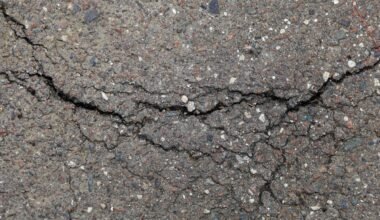
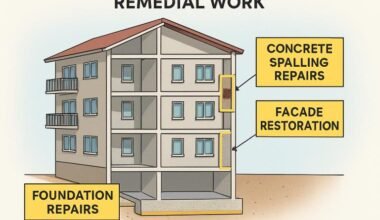
Professional input may be appropriate when there are large cracks, leaning walls, spalling concrete, corrosion, damaged columns, an open first floor, missing records, heavy new equipment, or major changes to walls and openings. It may also be needed when an insurer, lender, permit process, or planned renovation requires a formal evaluation.
A general visual review is not the same as a detailed condition assessment, engineering analysis, or construction documents. The appropriate level of review depends on the building, the observed conditions, and the decisions an owner needs to make.
Use a Simple Readiness Checklist
- Records: Organize plans, permits, inspections, repair history, and insurance documents.
- Structure: Document visible damage and potential weak points for further review.
- Contents: Secure racks, fixtures, tanks, equipment, and stored materials.
- Utilities: Label shutoffs and include them in emergency procedures.
- People: Confirm evacuation routes, meeting areas, and emergency contacts.
- Operations: Prepare backup communications, data access, supplier contacts, and alternate work plans.
- Funding: Assign budgets and timelines to high-priority improvements.
Conclusion
Earthquake readiness for Seattle commercial properties is a series of manageable decisions. By organizing records, reviewing risks, securing interior hazards, planning for operations, and prioritizing needed work, owners can take meaningful steps to protect occupants and reduce disruption. The strongest preparedness plans are reviewed after renovations, equipment changes, occupancy changes, or any event that reveals new vulnerabilities.