Key Takeaways
- The best surface depends on traffic, drainage, comfort, safety, and the purpose of the space.
- Low maintenance does not mean maintenance-free. Every material benefits from routine cleaning and inspection.
- A properly prepared base and water-management plan can help prevent puddles, settling, and premature damage.
- Using more than one material can make an outdoor area more functional and easier to maintain.
Choosing an outdoor surface for a Wilmington property means looking beyond day-one appearance. Rain, shade, regular foot traffic, pets, children, and seasonal temperature changes can all affect how a yard, courtyard, play area, or commercial frontage performs over time. The most practical option is the one that fits the space’s actual daily demands. For example, property owners researching artificial grass in Wilmington, DE, can review solutions from ForeverLawn South Jersey, a regional artificial turf provider serving properties in Wilmington, including apartment communities, schools, playgrounds, dog facilities, commercial spaces, and select residential yards. Its Wilmington service page focuses on matching specialized turf systems to traffic levels and intended use, which is an important part of planning any durable outdoor surface.
Start With How the Space Will Be Used
Begin with the activity that happens in the space, not the material that looks best in a photo. A private side yard may be used mainly for relaxation, while a shared apartment courtyard may handle continuous pedestrian traffic. A school play area, dog run, storefront entrance, or community amenity space has different needs again.
Make a short list of practical conditions before narrowing the options:
- How many people, pets, or pieces of equipment will use the area each day?
- Will tables, grills, play structures, or movable furniture sit on the surface?
- Does the area need to be usable soon after rainfall?
- Are there low spots, dense shade, exposed edges, or locations that already show wear?
Compare Common Outdoor Surface Types
Every material involves trade-offs. Reviewing low-maintenance paving and hardscape choices can help homeowners see why installation quality, existing site conditions, and expected upkeep should be considered together.
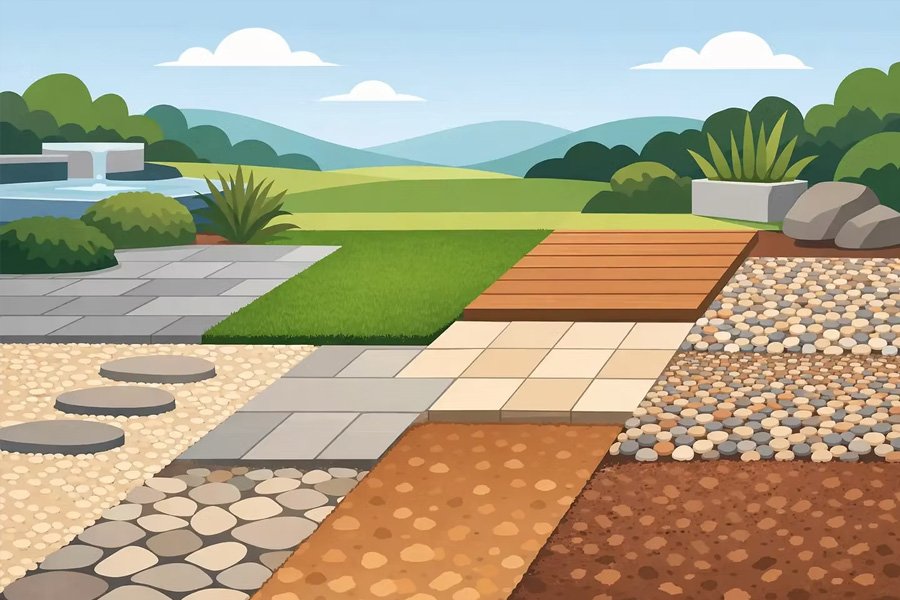
- Natural grass: Soft and familiar, but it can require mowing, watering, reseeding, weed control, and repair in worn areas.
- Pavers: Durable and often repairable by section, although joints can collect weeds and individual units can shift if the base moves.
- Concrete: A strong option for patios and walkways, but stains, cracking, and slippery conditions may need attention.
- Gravel: Permeable and flexible for lower-traffic areas, but it can migrate, develop ruts, and require periodic raking.
- Artificial turf: Useful in selected high-wear zones, though drainage, infill, cleaning, seams, and heat exposure should be evaluated before installation.
Put Drainage at the Center of the Plan
Drainage should be evaluated before a final material is chosen. Water that repeatedly collects in one location can lead to muddy ground, erosion, algae growth, surface movement, and maintenance headaches near buildings, fences, or retaining walls.
Questions to Ask Before Installation
- Where does water collect after a typical rainstorm?
- Which direction does the property slope?
- Will the finished surface sit near a foundation or existing drain?
- Can the base move water away without blocking access to utilities or drainage features?
Permeable materials and drainage components may help manage runoff when they are properly designed for the site. Communities exploring alternatives to traditional asphalt also illustrate why surface decisions increasingly involve both water flow and heat management.
Consider Safety, Comfort, and Accessibility
A surface can be durable yet still be a poor match if it is too uneven, slippery when wet, difficult to cross with wheels, or uncomfortable in a frequently used area. Review the full route through the property, including pathways, thresholds, edging, seating zones, and transitions between materials.
- Select textures that provide dependable traction in wet conditions.
- Limit abrupt changes in height that can create trip hazards.
- Use firm, stable routes where strollers, wheelchairs, and mobility aids may travel.
- Consider sun exposure and surface temperature in open areas.
- For play spaces, discuss appropriate fall-protection systems with qualified installers.
Match Materials to Traffic Levels
Dividing a property into use zones can prevent overspending and reduce unnecessary repairs. Decorative borders and quiet garden areas often have different needs than entrances, dog areas, or shared outdoor amenities.
- Light-use zones: Garden edges, decorative side yards, and spaces used occasionally may suit gravel, mulch, planting beds, or modest paving.
- Moderate-use zones: Residential patios, seating areas, and shared courtyards often need firm, comfortable surfaces that are simple to clean.
- Heavy-use zones: Dog runs, school grounds, commercial walkways, apartment amenities, and active play areas need materials designed for repeated use and straightforward repair.
Review Cleaning and Seasonal Care
Before committing to a material, picture the routine work required in every season. A low-maintenance surface should reduce the tasks that matter most to the property owner, whether that means mowing, weeding, raking, pressure washing, patching, or managing pet waste.
- Clear leaves, branches, and windblown debris.
- Inspect joints, edges, seams, and drainage points after heavy weather.
- Address loose pavers, cracks, worn spots, or shifted gravel early.
- Use surface-appropriate cleaning methods in pet areas.
- Plan for snow removal, ice, and freeze-thaw conditions.
Compare Long-Term Cost, Not Only the Initial Estimate
A useful comparison includes site preparation, base materials, drainage work, installation labor, recurring cleaning, repairs, and replacement parts. Natural grass may also involve continuing costs for water, mowing, fertilizer, seed, or sod repairs. Ask for a five-year or ten-year estimate so the initial price does not become the only deciding factor.
Use Mixed Materials When They Improve Function
One material need not cover the entire property. A dog-friendly yard might feature a firm path near the gate, a dedicated play surface in the most active area, and planted borders that soften edges and reduce the need for trimming. Pavers can define entrances, while lower-traffic corners may be better suited to mulch, gravel, or planting beds.
Questions to Ask an Installer or Contractor
- What base preparation does this system require?
- How will rainwater move through or away from the area?
- How does the surface perform in shade, sun, and winter weather?
- What cleaning and repair work should be expected?
- How are damaged sections replaced or corrected?
- Are permits, inspections, or drainage approvals required?
Common Questions About Low-Maintenance Outdoor Surfaces
What is the best surface for a high-traffic yard?
There is no universal answer. The right choice depends on drainage, pets, children, climate exposure, budget, and how heavily the area will be used.
Does low maintenance mean no maintenance?
No. Even durable surfaces need cleaning, inspection, and occasional repairs to remain safe and attractive.
Should drainage be checked before choosing materials?
Yes. Understanding how water moves across the property helps ensure the chosen surface and base support existing conditions rather than worsen them.
Choose for Daily Use, Not Just Day-One Appearance
The best low-maintenance outdoor surface for a Wilmington property is one that works with the site’s traffic, water flow, safety needs, and maintenance capacity. By planning the base, drainage, material transitions, and long-term care before installation, property owners can create outdoor areas that remain useful, polished, and easier to manage year-round.
Conclusion
Choosing a low-maintenance outdoor surface for a Wilmington property requires more than comparing appearance and installation prices. Property owners should consider how the space will be used, how well materials handle foot traffic and weather, and whether drainage, safety, and accessibility needs are properly addressed. Options such as natural grass, pavers, concrete, gravel, and artificial turf each offer distinct advantages and maintenance requirements, so the right choice depends on the site’s conditions. ForeverLawn South Jersey can help property owners explore artificial turf solutions suited to different outdoor settings and activity levels. Combining materials where appropriate, preparing the base correctly, and planning for routine cleaning and seasonal inspections can also help reduce avoidable problems. With a clear understanding of both immediate needs and long-term costs, property owners can create an outdoor space that remains functional, attractive, and manageable over time.