
Real Estate Asset Management Mill Valley: Market Overview and Core Services
In the dynamic economic landscape of October 2026, successfully managing and growing financial assets is more crucial than ever. For the discerning residents and businesses of Mill Valley, California, understanding the intricacies of asset management is fundamental to securing a prosperous future. This guide provides an in-depth look at the diverse world of asset management firms in this vibrant Bay Area community.
We recognize that wealth preservation, capital appreciation, and strategic financial planning are top priorities. That’s why we’ve compiled a comprehensive overview of the local asset management sector. We will explore the primary services offered, from sophisticated investment strategies and personalized financial planning to specialized areas like Real estate asset management Mill Valley.
Our aim is to shed light on the types of clients these firms serve, their unique approaches to portfolio management, and how they differentiate themselves in a competitive market. We will also delve into fee structures, the critical role of fiduciary standards, and the local economic factors shaping investment decisions.
By providing clear, unbiased insights, we hope to empower you with the knowledge needed to make informed decisions about your financial future in Mill Valley.
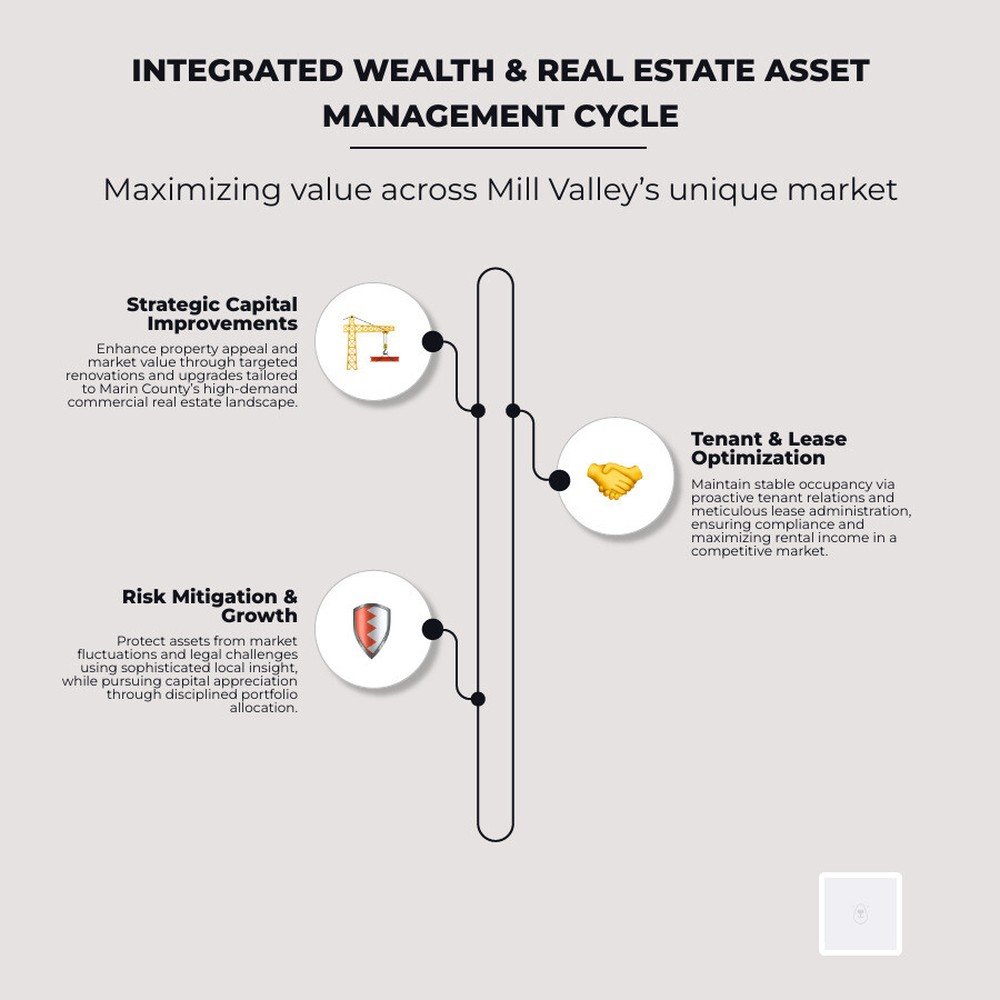
Mill Valley, nestled in the heart of Marin County, presents a unique and often complex market for asset management, particularly concerning real estate. The region’s commercial properties, ranging from retail spaces to office buildings, demand a nuanced approach that goes beyond simple property maintenance. Asset management firms in Mill Valley often provide comprehensive services designed to maximize the value and performance of these properties. This includes strategic capital improvements, which can significantly enhance a property’s appeal and market value, along with meticulous tenant relations to ensure stable occupancy and strong lease agreements. Lease administration, a critical component, involves managing the complexities of commercial leases, ensuring compliance, and optimizing rental income. Furthermore, proactive risk mitigation strategies are essential to protect real estate assets from market fluctuations, environmental concerns, and legal challenges inherent in the Marin County market.
The firms operating in this area understand that managing real estate assets effectively requires a blend of local market insight and sophisticated financial expertise. They are adept at navigating the specific conditions of the Mill Valley market, where high demand and limited inventory often create distinct opportunities and challenges. For a deeper dive into the specific considerations for real estate asset management in the region, including how local firms approach this specialized field, exploring resources focused on Real estate asset management Mill Valley can provide valuable context.
Specialized Strategies in Real Estate Asset Management Mill Valley
Asset managers in Mill Valley employ a variety of specialized strategies to optimize real estate portfolios. Property valuation is a continuous process, leveraging current market data and future growth projections to ensure assets are accurately assessed and strategically managed. Maximizing cash flow from properties is a primary objective, often achieved through efficient operational management, tenant retention, and strategic rent adjustments. For investors looking to defer capital gains taxes, advisors frequently guide clients through 1031 exchanges, allowing for the reinvestment of proceeds from the sale of a property into a new one.
In situations requiring immediate capital, liquid-secured financing can be arranged, using existing assets as collateral to provide flexibility without liquidating long-term holdings. Many firms also specialize in managing multi-family assets, recognizing the unique dynamics of residential income properties, and facilitating commercial syndication for clients interested in pooling resources for larger real estate ventures. Increasingly, environmental, social, and governance (ESG) criteria are integrated into real estate investment decisions, reflecting a growing client demand for sustainable and responsible asset management practices that can also enhance long-term value.
Integrating Real Property into Comprehensive Wealth Management
For many high-net-worth individuals, families, and businesses in Mill Valley, real property constitutes a significant portion of their overall wealth. Asset management firms here excel at integrating these tangible assets into a comprehensive wealth management strategy. This involves careful asset allocation across various investment classes, ensuring that real estate holdings are balanced with liquid reserves and other investments to achieve optimal diversification and risk management.
Advisors often act as a “personal CFO,” providing a holistic view of a client’s financial picture, including both traditional investment portfolios and real estate. This integrated approach is crucial for cross-generational planning, where the efficient transfer of real estate assets and associated wealth becomes a key consideration. Liquidity management is also paramount, ensuring that clients have access to funds when needed, even with substantial illiquid real estate holdings. Furthermore, strategic debt structuring for real estate investments is employed to optimize financial leverage and minimize tax liabilities, aligning these decisions with the client’s broader financial goals and estate plans.
Evaluating Asset Management Structures: Fiduciary Duties, Governance, and Fees
When selecting an asset management firm in Mill Valley, understanding their operational structure, particularly regarding fiduciary duties, governance, and fee transparency, is paramount. A firm’s commitment to a fiduciary standard means they are legally and ethically obligated to act in their clients’ best interests, placing client needs above their own. This standard is a cornerstone of trust in the financial advisory relationship. Governance structures within firms dictate how decisions are made, how conflicts of interest are managed, and how accountability is maintained. Regulatory compliance, including adherence to SEC registration requirements, ensures that firms meet stringent industry standards designed to protect investors. Mill Valley firms prioritize transparent communication about their processes and potential conflict mitigation strategies, offering clients clarity and confidence in their financial partnerships.
Fee Structures Across Bay Area Advisory Firms
The fee structures for asset management services in Mill Valley and the broader Bay Area can vary significantly, reflecting different service models and client needs. One common model is AUM (Assets Under Management) pricing, where fees are calculated as a percentage of the total assets a firm manages for a client. This percentage often decreases as the AUM grows, offering a tiered management structure. Another approach involves flat retainers, where clients pay a fixed fee for services, regardless of asset value. This can provide cost predictability for some investors.
Performance incentives, though less common in traditional wealth management, might be seen in certain specialized investment strategies, where fees are tied to achieving specific returns. Regardless of the model, advisory transparency is a key expectation. Firms are generally required to disclose all fees and expenses, ensuring clients have a clear understanding of the costs associated with their asset management services. This allows clients to compare options and choose a structure that aligns with their financial goals and preferences.
Comparing Fee Models for Asset Management
Understanding the nuances of different fee models is essential for investors seeking asset management services. Here, we compare common structures found among advisory firms, focusing on their characteristics and implications for clients.
| Feature | Fee-Only Fiduciary Services | Percentage of AUM Models | Direct Real Estate Management Fees |
|---|---|---|---|
| Fiduciary Standard | Always | Often, but verify | Varies, typically not fiduciary |
| Fee Calculation | Hourly, project-based, or fixed annual retainer | Percentage of managed assets (e.g., 0.5% – 1.5% annually) | Percentage of gross rents, leasing fees, project management fees |
| Transparency | High | High | Moderate to High |
| Service Scope | Comprehensive financial planning, investment advice, wealth management | Investment management, financial planning, ongoing advice | Property operations, tenant relations, maintenance, leasing |
| Alignment of Interest | High | Generally high | Aligned with property performance and occupancy |
| Cost Predictability | High (for fixed fees/projects) | Moderate (varies with AUM) | Moderate (varies with property income/activity) |
| Investor Suitability | Those seeking holistic advice, complex planning, or cost certainty | Those seeking ongoing investment management and advice | Real estate investors (individual or institutional) seeking operational management |
This table illustrates that each fee model caters to different needs and offers varying degrees of service and cost structures. Fee-only fiduciary services, for instance, are often favored by clients who prioritize unbiased advice and clear cost structures, ensuring a high alignment of interest. Percentage of AUM models are popular for ongoing investment management, while direct real estate management fees are distinct, focusing on the operational aspects of property ownership rather than broad financial planning.
Key Investment Approaches for Marin County Portfolios
Asset managers in Mill Valley, serving a sophisticated client base in Marin County, employ diverse investment approaches tailored to individual financial goals and risk tolerances. A common philosophy among many firms is value investing, which focuses on identifying undervalued assets with strong intrinsic value, believing that the market will eventually recognize their true worth. This approach, often associated with long-term growth, is complemented by strategic asset allocation across various classes, including equity allocation for growth potential and fixed income for stability and income generation. Some firms might also incorporate specific criteria like the “Rule of 40” when evaluating companies for investment, looking for a balance between revenue growth and profitability.
Given the dynamic nature of the financial markets in October 2026, understanding macroeconomic trends is crucial. Firms analyze global and national economic indicators, interest rate forecasts, and geopolitical events to inform their investment decisions, ensuring portfolios are resilient and positioned for future opportunities. The goal is always to build robust portfolios that can withstand market volatility while steadily progressing towards client objectives.
Strategic Implementation of Real Estate Asset Management Mill Valley
Beyond traditional securities, the strategic implementation of real estate asset management in Mill Valley involves a sophisticated set of practices designed to maximize returns and manage risk. This includes regular portfolio rebalancing to ensure real estate holdings remain aligned with overall investment objectives and market conditions. The primary aim is often capital appreciation, achieved through astute property selection, strategic development, and timely divestment.
For direct holdings, managers might focus on optimizing property performance, while for broader real estate exposure, they might utilize private placement opportunities or pooled investments, allowing clients to participate in larger, diversified real estate ventures without direct operational responsibilities. These strategies are all geared towards generating risk-adjusted returns, balancing the potential for high returns with an appropriate level of risk, especially in a market as unique as Mill Valley.
Wealth Preservation, Tax Optimization, and Estate Planning
A significant aspect of asset management in Mill Valley revolves around wealth preservation, particularly for high-net-worth individuals and families. This often involves intricate strategies for intergenerational transfer, ensuring that wealth can pass efficiently and effectively to future generations. Tax mitigation is a critical component, with advisors employing various tools such as grantor trusts and donor-advised funds to minimize tax liabilities and maximize the value of estates. Donor-advised funds, for example, offer a flexible and tax-efficient way to manage charitable giving, providing immediate tax deductions while allowing the donor to recommend grants to charities over time.
Legacy planning extends beyond financial assets, incorporating family values and philanthropic goals into the overall wealth strategy. Firms work closely with clients’ attorneys and tax advisors to ensure seamless estate coordination, addressing complex issues and providing comprehensive guidance to secure a lasting financial legacy for their clients and their communities.
The Future of Bay Area Asset Management in 2026 and Beyond
As we look towards the future from October 2026, the asset management industry in Mill Valley and the broader Bay Area is poised for continued evolution. Several key trends are shaping this landscape. There’s a growing interest in alternative investments, as investors seek diversification and potentially higher returns outside of traditional stocks and bonds. This includes private equity, venture capital, and other less liquid assets. The trajectory of interest rates will continue to be a significant factor, influencing everything from bond yields to real estate valuations and borrowing costs.
Sustainability mandates are increasingly impacting investment decisions, with a strong emphasis on ESG (Environmental, Social, and Governance) factors. Asset managers are integrating these considerations into their portfolios, reflecting both client demand and a recognition of the long-term financial implications of sustainability. Artificial intelligence (AI) is rapidly transforming how data is analyzed, how investment decisions are made, and how client relationships are managed, leading to more personalized and efficient services. The economic outlook for the Bay Area remains robust, driven by technological innovation and a strong job market, which will continue to attract capital and talent, further influencing asset management strategies and opportunities in Mill Valley.
Frequently Asked Questions About Mill Valley Asset Management
What is the difference between property management and real estate asset management?
While often confused, property management and real estate asset management serve distinct purposes. Property management focuses on the day-to-day operational maintenance of a property, including tasks like tenant screening, rent collection, repairs, and handling tenant relations. Its primary goal is to ensure the smooth functioning of the property and maintain its immediate value.
Real estate asset management, on the other hand, takes a strategic, long-term view. It involves higher-level financial oversight and strategic planning to maximize the long-term value and return on investment of a property or portfolio. This includes decisions about capital improvements, financing, market analysis, acquisition and disposition strategies, and ensuring the property aligns with the investor’s overall financial goals. Asset managers look at the “big picture” of a property’s financial performance and its role within a broader investment portfolio, whereas property managers handle the tactical execution of daily operations.
What typical fee models do Mill Valley asset management firms employ?
Asset management firms in Mill Valley typically employ a range of fee models to suit diverse client needs and service offerings. The most prevalent is the Assets Under Management (AUM) fee, where a percentage of the client’s total managed assets is charged annually. This percentage often scales down as the AUM increases. Other models include flat advisory fees, which are fixed annual or project-based charges, regardless of asset value. Some firms may also incorporate performance benchmarks, where a portion of the fee is contingent on achieving specific investment returns, though this is less common in general wealth management. Transaction fees, while less frequent for comprehensive asset management, might apply to specific trades or services. Regardless of the model, firms committed to fiduciary transparency ensure all fees are clearly disclosed to clients, allowing for informed decision-making.
How do local market conditions in Marin County influence asset allocation?
Local market conditions in Marin County significantly influence asset allocation strategies for Mill Valley firms. The region is characterized by limited inventory and exceptionally high property values, which impacts real estate investment decisions. Localized demand, often driven by a strong economy and desirable lifestyle, can create unique opportunities and challenges. Asset managers must consider these factors when advising on real estate allocations within a broader portfolio.
Furthermore, specific tax considerations unique to California and Marin County, such as property tax regulations and potential capital gains implications, play a crucial role in shaping investment and divestment strategies. Firms also analyze how these local factors affect risk distribution across different asset classes, ensuring that portfolios are optimally diversified and resilient to regional economic shifts, while still capitalizing on the unique advantages of the Mill Valley market.
Conclusion
In the sophisticated financial landscape of Mill Valley, effective asset management is a cornerstone of enduring wealth. We’ve explored the comprehensive services offered by firms in this vibrant community, from the specialized nuances of real estate asset management to the integrated approach of holistic wealth planning. The commitment to fiduciary standards, transparent fee structures, and personalized client relationships stands out as a hallmark of quality in the region.
Whether clients are seeking strategic implementation of real estate investments, robust wealth preservation, or intricate estate planning, Mill Valley asset managers demonstrate a deep understanding of both local market conditions and global economic trends. As we move through October 2026 and beyond, the industry continues to evolve, embracing new technologies and sustainable practices. The goal remains consistent: to provide discerning individuals, families, and businesses with the expert guidance and disciplined investing required for long-term growth and financial peace of mind, ensuring a strong advisor alignment with their most important financial goals.