Key Takeaways
- Plan the space around everyday routines before selecting finishes or furniture.
- Create clear areas for dining, relaxing, cooking, planting, and walking.
- Choose materials that suit real foot traffic, weather exposure, cleaning needs, and maintenance expectations.
- Address drainage, shade, lighting, privacy, and safe movement before decorative details.
- Build the essentials first, then add optional features as the budget allows.
A well-designed backyard can make a Roseville home feel larger, more comfortable, and easier to enjoy year-round. Whether the goal is a quiet morning coffee spot, a family dining patio, or a gathering place for neighbors and friends, the best outdoor spaces begin with how people will actually use them. A durable surface such as stamped concrete Roseville CA can be part of that plan, but the layout and site conditions should come first.
Roseville outdoor living areas often need to handle bright afternoons, changing seasonal conditions, regular entertaining, and the practical demands of pets, children, and active households. Rather than filling every available corner with features, focus on creating a few purposeful areas that feel comfortable, connected, and simple to maintain.
Start With Real-Life Use
Before comparing pavers, concrete patterns, pergolas, or patio furniture, make a list of the activities the yard needs to support. In Roseville, where summer afternoons can be hot and dry, consider when the yard is most comfortable to use. Consider how many people use the area on a normal day, whether meals are usually casual or formal, and how often larger gatherings happen. Also think about children, pets, older relatives, and anyone who may need an easy, stable route through the space.
A family patio may need open room for movement and durable dining furniture, while a couple’s retreat may prioritize lounge seating, planting, and privacy. Helpful outdoor living guidance emphasizes planning for seating, tables, shade, lighting, privacy, and power needs together rather than treating them as separate afterthoughts.
Divide the Yard Into Useful Zones
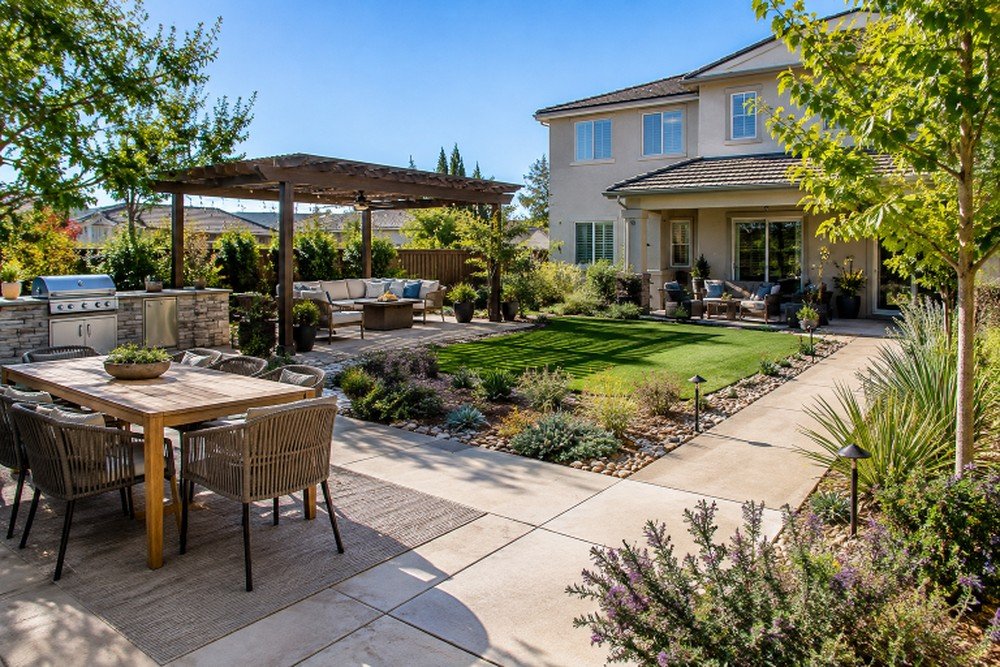
Zoning gives an outdoor area structure without making it feel rigid. Even a compact Roseville backyard can work better when each activity has a defined place. A practical plan may include:
- Dining: Enough room to pull chairs out without blocking a walkway.
- Cooking and serving: A convenient location near the house, with space for food preparation and safe grill access.
- Lounge seating: A comfortable area for conversation, reading, or watching children play.
- Circulation: Clear routes between doors, seating, storage, garden beds, and the wider yard.
- Planting and storage: Areas that add softness or utility without intruding on paths.
Leave open space around furniture. A patio can look generous on a sketch but feel crowded once chairs, side tables, cushions, grills, and serving trays are in place.
Choose Surfaces for Performance
Appearance matters, but an outdoor surface must also suit the way the area will be used. Concrete, brick, pavers, natural stone, gravel, and decking each create a different look and maintenance routine. Compare samples outside in both direct light and shade, since color and texture can look different across the day.
Consider slip resistance near water, heat underfoot, ease of sweeping, repair options, and the effect of patio furniture or pet traffic. Roseville’s intense summer sun can make dark surfaces uncomfortably hot, so lighter tones and textured finishes are often worth considering in exposed areas. Gravel may work well for a casual garden path but can be less convenient beneath dining chairs. Individual pavers allow targeted repairs, while a continuous concrete surface provides a clean, unified foundation for a patio or walkway. Wood and composite decks can be useful where a raised platform helps solve an uneven grade.
Make Drainage a First Priority
Decorative features cannot compensate for poor water management. Water should not collect beside the home, beneath seating, or at the bottom of steps. Many Roseville lots have compacted, slow-draining soils, and winter storms can leave low spots holding water for longer than expected. Before construction, identify downspouts, existing low points, roof runoff, retaining walls, and areas where soil has already washed away.
Patios and walkways close to a house should be designed to direct water away from the foundation. Guidance on sloping hard surfaces away from the house explains why grading, drains, swales, and properly planned runoff routes are important parts of a durable installation. Drainage should be settled before finalizing surface patterns, planter locations, or furniture placement.
Add Comfort With Shade, Lighting, and Privacy
Watch the yard at different times before choosing the location of a dining table, grill, or lounge area. Roseville summers can bring long stretches of strong sun, so shade is often essential rather than optional. An umbrella, pergola, shade sail, covered patio, or strategically placed tree can make a sitting area more usable during sunny periods. The best option provides relief while preserving airflow and desired views.
Lighting should work in layers. Use path and step lights to improve visibility, task lighting near cooking areas, softer ambient lighting for seating, and accents for planting or architectural details. Plan outlets, switches, and wiring early, especially when the project includes a covered structure, outdoor kitchen, fans, or heaters.
Privacy does not require enclosing the whole yard. A hedge, trellis, planter, screen, fence section, or low wall can block one unwanted sightline while keeping the overall space open. Planting can also soften hard edges and help separate zones naturally, especially with drought-tolerant plants that suit Northern California’s dry summers.
Design for Safe Movement and Seasonal Flexibility
Every outdoor living area should allow people to move safely while carrying food, pulling out chairs, or walking after dark. Keep paths clear, use stable surfaces, make step edges visible, and include handrails where elevation changes require them. If mobility is a concern, favor wider routes, gentle transitions, and fewer unnecessary level changes.
Flexible features help the space serve multiple seasons. Stackable or movable seating can adapt to different group sizes. Weather-resistant cushions, furniture covers, enclosed storage, fans, wind screens, and covered zones can make routine use easier. In a place with hot summers and mild, occasionally wet winters, design for the conditions the household experiences, not only for a perfect weekend gathering.
Budget in the Right Order
Put site preparation, drainage, access, structural work, and safety ahead of optional upgrades. Common budget items include demolition, grading, base preparation, surface materials, steps, walls, electrical work, lighting, shade structures, cooking features, and landscaping. Divide the wish list into essentials, helpful additions, and later upgrades.
A smaller patio with reliable drainage, comfortable circulation, useful shade, and well-chosen lighting can offer more daily value than a larger space crowded with features. Ask about cleaning, sealing, plant trimming, joint repairs, and seasonal upkeep before committing to any finish.
A Simple Roseville Outdoor Living Checklist
- Measure the available space and mark doors, trees, utilities, slopes, and drainage routes.
- List the activities the outdoor area must support.
- Create zones for dining, cooking, relaxing, planting, storage, and movement.
- Study sun, shade, privacy, wind, and views at different times.
- Choose surfaces according to safety, maintenance, appearance, and expected traffic.
- Plan drainage, lighting, power, shade, and storage before construction.
- Review City of Roseville requirements when structures, utilities, walls, or elevation changes are involved.
- Reserve part of the budget for unexpected site conditions and future care.
Build a Space That Feels Natural to Use
The strongest outdoor living designs are not defined by the number of features they contain. They work because every element supports comfort, movement, durability, and everyday use. For a Roseville, California home, thoughtful planning can turn a patio, deck, or backyard into a practical extension of the home that remains inviting long after the project is complete.