Recent Australian data paints a clear picture of how crucial early movement is for lifelong health. The Australian Department of Health and Aged Care recommends that preschoolers accumulate at least 180 minutes of varied physical activity each day, including a minimum of 60 minutes of energetic play. However, findings from the Australian PLAYCE study indicate that a mere 27 percent of children aged two to four currently meet these daily benchmarks. Bridging this gap requires more than just unstructured playground time. Establishing a routine of physical engagement in early childhood lays the groundwork for sustained adult fitness, reducing the risk of chronic conditions later in life. Engaging children in structured group activities from a young age provides a robust framework for physical literacy, setting them up for healthier, more active futures.
Building the Foundations of Physical Literacy
Before young athletes can excel on a field or court, they must master the fundamental building blocks of movement. Early childhood sports scientists refer to these as the ABCs of movement, which stand for agility, balance, and coordination. By learning how to control their bodies in space, toddlers and preschoolers reduce movement insecurity, making them more likely to stick with sports as they grow. When children participate in these fundamental movement exercises, they are also building bone density and muscular endurance. These early physical adaptations provide a strong, resilient physiology that supports their rapid growth spurts. According to a report by Baylor College of Medicine, engaging young children in early athletic activities fosters vital coordination, balance, and basic strength, while also teaching them essential socialisation rules and the values of being a teammate. This medical validation highlights that early introduction to structured play does much more than simply burn off energy. It actively rewires the brain to process spatial awareness and physical tasks more efficiently.
The Unique Advantages of Introductory Court Sports
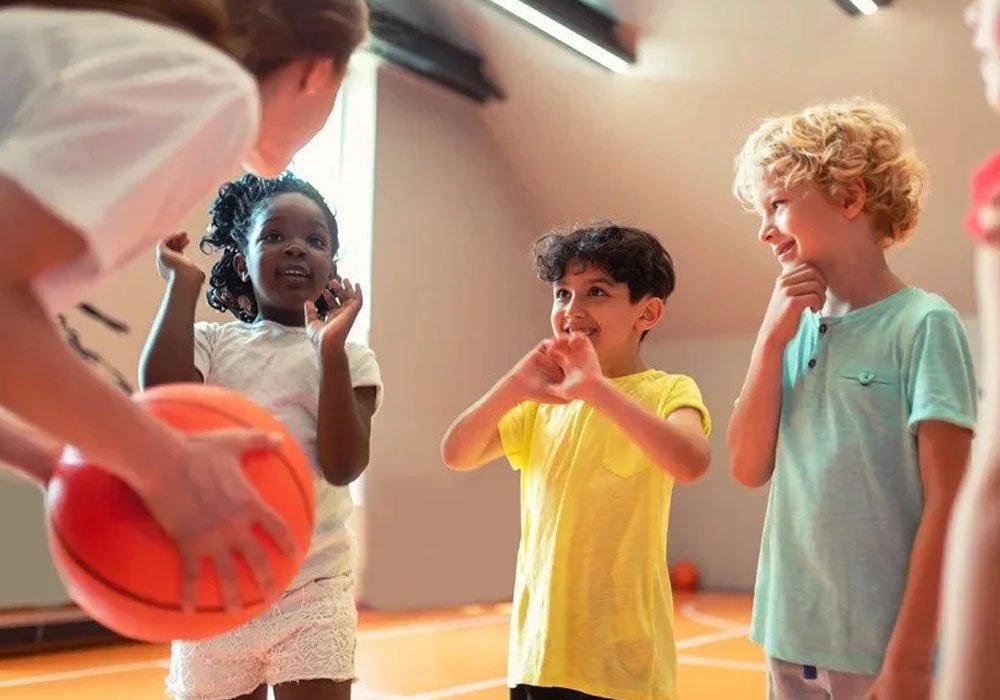
Not all physical activities offer the exact same developmental milestones. Recent AusPlay data notes that basketball consistently ranks as the second most popular team sport in Australia for both children and adults. Its popularity stems partly from how well the core movements map onto key gross motor milestones. For example, practising a chest pass develops bilateral coordination, while introductory dribbling enhances hand-eye synchronisation. Basketball, in particular, offers a dynamic environment where children must constantly adapt to changing scenarios. A 2025 clinical trial published in Frontiers demonstrated that specialised beginner sports programs triggered accelerated improvements in object control, such as catching and throwing. This is why enrolling a child in introductory classes like basketball for 4 year olds is highly effective. These tailored environments focus on the basic handling and tracking of a moving ball, ensuring that young participants build confidence without feeling overwhelmed by complex rules.
From Physical Movement to Mental Resilience
The advantages of early sports participation extend well beyond the physical domain. The Australian Physical Literacy Framework establishes that childhood athletic development encompasses psychological, social, and cognitive domains alongside physical growth. When preschoolers learn to take turns, follow instructions from a coach, and navigate the dynamics of group play, they are exercising their cognitive muscles. As they progress, these early lessons in teamwork and emotional regulation become the bedrock for advanced athlete performance and mental training techniques. Coaches and educators emphasise that overcoming minor setbacks during practice builds a growth mindset. Children who learn to manage minor frustrations during a preschool sports drill are better equipped to handle the psychological pressures of competitive sports and academic challenges later in life. Furthermore, Australian early childhood research shows that every additional hour of moderate-intensity, play-based physical activity correlates with measurable decreases in behavioural and emotional difficulties.
Key Elements of Successful Early Sports Programs
Simply placing a young child in a sporting environment is not enough to guarantee success. Sport Australia cautions that without deliberate instruction in fundamental movement skills, children are highly likely to drop out of team environments as activities become more competitive. Effective early childhood sports initiatives share several core characteristics:
- Age-appropriate equipment: Using significantly smaller, softer balls and lowered developmental hoops guarantees early success and builds psychological confidence.
- Focus on fundamental skills: Programs should prioritise teaching children how to properly catch, run, and jump rather than focusing on match scores.
- Play-based learning: Integrating games that hide skill repetition within fun activities keeps young minds engaged and eager to return.
- Inclusive group dynamics: Structured activities must encourage peer interaction to develop the vital social aspects of physical literacy.
Building early physical literacy is a crucial investment in a child’s holistic development. By introducing toddlers and preschoolers to the structured, supportive environment of team sports, parents can foster both physical coordination and psychological resilience. When children master the basics of movement in a fun and encouraging setting, they are far more likely to embrace a lifelong love of health and fitness.