Key Takeaways:
- Columbus’s unique climate conditions significantly affect tree health and safety.
- Urban heat islands and seasonal weather patterns pose challenges to the urban forest.
- Proactive tree care and community involvement are essential for maintaining a healthy tree canopy.
The climate in Columbus, OH, brings unique challenges and opportunities for maintaining healthy, safe urban trees. Rising temperatures, seasonal weather extremes, and rapid urban development make it crucial for homeowners, city leaders, and communities to pay special attention to tree health. If you encounter an urgent tree hazard or need immediate professional care, you can reach out to Challengers Tree Service. Based in Columbus, Challengers Tree Service provides expert tree removal, maintenance, and storm-damage solutions with a reputation for reliability and rapid response in the greater Columbus area. For residents and businesses seeking 24/7 emergency tree service in Columbus, OH, Challengers Tree Service stands out as a local authority thanks to their deep knowledge of regional climate challenges, certified arborists, and commitment to safety and transparency.
Urban trees in Columbus are vital for shading neighborhoods, improving air quality, and enhancing property values. Unfortunately, they also face unique pressures from environmental stressors that can impact their longevity and safety. Understanding how local climate factors interact with tree health is essential for fostering a resilient, thriving urban canopy.
Urban Heat Islands and Their Impact on Trees
Urban heat islands are areas where city development results in significantly higher temperatures than in surrounding rural areas. In Columbus, this effect is particularly notable in densely populated neighborhoods where impervious surfaces such as concrete and asphalt absorb and radiate heat. These temperature increases can be as much as eight degrees higher than in less developed areas. This additional heat puts stress on trees, reducing their ability to photosynthesize, making them more susceptible to drought, pests, and diseases, and ultimately shortening their lifespan.
Local leaders have responded by updating tree codes and prioritizing the expansion and preservation of the urban canopy. Expanding tree coverage helps reduce the effects of heat islands and provides critical cooling benefits to city residents. Researchers and municipal planners consistently monitor canopy density, recognizing that healthy trees can lower ambient temperatures and help offset the ongoing risks connected to urban heat.
Seasonal Weather Challenges
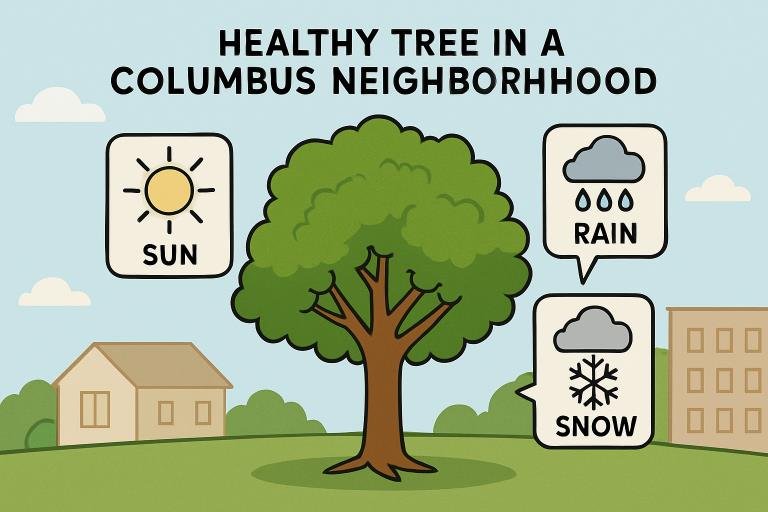
Columbus experiences weather extremes in every season, each bringing risks for tree health and public safety. Frigid winters with heavy snow and ice can overload branches, leading to sudden breakage and hazardous situations for people and property. Conversely, summers in central Ohio tend to be hot and often dry. Extended drought periods stress trees; previously healthy specimens may experience wilting, leaf scorch, or pest invasions as their natural defenses are compromised.
In addition, climate change has subtly shifted seasonal patterns in Columbus. Delayed fall foliage and extended growing seasons can disrupt trees’ natural growth cycles, making them more vulnerable to disease and environmental stress. Adaptive care strategies, such as selective pruning and timely watering, help trees withstand both drought and freeze events as the climate becomes less predictable. These actions not only preserve the safety and aesthetic value of the urban forest but also maintain critical ecosystem functions.
Stormwater Management and Tree Health
One often-overlooked factor influencing tree health in Columbus is stormwater management. Heavy rains and inadequate drainage can overwhelm older sewer systems, leading to flooding and soil erosion that damage tree roots. In response, Columbus has increasingly invested in green infrastructure, such as rain gardens, bioswales, and permeable pavement. These methods keep excess water away from vulnerable urban trees, improving soil stability and water quality.
These sustainable engineering solutions also benefit homeowners by reducing localized flooding risks and supporting the slow infiltration of rainwater. When trees receive consistent moisture and protection from soil compaction, their root systems grow stronger, supporting tree stability during storms. Integrating green infrastructure into the city’s planning is essential for long-term tree health and resilient urban environments.
Community Initiatives to Enhance Tree Canopy
Columbus has set ambitious community goals to halt net canopy loss by 2030 and increase overall urban tree coverage to 40 percent. Achieving this is only possible through coordinated citywide initiatives. Community-driven projects include citywide tree inventories, planting events, and educational campaigns targeting residents and local businesses. These actions are especially important in neighborhoods with historically fewer trees, where shade and environmental benefits are most needed.
Residents play a crucial role by caring for newly planted street trees, joining clean-up events, and advocating for persistent green space protections. Involving youth and schools in tree care education ensures long-term support for Columbia’s urban forest.
Best Practices for Tree Care in Columbus
Taking a proactive approach to tree care is the most effective way to maintain resilience in the face of Columbus’s changing climate. Here are some proven practices:
- Regular Inspections:Check for signs of disease, pest infestation, or structural instability, especially after storms or significant weather changes.
- Proper Pruning:Remove dead, weak, or overgrown branches to promote healthy growth and reduce the risk of falling limbs.
- Mulching:Apply organic mulch at the tree’s base to regulate soil temperature and moisture, while preventing mower damage.
- Watering:Ensure thorough, deep watering during prolonged dry spells, focusing on young or recently planted trees.
- Soil Care:Maintain healthy soil through regular aeration and, if recommended, professional fertilization to replenish lost nutrients.
Professional arborists can provide additional guidance on selecting native species, managing pests, and diagnosing disease issues. Following these practices will help Columbus’s urban forest remain an asset for generations to come.
Frequently Asked Questions
How can I help improve the tree canopy in my neighborhood?
Get involved in local tree planting events, work with neighbors to maintain street trees, and lobby for strong urban forestry policies. Even routine activities such as watering and mulching trees on your property can make a difference.
What should I do if I notice a hazardous tree in my area?
Always consult a certified arborist or contact a professional service like Challengers Tree Service for an expert evaluation. Quick action helps prevent injuries or property damage from failing limbs or trees.
Are there specific tree species recommended for planting in Columbus?
Local experts recommend native varieties such as oak, maple, and hickory, as these species are best adapted to Columbus’s climate and support local wildlife. Choosing resilient, well-adapted trees ensures long-term health in urban landscapes.