Key Takeaways
- Energy-efficient windows can lower household energy bills by up to 13%.
- Key factors include window type, frame material, glass options, and proper installation.
- Look for ENERGY STAR® and NFRC ratings to ensure optimal performance.
Upgrading to energy-efficient windows can significantly enhance your home’s comfort, boost curb appeal, and reduce ongoing energy costs. When you invest in quality window replacement, you are making a long-term decision that benefits your household in multiple ways, including added property value and year-round comfort. This guide explains what factors matter when selecting windows that save energy and serve your needs.
Choosing the right product can initially seem overwhelming, but focusing on critical areas like ratings, frame material, and installation will make a substantial difference. The right windows block drafts, limit heat loss, and lower your carbon footprint while potentially qualifying for energy-saving incentives.
Beyond savings, modern, efficient windows can improve your family’s comfort by maintaining consistent indoor temperatures and minimizing outside noise. Whether you are renovating, building new, or simply exploring your options, knowing the ins and outs of the selection process ensures you make a smart, cost-effective investment.
Before you buy, it is essential to research, compare, and consult reputable sources like the U.S. Department of Energy for unbiased information on window technologies and performance ratings.
Understanding Energy Efficiency Ratings
The performance of energy-efficient windows is measured through independent rating systems like those from the National Fenestration Rating Council (NFRC). These labels detail factors such as:
- U-Factor:Indicates insulation effectiveness by measuring how well a window prevents heat from escaping. The lower the U-factor, the better the performance in keeping your home warm.
- Solar Heat Gain Coefficient (SHGC):Assesses how much heat from sunlight enters through the glass. Low SHGC values are advantageous in warmer regions, helping reduce air conditioning loads.
To simplify the buying process, seek windows that carry the ENERGY STAR® label, which signifies they meet strict energy efficiency requirements set by the U.S. Environmental Protection Agency. According to Consumer Reports, ENERGY STAR® certified windows can help homeowners cut annual energy expenses by about 12% depending on climate and home design.
Choosing the Right Window Type
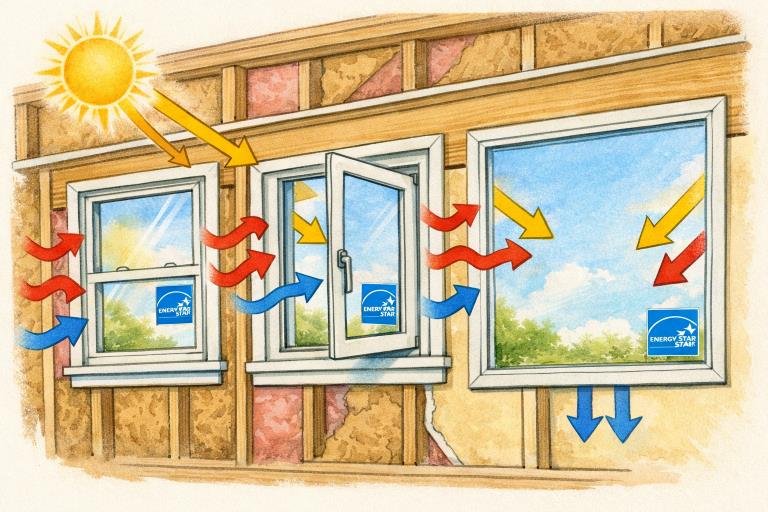
Window styles not only influence the look of your home but also affect energy performance and function. Consider these options:
- Double-Hung Windows:The most common style, featuring two vertically sliding panels. While classic and suited to most homes, they may not be as airtight as other types.
- Casement Windows:These units are hinged at the side and open by swinging outward, forming a tight seal when closed. This makes them ideal for maximizing energy savings and ventilation.
- Picture Windows:Fixed panes that don’t open. Their lack of moving parts delivers excellent efficiency and unobstructed views, although they do not allow for ventilation.
Selecting the ideal window type means balancing factors such as your climate, architectural style, and whether you require ventilation in certain rooms.
Frame Materials and Their Impact
The frame around the glass is a major determinant of overall efficiency and longevity. Four popular materials dominate the residential market:
- Wood:Delivers strong insulation and a classic look, but routine painting or sealing is needed to prevent rot and weathering.
- Vinyl:Offers good insulation and minimal maintenance. Quality varies between manufacturers, so be sure to check warranties and reviews.
- Aluminum:Strong and lightweight, but conducts heat. Only choose aluminum frames with a thermal break to avoid negating energy efficiency gains.
- Fiberglass:Known for durability, low upkeep, and superior insulating value, though often at a higher price point.
The choice of frame should be determined by your climate, desired insulation value, budget, and the amount of maintenance you are willing to perform.
Glass Options and Technologies
The glazing, or glass, within your chosen frame can further boost savings and comfort. Make an informed choice by considering:
- Double or Triple Glazing:Two or three panes of glass separated by sealed air or gas (usually argon) for improved insulation.
- Low-E Coatings:Special coatings that reflect infrared energy, preventing heat loss in winter and reducing heat gain during summer months.
- Gas Fills:Using argon or krypton gas between panes enhances thermal efficiency over standard air fills.
Each technology will influence overall cost, comfort, and efficiency—think about your local climate as you evaluate options.
Proper Installation Matters
Even the best windows underperform if not installed with care. Key installation factors to look for include:
- Ensuring windows are set square, plumb, and level in the opening.
- Applying proper seals to deter drafts and prevent water infiltration.
- Using adequate insulation around the frame to avoid cold spots and energy leaks.
It is wise to hire certified and experienced professionals who will follow manufacturer instructions and local building codes for best results.
Cost Considerations and Incentives
While energy-efficient windows may require a larger initial investment, they deliver meaningful long-term savings. To help offset upfront costs, many programs are available:
- Federal Tax Credits:Eligible ENERGY STAR® windows can qualify for federal tax incentives, providing an immediate financial benefit during tax time.
- Local Rebates:Utility companies and local governments frequently offer rebates and incentives, so it’s worth investigating options in your area.
Factor these credits and rebates into your decision to maximize your return on investment and stretch your budget further.
Maintenance and Longevity
Proper upkeep extends the life and maintains the efficiency of your new windows. Maintenance tasks include:
- Regularly cleaning tracks and sashes so windows open and close smoothly.
- Inspecting and replacing worn seals to keep unwanted drafts and moisture out.
- Repainting or refinishing wood frames, which protects them from weather and UV exposure.
Annual inspections and prompt repairs can ensure your investment yields lasting energy and comfort benefits.
Conclusion
Selecting the best energy-efficient windows requires balancing performance ratings, materials, and installation quality. By carefully considering these elements and taking advantage of available incentives, you can boost your home’s comfort, enjoy energy savings, and make an environmentally responsible choice for the future.