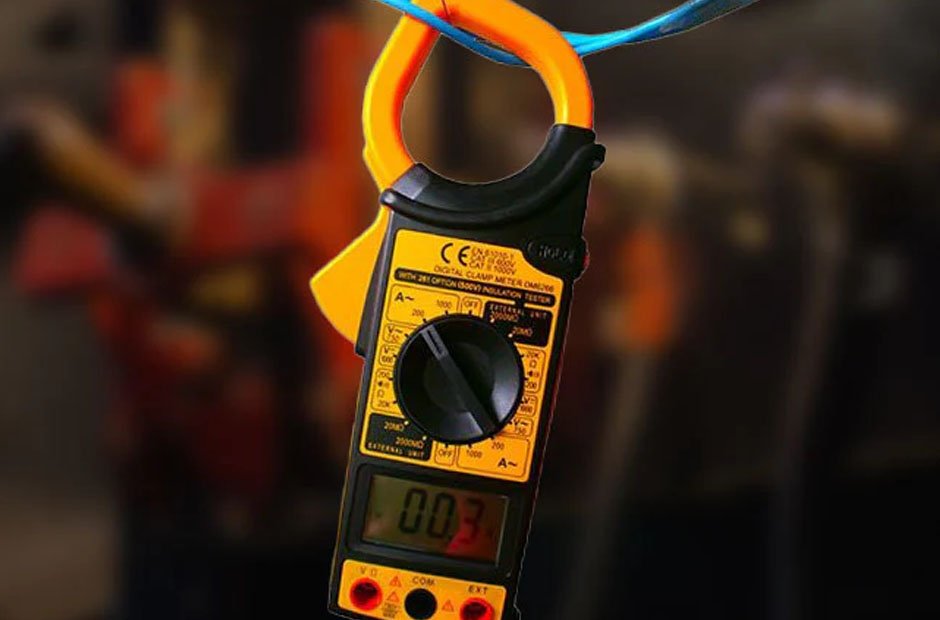
Converting watts to volts using resistance means calculating voltage from a known power value and a resistance value, using the relationship between power, voltage, and resistance in an electrical circuit. This conversion relies on two fundamental electrical laws, Ohm’s Law and the Power Formula, combined into a single working equation.
The main benefit of this conversion is practical: you don’t need a voltmeter to find voltage. As long as you know the power in watts (W) and the resistance in ohms (Ω), you can calculate volts directly. This is useful in circuit design, electrical troubleshooting, appliance sizing, and load analysis.
The core components of this conversion are three variables power (W), resistance (Ω), and voltage (V) and one derived formula: V = √(W × R).
Watts to Volts Using Resistance with Calculator
The Watts to Volts Calculator converts watts to volts in one step, enter the power in watts and the resistance in ohms, and the calculator returns the voltage instantly.
WattstoVolts brand calculator is built for anyone working with electrical values: engineers, electricians, students, and hobbyists. The tool removes the need to memorize formulas or carry out manual square root calculations. You enter two values, and the result is displayed without delay.
Why use Calculator over manual calculation?
Manual conversion using V = √(W × R) requires a calculator with a square root function and careful input. A single digit error gives a wrong voltage reading. The Watts to Volts calculator eliminates that risk entirely. It handles the math accurately every time, including for decimal values and large resistance figures.
The calculator covers 3 main conversion types:
- Watts to Volts using resistance (Ω) — uses the formula V = √(W × R)
- Watts to Volts using current (A) — uses the formula V = W / A
- Watts to Volts using resistance and current — cross-verification mode
For resistance-based conversions specifically, calculator applies the correct derived formula and displays results in standard voltage units (V), with support for millivolt (mV) and kilovolt (kV) outputs depending on the input scale.
The interface is clean, mobile-friendly, and requires no sign-up. It is one of the most reliable free tools available for this type of electrical conversion.
Watts to Volts Resistance Formula
To convert watts to volts using resistance, use the formula: V = √(W × R), where V is voltage in volts, W is power in watts, and R is resistance in ohms (Ω).
This formula comes from combining two equations:
Ohm’s Law: V = I × R
Power Formula: W = V × I → rearranged as I = W / V
Substituting I = W / V into V = I × R:
V = (W / V) × R → V² = W × R → V = √(W × R)
Conversion Examples
Example 1: A resistor dissipates 50 W across a resistance of 200 Ω.
V = √(50 × 200) = √10,000 = 100 V
Example 2: A circuit component uses 18 W across 8 Ω.
V = √(18 × 8) = √144 = 12 V
Example 3: A load draws 0.5 W through 72 Ω.
V = √(0.5 × 72) = √36 = 6 V
Key Values Reference Table
| Power (W) | Resistance (Ω) | Voltage (V) |
| 10 W | 100 Ω | 31.62 V |
| 25 W | 50 Ω | 35.36 V |
| 60 W | 240 Ω | 120 V |
| 100 W | 144 Ω | 120 V |
| 500 W | 10 Ω | 70.71 V |
When to Use This Formula
Use V = √(W × R) when:
- Resistance is known but current is not measured
- Verifying voltage drop across a specific resistive load
- Designing circuits where power rating and resistance are the primary specifications
- Cross-checking voltage readings in DC circuits
Do not apply this formula directly in AC (alternating current) circuits with reactive components (capacitors or inductors), because reactance affects the real power dissipation. For pure resistive AC loads, the formula still holds.
Conclusion
Converting watts to volts using resistance uses the formula V = √(W × R), derived from Ohm’s Law and the standard power equation. This conversion applies to DC circuits and purely resistive AC loads, and it requires only two known values: power in watts and resistance in ohms.
The Watts to Volts calculator handles this conversion instantly, with no manual calculation required. It is the fastest and most accurate way to get voltage from watts and resistance, whether you are designing a circuit, troubleshooting an electrical system, or working through an electrical engineering problem.