Key Takeaways
- Identify each item before seeking an offer.
- Separate metal value from collector, gemstone, designer, and antique value.
- Protect the condition, gather records, and compare multiple written offers.
- Ask how testing, weights, fees, and payment terms affect the final amount.
- Keep sale records for estate, insurance, and possible tax purposes.
Selling inherited jewelry, old coins, bullion, sterling silver, or broken gold can feel simple until it is time to decide whether an offer is fair. A careful process helps sellers avoid treating every item as scrap when some pieces may have collectible, gemstone, designer, or historical value. Working with an established buyer such as Precious Elements Jewelry & Coin can give sellers a place to ask direct questions, but preparation should begin before the first appointment.
A rushed sale can leave value on the table. A broken gold chain may be valued mainly for its metal content, while an older coin in the same jewelry box could be worth more because of its date, rarity, condition, or mint mark. Sorting and documenting items first makes it easier to receive meaningful, item-specific offers.
Why Preparation Matters Before a Sale
Preparation gives you a clearer picture of what you own and makes offer comparisons more useful. Take photos, make a basic inventory, and keep related items together. Even a short list with descriptions, visible marks, and approximate weights can prevent confusion when several pieces are evaluated at once.
Identify What You Have
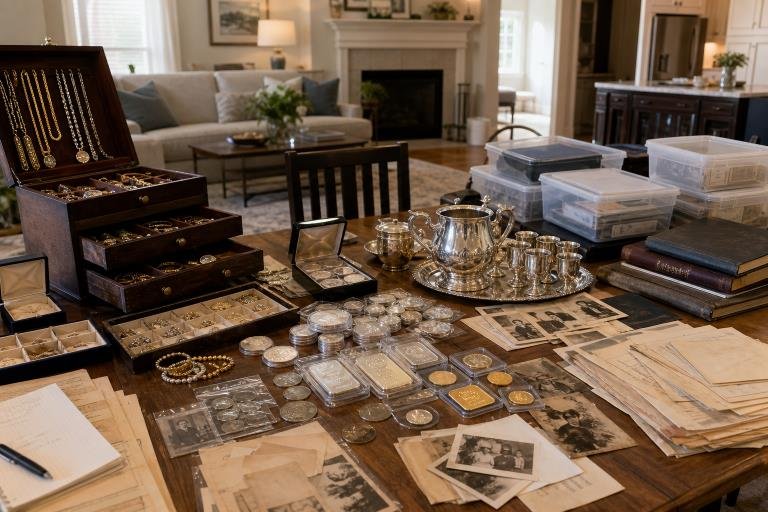
Sort belongings into broad categories before requesting quotes. Keep coins separate from jewelry, and do not mix silver-plated serving pieces with sterling silver. Common categories include:
- Gold, silver, platinum, and other precious-metal items
- Coins, bullion bars, rounds, and proof sets
- Gemstone jewelry, including rings, watches, and earrings
- Signed designer pieces, antique jewelry, and vintage items
- Sterling flatware, serving pieces, and tea sets
- Broken, incomplete, tangled, or damaged jewelry
Check Marks, Stamps, and Labels
Look for stamps such as 10K, 14K, 18K, 22K, 24K, 925, PT, or PLAT. Coins may have dates, mint marks, denominations, grading labels, or original packaging. Jewelry can carry hallmarks, maker’s marks, serial numbers, or brand signatures. Photograph these details in good light, but do not assume a stamp confirms authenticity. A qualified buyer may still need to test the item.
Research Current Market Conditions
Metal prices change throughout the day, so it helps to check current spot prices on the same day you seek offers. Sellers comparing local gold buyers should remember that the spot price is not the final purchase price. Purity, weight, refining, testing, overhead, resale risk, and the item’s condition all affect the amount a buyer can pay.
Recent interest in precious metals has made price research especially important. Independent guidance on selling gold and silver can help sellers understand why it matters to compare offers and read terms carefully before completing a transaction.
Know the Difference Between Melt Value and Collector Value
- Melt value:The value of recoverable metal based on purity, weight, and market pricing.
- Collector value:Value influenced by rarity, date, mint mark, demand, grade, condition, and documented history.
- Retail or replacement value:Often an insurance-oriented figure that may be much higher than a direct-sale offer.
- Design or brand value:Additional value that may apply to signed jewelry, desirable makers, or exceptional craftsmanship.
Do not assume that old means valuable or that damaged means worthless. A common worn coin may have little premium beyond metal value, while a rare coin should not be sold by weight alone. Likewise, a damaged designer bracelet may still have resale appeal beyond its gold content.
Prepare Items Without Damaging Them
- Keep coins in holders, flips, capsules, or original packaging whenever possible.
- Do not polish rare coins or use harsh chemicals on jewelry and silverware.
- Store pieces separately in soft bags or containers to reduce scratching.
- Gather receipts, certificates, appraisals, grading reports, boxes, and estate paperwork.
- Record photos, descriptions, and approximate weights before leaving items for review.
When an Appraisal Makes Sense
An appraisal can be worthwhile for inherited collections, rare or certified coins, signed jewelry, notable gemstones, unusual craftsmanship, and items with strong historical or estate significance. It may also help determine whether an auction is more appropriate than a direct sale. However, an appraisal is not the same as a purchase offer. An appraiser may estimate replacement or insurance value, while a buyer must account for resale costs and market conditions.
Compare Selling Options
- Local jewelry buyers:Convenient for face-to-face questions about jewelry and precious metals.
- Coin dealers:Often well-suited to bullion, collectible coins, and graded pieces.
- Auction houses:Potentially useful for rare collections, though commissions and wait times may apply.
- Online buyers:Convenient for some sellers, but shipping insurance, return terms, and payment timing require close review.
- Pawn shops:Can provide quick cash, but a collateral loan differs from an outright sale.
Ask These Questions Before Accepting an Offer
- How was each item tested?
- What purity and weight were used in the calculation?
- Is the price based on melt value, resale value, or collector value?
- Will every item be listed separately on a written breakdown?
- Are fees, shipping charges, or commissions deducted?
- How long is the offer valid, and when will payment be made?
- What happens if you decline the offer or request your items back?
Compare Offers the Smart Way
Request two or three offers from reputable buyers when practical, preferably on the same day. Provide the same item list and documentation to each buyer. Compare the final amount you would receive, not simply an advertised percentage or a single total. Be cautious if a buyer avoids explaining tests, refuses to separate items, changes terms, or pressures you to sell immediately.
Keep Records After the Sale
Save photographs, the written offer, final receipt, payment record, and notes about the sale date. These records may be useful for estate administration, insurance history, or tax discussions. Large gains, inherited property, and investment collections can raise reporting questions, so review the IRS overview of capital gains and losses and consult a qualified tax professional when needed.
Common Questions
Should jewelry be cleaned before it is sold?
Light cleaning may be appropriate for ordinary jewelry, but aggressive polishing can damage finishes, loosen stones, or remove detail. Rare coins should generally be left untouched.
Are old coins always valuable?
No. Age alone does not establish value. Authenticity, rarity, condition, mint mark, demand, and metal content all matter.
How many offers should a seller get?
Two or three offers usually provide a useful baseline. Rare coins, signed jewelry, and large collections may justify more research or a specialized opinion.
Conclusion
A fair sale begins before the first quote. Identify each item, protect its condition, understand the difference between scrap and collectible value, and compare clear written offers. A few deliberate steps can help determine whether an item is best sold for its metal content, marketed as a collectible, or evaluated for another selling option.