Key Takeaways
- Build your setup around the repairs you perform most often.
- Use defined tool zones so daily-use equipment is always easy to reach.
- Protect diagnostic devices, customer data, and expensive tools from damage and theft.
- Make safety gear and a restocking routine part of every service call.
A mobile repair vehicle has to function as a workshop, parts room, diagnostic station, and customer-facing workspace at the same time. Whether you service passenger vehicles, light trucks, or fleet equipment, a well-organized setup helps you arrive prepared and spend more time repairing instead of searching. Stocking dependable hand tools and storage solutions from Val’s Tools can help create a practical foundation without turning the vehicle into a rolling pile of equipment.
The goal is not to carry every tool available. The goal is to carry the right equipment for your usual work, protect it during travel, and follow a repeatable process from the first appointment of the day through the final restocking check.
Why Mobile Repair Setup Matters
Field repair requires more than mechanical ability. Technicians also manage travel, changing work locations, electronic testing, parts planning, weather, customer communication, and safe work practices. A poor vehicle layout can waste time, allow equipment to shift in transit, and make it easier to overlook a needed adapter or consumable.
Modern vehicles can add another layer of complexity through electronic control modules, networked systems, service resets, and software-based procedures. A strong setup supports a clear workflow: assess the concern, verify the fault, complete the repair, document the result, and leave the site ready for the next call.
Start With the Jobs You Handle Most
Before purchasing more tools or storage, review your last 20 to 30 service calls. Identify the repairs and inspections that appear repeatedly. Most mobile technicians will see some combination of battery and charging work, maintenance, brake repairs, suspension concerns, electrical testing, scan-tool diagnostics, and roadside troubleshooting.
Use that review to create three lists:
- Always onboard: Tools and supplies used on routine calls.
- Appointment-specific: Specialty tools, larger equipment, and unusual parts loaded for confirmed jobs.
- Shop inventory: Equipment that is rarely needed or too large to transport every day.
This approach keeps unnecessary weight and clutter out of the vehicle. It also makes it easier to prepare for specialty work in advance instead of discovering at the job site that a puller, connector kit, or manufacturer-specific adapter is missing.
Divide Tools Into Clear Work Zones
A simple three-zone layout makes daily work more consistent. Keep high-frequency items between waist and shoulder height when possible, where they can be reached without excessive bending or unloading.
1. Daily-Use Zone
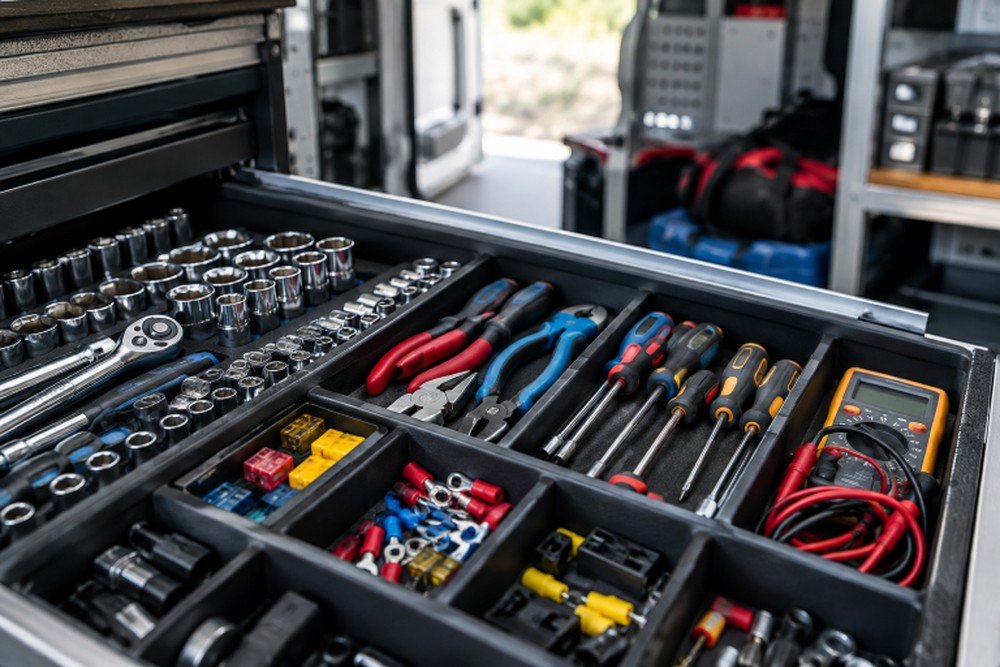
Place sockets, ratchets, pliers, screwdrivers, a multimeter, lights, gloves, and common fasteners in the most accessible drawers or cases. Drawer dividers, labeled pouches, and foam cutouts make missing tools easier to spot at a glance.
2. Specialty Zone
Store pullers, service adapters, test leads, programming equipment, and vehicle-specific tools separately. A technician can lose valuable time when a small but essential adapter is mixed into a general tool case. Dedicated, labeled cases prevent that problem.
3. Safety and Support Zone
Keep traffic cones, warning triangles, a first-aid kit, spill materials, fire protection, and extra lighting together. This equipment should be accessible before the repair begins, not buried behind heavy toolboxes.
Choose Diagnostic Equipment With Care
Select a scan tool based on the makes, systems, and services you actually support. Confirm whether it covers the needed modules, active tests, service functions, updates, subscriptions, and any secure functions required for authorized repairs. Outdoor readability, battery life, case protection, and reliable connectivity are also important for field work.
A scan tool works best as part of a diagnostic kit that includes a quality multimeter, test light, battery tester or support unit, organized leads, and dependable internet access. The EPA explains that manufacturers of on-road vehicles must provide information needed to diagnose and repair emission control systems, including certain service information, OBD data, and reprogramming information. Always confirm the procedure and vehicle requirements before beginning software-related work.
Build a Practical Safety Kit
Every service vehicle should have safety glasses, suitable gloves, hearing protection, high-visibility clothing, wheel chocks, work lights, first-aid supplies, absorbent pads, a fire extinguisher, and warning devices. The exact equipment may vary by the work performed, but roadside and parking-lot jobs require particular attention to traffic, visibility, uneven ground, and moving vehicles.
Inspect jacks, stands, cords, portable batteries, and lights before use. OSHA recognizes that repair and maintenance companies may work across changing locations, so effective safety planning must account for sites where workers have limited control over the environment. Its guidance for a mobile workforce emphasizes systems for hazard prevention, inspections, training, and oversight.
Protect Tools, Data, and Customer Vehicles
Use lockable storage for expensive tools and keep inventory photos, serial numbers, and purchase records in a secure location. Separate clean electronic equipment from oily hand tools, and use padded cases for scan tools, tablets, and meters. Secure heavy items so they cannot slide or pose a hazard during braking or turns.
Diagnostic equipment is also a data device. Use strong passwords, install legitimate updates, secure wireless connections, and keep customer keys, registration information, and repair reports protected. Programming or module communication work should have stable power support and be performed only with customer authorization and the correct service information.
Create a Fast Daily Workflow
Start each day with a short readiness check:
- Check fuel, vehicle condition, phone power, and connectivity.
- Confirm daily-use tools, lights, and diagnostic devices are present and charged.
- Review scheduled jobs and load required parts or specialty equipment.
- Inspect safety supplies and replace any that are used or damaged.
At the job site, park safely, assess the area, confirm the customer’s concern, and document the visible condition of the vehicle before work starts. Test before replacing parts whenever practical, then record the repair, relevant test results, and any recommended next steps.
Use a Simple Restocking System
Restock after each job rather than waiting until the end of the week. Keep a short list of consumables for gloves, fuses, terminals, connectors, tape, cleaners, wipes, fasteners, and shop towels. Maintain a separate list for tools that need charging, cleaning, calibration, or repair.
A 15-minute weekly inventory review can catch low stock, damaged equipment, and expired supplies before they disrupt an appointment. Consistent restocking also reduces rushed purchases and prevents the common problem of discovering an empty bin during a repair.
Common Setup Mistakes to Avoid
- Buying popular tools that do not match the jobs you actually perform.
- Storing heavy equipment in a way that it can shift during travel.
- Mixing electrical test tools with dirty or wet mechanical equipment.
- Skipping software updates, charging checks, or subscription reviews.
- Relying on only one light, one power source, or one communication device.
- Ignoring weather, traffic exposure, poor ground conditions, or limited parking.
Final Checklist for Mobile Technicians
- Daily-use tools are accessible and accounted for.
- Specialty tools are labeled, protected, and loaded when needed.
- Diagnostic equipment is charged, updated, and stored securely.
- Safety supplies are complete and ready before work begins.
- Consumables are restocked and damaged tools are identified.
- Customer vehicles and information are handled carefully.
Conclusion
A reliable mobile repair setup is built through planning, not clutter. When common tools are easy to reach, sensitive equipment is protected, safety supplies are ready, and restocking is routine, each service call becomes easier to manage. Small improvements to layout and workflow can make the vehicle safer, faster, and more dependable throughout 2026.