Key Takeaways
- Emerging technologies are revolutionizing magnetic power distribution, leading to more efficient and sustainable energy solutions.
- Innovations in magnet design and manufacturing are reducing reliance on rare earth elements and improving performance.
- Advancements in wireless power transfer and magnetic confinement fusion hold promise for future energy applications.
As demands for cleaner, more reliable energy infrastructure escalate, magnetic power distribution is entering a new era of innovation. Groundbreaking research and development in magnet materials, device fabrication, and system designs are poised to reshape the landscape of how we generate, transmit, and utilize electrical power. This wave of advancements aims not only to enhance energy efficiency but also to address key challenges, such as reducing reliance on critical materials and strengthening supply chain resilience. One integral piece in this evolution is the emerging range of dry type transformers, which provide robust, efficient, and environmentally friendly solutions for modern power distribution needs.
Sustainable and high-performance innovations are transforming power distribution through advances like optimized magnet manufacturing and wireless power transfer. Effective adoption depends on scientific breakthroughs, domestic production, and the practical deployment of these innovations. Collaboration among policymakers, utilities, and industries is key to reducing costs and emissions while maintaining grid reliability. The transition includes improved transformers, efficient data storage, and experimental clean fusion, all of which drive a sustainable global power infrastructure.
Advancements in Magnet Design and Manufacturing
The latest advances in magnet design aim to address two significant issues: ensuring high performance while minimizing dependence on scarce rare-earth elements. Researchers at North Carolina State University have developed new manufacturing techniques that enhance the quality of magnetic materials and reduce both costs and environmental impact. Their approach, which optimizes microstructure and uses alternative raw materials, not only increases efficiency but also lessens vulnerability to market fluctuations in rare earth supply chains. These breakthroughs are critical for sectors such as renewable energy, aerospace, and consumer electronics, where supply security and sustainable material sourcing are paramount.
Wireless Power Transfer Innovations
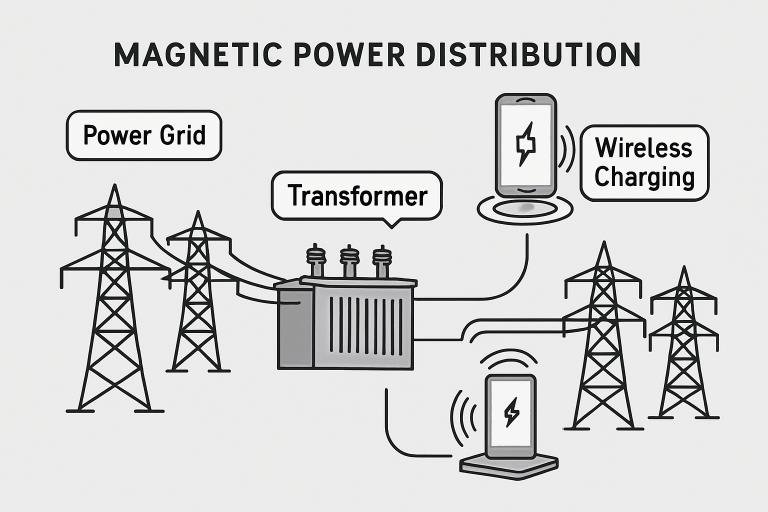
Wireless power transfer (WPT) technologies are evolving to enable seamless charging environments for a wide range of devices, from smartphones to electric vehicles. Traditionally, WPT demanded multiple transmitting coils, complicated controllers, and precise object placement. However, recent advances in metasurfaces — engineered structures that manipulate electromagnetic waves — have transformed wireless power systems by reforming magnetic fields. Now, a single coil paired with a smart metasurface can deliver efficient, free-positioning energy transfer to multiple devices, significantly expanding coverage and usability while reducing system complexity and cost. These systems are set to accelerate the adoption of wireless charging stations in homes, public spaces, and transit networks.
Magnetic Confinement Fusion Breakthroughs
Fusion energy, long regarded as the “holy grail” of sustainable power, is now inching closer to commercial viability partly due to improvements in magnetic confinement. At the Princeton Plasma Physics Laboratory, researchers have demonstrated the use of cost-effective, off-the-shelf permanent magnets for confining plasma — a critical component for achieving controlled fusion reactions. Devices such as the “MUSE” experiment mark a departure from complex superconducting magnet setups, offering a more straightforward, more affordable pathway to creating and sustaining stable fusion environments. This approach could significantly reduce the cost and complexity of future fusion plants, thereby broadening the accessibility of safe, clean energy worldwide.
Energy-Efficient Magnetic Random-Access Memory (MRAM)
Beyond power distribution, innovations in magnetic materials are revolutionizing data storage. Researchers at Kyushu University have developed energy-efficient MRAM utilizing thulium iron garnet (TmIG). This magnetic insulator enables rapid, room-temperature data rewriting. This breakthrough could significantly reduce the energy demands of high-performance computing hardware, such as servers that support artificial intelligence or cloud platforms. Improved MRAM will not only speed up processing but also help lower operational costs across data-driven industries.
Domestic Manufacturing of Magnetic Components
In response to mounting concerns over supply chain risks, domestic manufacturers are scaling up the production of critical magnetic components. Companies such as Vulcan Elements have received significant federal support to build modern manufacturing facilities that aim to strengthen the domestic supply of high-performance alloys and magnetic components. This onshoring effort is a vital step toward grid modernization, the development of electric vehicle infrastructure, and national energy security. Initiatives like these ensure that strategic industries are less susceptible to international market shocks and can more readily access the advanced materials needed for ongoing innovation in power distribution systems.
Conclusion
The future of magnetic power distribution is being shaped by technological innovation and a commitment to sustainable, high-impact infrastructure. From cutting-edge dry-type transformers and innovative magnet fabrication to the potential of wireless energy and practical fusion, these collective advancements provide a blueprint for safer, greener, and more affordable electricity worldwide. As these solutions continue to mature, collaborative action among researchers, industry stakeholders, and policymakers will be essential to realize the full benefits of this rapidly evolving field.