Key Takeaways
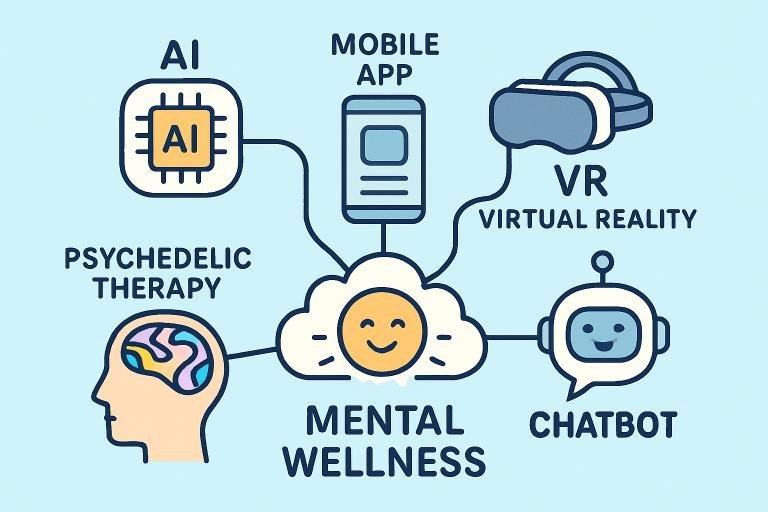
- Artificial Intelligence (AI) is revolutionizing mental health care by enhancing diagnostics and personalizing treatment plans.
- Digital therapeutics, including app-based treatments, offer accessible and effective support for mental health conditions.
- Virtual Reality (VR) therapy provides immersive environments for treating various mental health disorders.
- Psychedelic-assisted therapies are emerging as promising treatments for conditions like depression and anxiety.
- AI-powered chatbots and virtual therapy platforms offer immediate, confidential support, enhancing accessibility to mental health care.
Mental wellness is at a turning point, shaped by groundbreaking advancements in technology and science. Innovative methods are making mental health care more accessible, personalized, and efficient than ever before. With these advances, individuals have better resources to take control of their well-being. Clinics, such as Brook Behavioral Health, are incorporating these emerging tools into comprehensive care, prioritizing patient needs in new and meaningful ways.
Experts note that traditional care models are adapting to increased demand through AI, digital platforms, and immersive technologies, leading to more personalized mental health support. These innovations aim to fill gaps in current systems and provide alternative options for those who find conventional therapy challenging. Additionally, technology helps normalize mental health treatment by allowing private access, improving availability, and ultimately enhancing the understanding and management of mental health conditions.
Artificial Intelligence in Mental Health Care
Artificial Intelligence is revolutionizing mental health diagnostics and treatment. AI tools can swiftly analyze complex datasets, such as patient history, genetics, reported symptoms, and even social media activity, to spot subtle patterns linked to mental health conditions. By processing this vast array of information, AI assists clinicians in making more accurate diagnoses and developing highly personalized treatment regimens.
Another transformative benefit is AI’s ability to learn in real time. As patients progress, these systems can adjust treatment plans to ensure that care remains both proactive and adaptive to the individual’s needs. The result is a level of personalization previously unattainable, empowering both providers and patients to make more informed decisions and achieve better outcomes.
Digital Therapeutics: App-Based Treatments
Digital therapeutics are redefining accessibility in mental health care. These app-driven approaches deliver clinically validated interventions directly through smartphones, making evidence-based support readily available. For instance, the FDA-approved Rejoyn platform utilizes neural circuit rewiring tasks to treat major depressive disorder, illustrating the promise of technology in tackling serious mental health concerns. These digital options offer non-invasive, flexible approaches that support individuals in both clinical settings and at home.
This development is significant for people who may not respond to traditional therapies or cannot regularly visit a mental health provider. By delivering much-needed treatments through secure platforms, digital therapeutics lower barriers to care and empower individuals to track their progress, receive guidance, and stay connected to professional resources outside of traditional office visits.
Virtual Reality Therapy
Virtual Reality therapy is transforming exposure-based treatment for conditions such as PTSD, phobias, anxiety, and depression. By immersing individuals in carefully crafted digital environments, VR therapy allows patients to confront specific triggers in a safe, controlled, and supportive setting. Clinicians can tailor these scenarios to the patient’s unique challenges, facilitating a gradual exposure and desensitization process that is difficult to replicate in real life. The immersive nature of VR also enhances the sense of presence and engagement, which can be especially beneficial for treating complex trauma or deeply rooted fears.
Research shows that VR therapy is effective for a range of disorders and is increasingly being implemented in mental health clinics and trauma recovery programs around the world. As technology becomes more affordable and accessible, VR-based therapies are poised to become a mainstream component of comprehensive mental health treatment plans.
Psychedelic-Assisted Therapies
Psychedelics such as ketamine, psilocybin, LSD, and MDMA, when administered in a controlled, therapeutic setting, show promise as treatments for depression, anxiety, and post-traumatic stress disorder. Companies like NUE Life Health are developing digital platforms to facilitate at-home, guided treatments involving ketamine, supported by telehealth check-ins and ongoing therapy. The renewed interest in psychedelic therapies is driven by emerging clinical evidence and regulatory advances that indicate these substances, when paired with professional support, can rapidly alleviate symptoms of treatment-resistant mental health conditions.
These therapies are not suitable for everyone but represent an important option for individuals who have not responded to more traditional interventions. As scientific exploration continues, psychedelic-assisted therapy is shifting from experimental to evidence-based practice, signaling a potentially transformative era in mental health care.
AI-Powered Chatbots and Virtual Therapy Platforms
AI-powered chatbots like Woebot and Wysa engage users in real-time conversations, using evidence-based cognitive-behavioral techniques to provide daily support, stress management, and emotional guidance. These digital companions are not meant to replace therapists. Instead, they supplement traditional care by providing an immediate outlet for those who need instant relief or ongoing encouragement between professional sessions. Virtual therapy platforms connect users directly to licensed clinicians, making high-quality mental health care more accessible, flexible, and tailored to individual lifestyles.
These tools are especially valuable for those who are unsure about seeking therapy in person or need guidance outside regular office hours. As acceptance grows, AI-powered platforms can help close care gaps and provide on-demand support, encouraging more people to take proactive steps toward maintaining their mental well-being.
Conclusion
The landscape of mental health care is experiencing momentous change, with smart technologies and innovative therapies leading the way. Advances in AI, digital therapeutics, VR, and psychedelic-assisted treatments, supported by accessible chatbots and telehealth platforms, are enabling more people to benefit from targeted, effective care. As research and technology continue to progress, these holistic approaches will play a central role in expanding the reach and efficacy of mental wellness support for all.