Introduction
Homeowners across the country constantly seek ways to improve their living spaces. They often struggle with rising utility bills and uncomfortable indoor temperatures. Investing in energy-efficient HVAC and electrical solutions is more than just a trend. It’s a smart choice for a sustainable and cost-effective home. These upgrades offer many benefits. They ensure steady temperatures and help prevent hidden dangers. Embracing efficiency can truly change your daily life. This article will show you the key benefits of updating your home’s systems. We will highlight how smart investments lead to big savings, better safety, and a healthier home. We will share practical tips and important signs every homeowner should know to make their home more energy-efficient.
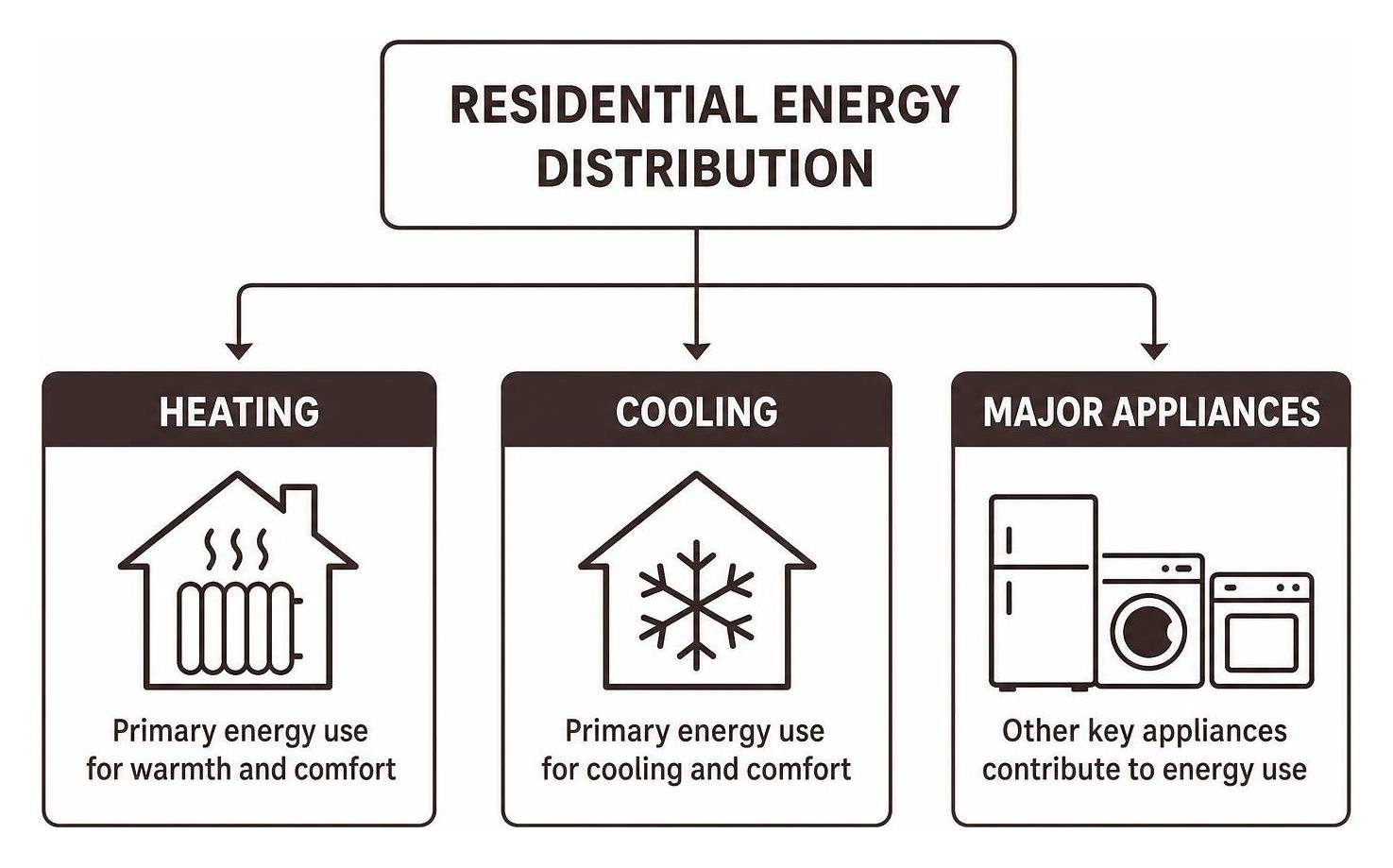
When we consider home energy consumption, it’s often a complex picture. Our heating and cooling systems typically account for the largest portion of our energy bills, but other major appliances also contribute significantly. Understanding this distribution is the first step toward effective energy management.
Core Benefits of an Energy-Efficient HVAC System
Upgrading to an energy-efficient HVAC system is one of the most impactful decisions homeowners can make for their property. These advanced systems are designed not just to heat and cool, but to do so with remarkable precision and minimal waste.
Modern high-efficiency heat pumps, for instance, boast impressive Seasonal Energy Efficiency Ratio 2 (SEER2) ratings, indicating their superior performance. Paired with smart thermostats, these systems can learn our preferences and adjust settings automatically, optimizing comfort and energy use. Variable-speed motors further enhance efficiency by allowing the system to run at lower capacities for longer periods, maintaining consistent temperatures without harsh fluctuations. Moreover, ensuring the integrity of our home’s ductwork is paramount, as even the most efficient unit can’t perform optimally if air is leaking before it reaches its destination.
Lowering Operational Costs with Energy-Efficient HVAC Upgrades
The most immediate and tangible benefit of upgrading to an energy-efficient HVAC system is the significant reduction in operational costs. We consistently see homeowners save substantially on their monthly utility bills. These systems achieve greater thermal efficiency, meaning they convert more of the energy they consume into actual heating or cooling power, rather than losing it to inefficiency.
Accurate load calculations, performed by professionals, ensure that the installed system is perfectly sized for the home, preventing oversized units from short-cycling or undersized ones from running constantly. Beyond the direct savings, many utility companies offer rebates and incentives for installing energy-efficient equipment, further reducing the initial investment and accelerating the return on investment. Over the lifespan of the system, these savings can amount to thousands of dollars, making the upgrade a sound financial decision.
Improving Indoor Air Quality and Comfort
Beyond financial savings, energy-efficient HVAC systems dramatically enhance the indoor environment. Modern systems offer superior humidity control, which is crucial for comfort and preventing mold growth, especially in humid climates. Advanced airflow filtration systems capture more airborne particles, allergens, and pollutants, leading to noticeably cleaner and healthier indoor air. For families with allergies or respiratory sensitivities, this can be a game-changer.
Furthermore, the precise control offered by variable-speed technology and smart thermostats ensures consistent temperature throughout the home, eliminating hot and cold spots. This uniform comfort, combined with improved air quality, creates a more pleasant and healthy living space for everyone. We believe that a comfortable home is not just about temperature, but also about the quality of the air we breathe.
Integrating Electrical Safety and Heavy-Appliance Efficiency
While HVAC systems are major energy consumers, our home’s electrical infrastructure and other heavy-duty appliances also play a critical role in overall energy efficiency and safety. An integrated approach considers the entire home as a system, where each component affects the others.
Ensuring adequate panel capacity and dedicated circuits for high-demand appliances like electric dryers, ovens, and water heaters is essential. This prevents overloading circuits and reduces the risk of electrical hazards. Regular appliance maintenance, especially for those that generate heat, is vital. We must also consider the thermal load these appliances contribute to our homes, as inefficient operation can force our HVAC systems to work harder, negating efficiency gains.
An often-overlooked aspect of home efficiency and safety is the performance of our dryer vents. Many homeowners miss the subtle signs that their dryer vent is becoming clogged, leading to reduced efficiency and potential hazards. Understanding these indicators is a key component of maintaining an energy-efficient hvac and electrical system throughout your entire home.
Managing Appliance Thermal Loads with Energy-Efficient HVAC Maintenance
Appliances such as clothes dryers generate significant heat. When operating efficiently, this heat and moisture are safely exhausted outside. However, a clogged dryer vent can severely impede this process. Lint buildup is the primary culprit, restricting airflow and causing the dryer to work harder and longer. This increased motor strain and prolonged heat dissipation not only wastes energy but also contributes to a higher thermal load within the laundry area, forcing your HVAC system to compensate.
We’ve observed that homeowners often overlook specific warning signs of a clogged dryer vent, mistakenly attributing issues to a failing appliance. Common indicators include clothes taking much longer to dry than usual, requiring multiple cycles, or emerging still damp, especially thicker items like towels. A dryer that feels unusually hot to the touch or a laundry room that becomes excessively warm and humid during operation are also red flags. You might notice a burning smell, often described as burnt lint, which is a serious fire hazard. Visual cues such as excessive lint around the dryer or the exterior vent opening, or a vent flap that doesn’t open freely or show strong airflow, are also critical. Ignoring these signs can lead to increased energy consumption—potentially up to 30% more—and significantly shorten the lifespan of your dryer. In severe cases, the dryer’s thermal safety switch might trip, causing it to shut off mid-cycle, further frustrating homeowners who then wrongly suspect a broken appliance.
Preventing Electrical Hazards and Overheating
The dangers of a clogged dryer vent extend far beyond mere inconvenience and higher utility bills. The accumulated lint, being highly flammable, combined with restricted airflow and excessive heat, creates a significant fire hazard. According to industry statistics, failure to clean dryer vents causes a substantial percentage of annual U.S. dryer fires, leading to deaths, injuries, and millions in property damage. We cannot stress enough the importance of addressing a burning smell immediately; it indicates lint is overheating, potentially nearing ignition. If you detect such an odor, stop the dryer at once, unplug it, and do not use it again until a professional has inspected and cleared the vent.
For gas dryers, a clogged vent poses an additional, silent threat: carbon monoxide poisoning. If exhaust cannot escape outdoors, this odorless, colorless gas can back up into the home, with potentially fatal consequences. Our electrical systems are designed with safeguards like circuit breakers and thermal switches to prevent overheating, but these are reactive measures. Proactive maintenance, including regular dryer vent cleaning, is crucial to prevent the conditions that trigger these safety mechanisms. Worn wiring due to constant overheating can also become an electrical hazard, underscoring the interconnectedness of appliance maintenance and overall home safety. Adhering to standards, such as those recommended by organizations like CSIA (Chimney Safety Institute of America), ensures that our ventilation systems are safe and efficient.
Comprehensive Maintenance Strategies for Long-Term Performance
To truly maximize the efficiency, safety, and longevity of our home systems, comprehensive maintenance is non-negotiable. Regular tune-ups for our HVAC units ensure they operate at peak performance, while duct cleaning prevents the accumulation of dust and allergens that can hinder airflow and impact indoor air quality. Seasonal inspections allow us to catch minor issues before they escalate into costly repairs or safety hazards.
These proactive measures not only extend the life of our expensive equipment but also ensure that our homes remain comfortable and healthy year-round. A well-maintained system is a reliable system, and that peace of mind is invaluable.
Whole-Home Ventilation and Ductwork Management
Effective ventilation and properly managed ductwork are foundational to an energy-efficient home. We advocate for the use of rigid ductwork whenever possible, as it offers superior airflow characteristics and is less prone to kinking or crushing compared to flexible alternatives. This ensures that conditioned air travels efficiently and that exhaust air, such as from dryers, is expelled without obstruction.
Regular inspection of exterior vents is also crucial; they should be clear of debris, animal nests, and lint buildup, allowing for unimpeded airflow. Airflow dampers, strategically placed within the duct system, help regulate air distribution to different zones of the home, optimizing comfort and efficiency. Finally, professional duct sealing is vital to prevent air leaks, which can account for significant energy loss. By addressing these aspects of whole-home ventilation, we ensure that our HVAC and appliance systems perform as intended, without unnecessary strain or energy waste.
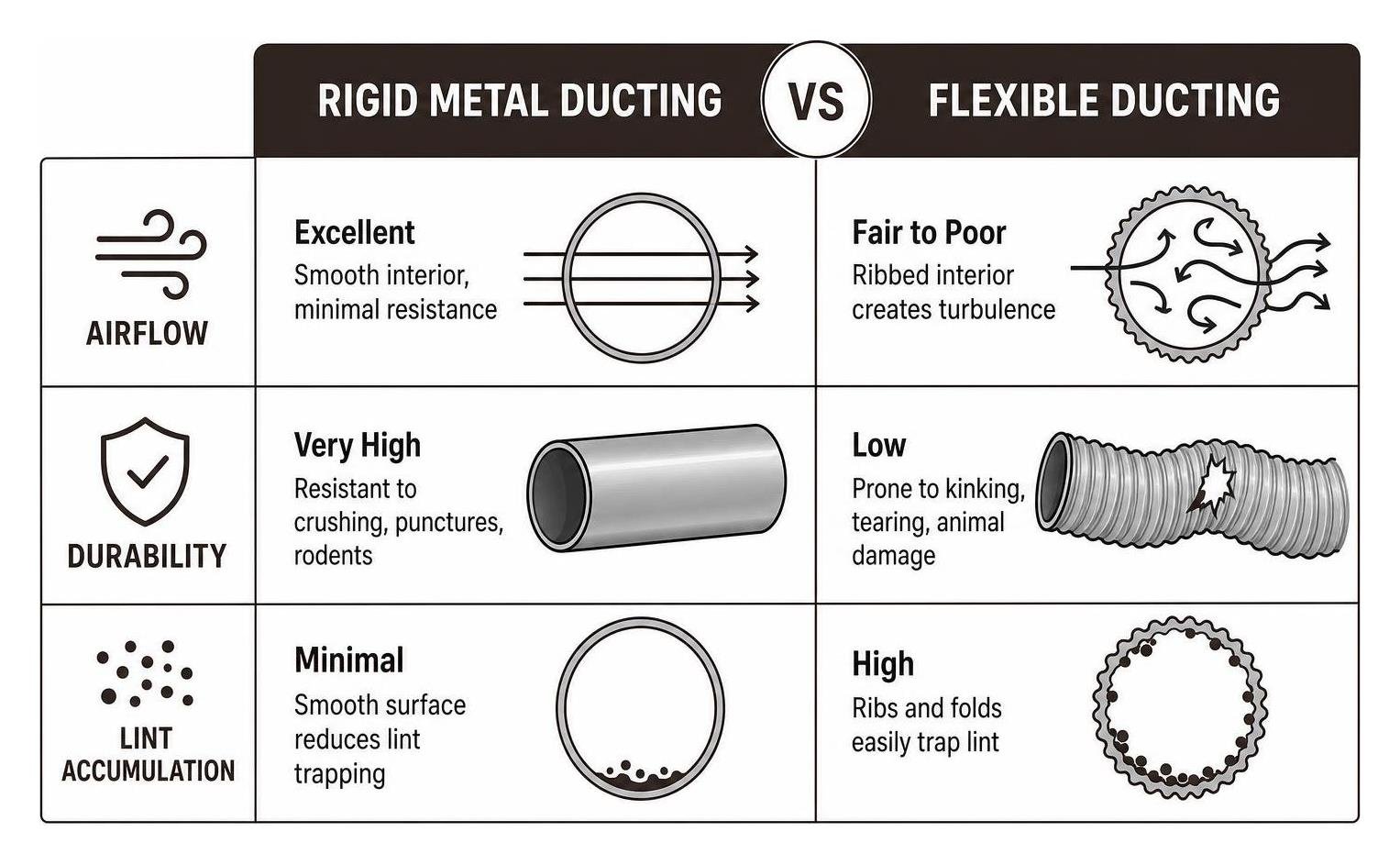
Feature Rigid Metal Ducting Flexible Ducting Airflow Excellent, smooth interior, minimal resistance Fair to Poor, ribbed interior creates turbulence Durability Very High, resistant to crushing, punctures, rodents Low, prone to kinking, tearing, animal damage Lint Accumulation Minimal, smooth surface reduces lint trapping High, ribs and folds easily trap lint Installation More complex, requires specialized tools and skills Easier, more adaptable to tight spaces Cost Higher initial material and labor cost Lower initial material and labor cost Fire Resistance High, non-combustible Lower, can be combustible (depending on material) Energy Efficiency High, maintains consistent airflow, less leakage Lower, prone to airflow restriction and leakage Maintenance Easier to clean, less frequent cleaning required Harder to clean, more frequent cleaning required Lifespan Very long, often lasts the life of the home Shorter, prone to degradation and damage
Frequently Asked Questions About Energy Efficiency
We often receive questions from homeowners curious about optimizing their home’s energy performance. Here are some of the most common inquiries we address:
How do high-efficiency systems reduce household electrical strain?
High-efficiency HVAC systems are designed to operate with greater precision and less brute force. They often incorporate inverter technology and variable-speed components that allow them to modulate their output rather than constantly cycling on and off at full power. This means they draw less power at any given moment, reducing peak electrical demand and overall strain on your home’s electrical grid. This steady, lower power draw also minimizes voltage fluctuations, which can extend the longevity of other electrical components and appliances in your home by preventing surges and brownouts. The result is a more stable electrical environment and reduced wear and tear on your entire electrical system.
What signs indicate an appliance is wasting energy?
Several indicators can suggest an appliance is consuming more energy than it should. For example, if your clothes dryer consistently takes significantly longer to dry a load than it used to, or if the exterior of the appliance becomes excessively hot, it’s a strong sign of inefficiency, often due to a clogged vent. Similarly, a refrigerator that runs almost constantly, or an oven that takes an unusually long time to preheat, could be wasting energy. Sudden spikes in your utility bills without a corresponding increase in usage are a clear financial indicator that something in your home is operating inefficiently. These signs often point to a need for maintenance or, in some cases, an upgrade to a more energy-efficient model.
How often should home ventilation systems undergo professional service?
For optimal performance and safety, we recommend that all home ventilation systems, including dryer vents and HVAC ductwork, undergo professional service at least once a year. For dryer vents, factors such as household size (more than eight loads of laundry per week), pets that shed heavily, or vent systems longer than 15 feet or with multiple turns, may necessitate more frequent cleaning—perhaps every six months. Professional service ensures thorough cleaning, inspection for damage or disconnections, and verification of proper airflow. While homeowners can perform quick, no-tool self-assessments regularly to check for obvious blockages, a professional has the specialized tools and expertise to identify hidden issues and ensure the entire system is clear and functioning safely.
Conclusion
Investing in energy-efficient HVAC and electrical systems is a multifaceted strategy that yields significant returns. It’s about more than just saving money on utility bills; it’s about creating a safer, healthier, and more comfortable living environment for our families. By understanding the core benefits of high-efficiency equipment, integrating electrical safety with appliance maintenance, and committing to comprehensive maintenance strategies, we can achieve holistic efficiency throughout our homes.
From recognizing the subtle warning signs of a clogged dryer vent that homeowners often miss to ensuring our ductwork is sealed and clear, preventive care is key. These proactive steps not only provide an excellent long-term return on investment but also uphold crucial safety protocols, protecting our homes and loved ones from potential hazards. We empower homeowners to make informed decisions that lead to lasting comfort, efficiency, and peace of mind.