Nobody buys pyjamas thinking about 3am. They buy them in daylight, feeling reasonably alert, holding a folded set in both hands. That is the problem. The pair you actually need is the pair that works when you are half asleep, one-handed, in a dark room, with a baby in the crook of your arm and no interest whatsoever in finding a light switch. Almost every complaint about maternity sleepwear traces back to that gap between how it was bought and how it gets used.
The hardest-working thing in the wardrobe
Count the hours. A pair of maternity pyjamas is worn overnight, again during the day for the first fortnight home, and again for every broken hour in between. No dress, no pair of jeans, nothing else in a pregnancy wardrobe comes close on wear time, and yet it is usually the last thing on the shopping list and the first thing bought on price alone.
It also has to survive three very different jobs. Late pregnancy, when the bump makes every position awkward and the room feels ten degrees warmer than it is. The hospital stay, where you are undressing and re-dressing in front of strangers and things get messy. Then the newborn months, when the garment is essentially a feeding uniform. One set rarely does all three well, which is worth knowing before you buy four of the same thing.
Sleep is already difficult, so stop adding friction
This is not a small comfort issue. Research collected by the Sleep Foundation on pregnancy insomnia suggests that by late pregnancy the majority of women are dealing with genuine trouble falling or staying asleep, driven by hormones, physical discomfort and constant trips to the bathroom. When sleep is that fragile, every extra obstacle counts: a waistband that digs in, a top that has to come off entirely, a fabric that traps heat at 2am.
Think of sleepwear as removing friction rather than adding luxury. You are not trying to make the night lovely. You are trying to make the four or five interruptions in it slightly less awful, and small design choices add up quickly across a hundred nights.
The 3am test
Here is a single question that sorts good maternity sleepwear from the rest: can you open it with one hand, in the dark, without sitting up? If the answer is no, it will be a daytime piece and nothing more.
Access types, ranked by how they behave at night
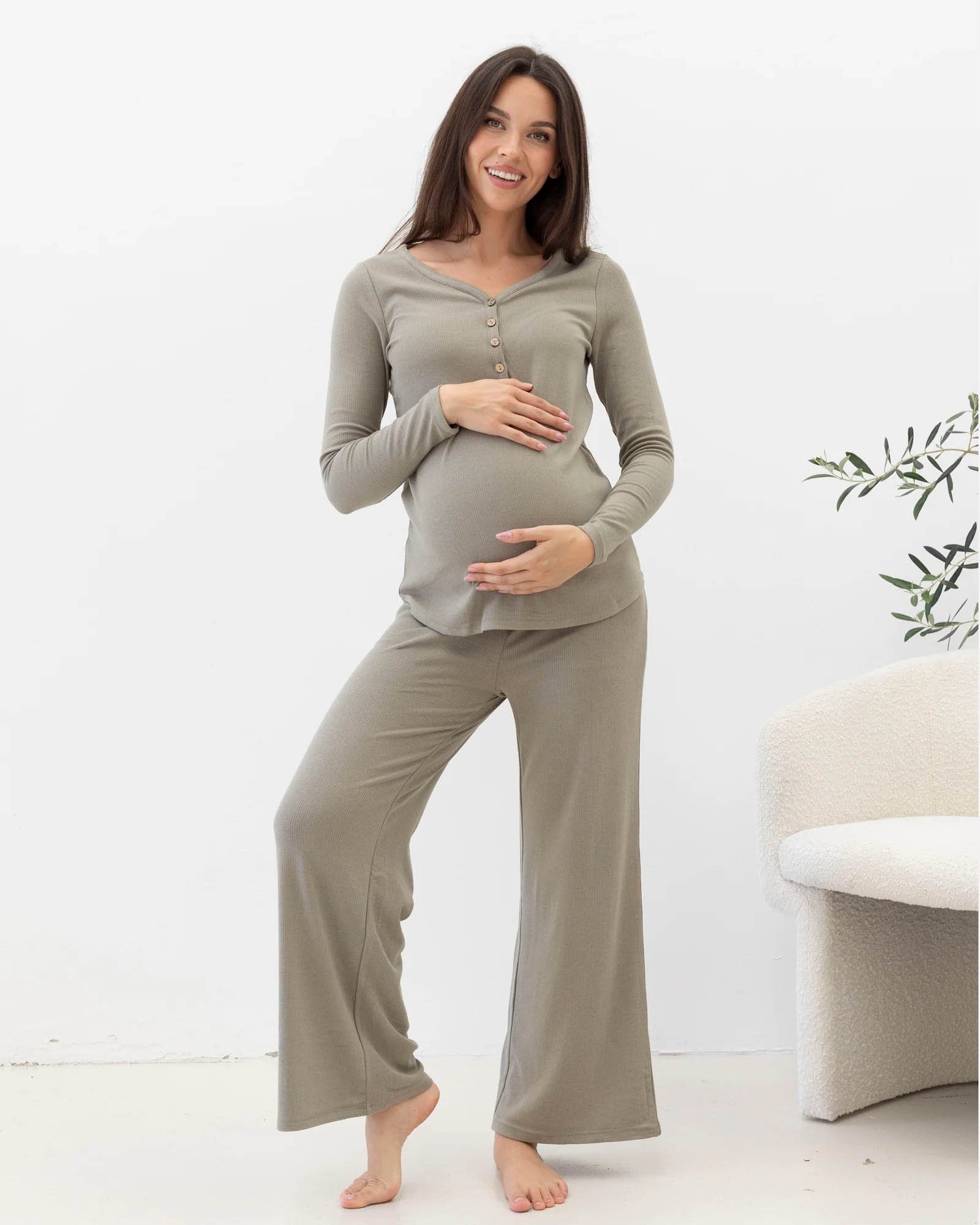
Snap or press-stud plackets are the easiest to work one-handed and the easiest to close again afterwards. Crossover and wrap fronts are almost as good and tend to look less clinical. Hidden layer designs, where a stretchy outer neckline pulls aside to reveal a second panel, are the most discreet and the best choice if you dislike the look of obvious nursing wear. Small buttons are the worst of the lot; they are fiddly with one hand and infuriating when you are tired. A good maternity sleepwear range will spell out which access type each piece uses, and it is worth reading that detail rather than assuming every nursing-labelled set opens the same way.
Colour and print do practical work
Nobody mentions this and everyone learns it. Leaking, spills and night sweats are all part of the first weeks. Prints and mid-tone colours hide the evidence between washes; pale solids do not. A striped or floral set is not just a style choice, it is a laundry decision.
Fabric decides whether you overheat
Body temperature runs higher in pregnancy and hot flushes are common in the weeks after birth as hormones settle. Bamboo, cotton and cotton blends breathe and move moisture away from the skin; heavy polyester holds heat and holds smell. If you tend to run warm, a short-sleeve set with long pants often beats a full long-sleeve set, because you can regulate with a blanket rather than with the garment itself.
Stretch matters as much as breathability. A knit with a little elastane accommodates the bump, then keeps fitting through the postpartum weeks when your shape is changing again in the other direction. Rigid woven cotton looks beautiful in photographs and stops fitting sometime around week 32.
The waistband question
Over-bump or under-bump is personal, but there is a pattern. Most women find over-bump easier for sleeping, because an under-bump band tends to roll down and then dig in when you turn over. After a caesarean the calculation changes completely; anything sitting on the incision line is uncomfortable for weeks, so a high, soft over-bump band or a loose nightie is the safer buy. Whatever you choose, avoid a drawstring you have to retie in the dark.
Sizing follows the same logic as most maternity basics: buy your pre-pregnancy size and let the cut do the work, sizing up only if you want a genuinely loose fit for sleep. Maternity sleepwear is drafted with the growth already built in, so going up two sizes usually gives you a shoulder that slips and a waistband that will not stay put.
What actually earns a place in the hospital bag
Pack two nighties rather than two full pyjama sets. Nighties are far easier during labour, during checks and in the first days of feeding, and they do not strand you in half an outfit. Add a robe, because you will walk corridors and receive visitors, and hospital wards are either too warm or too cold with nothing in between. Button or snap fronts earn their keep here more than anywhere else, since skin-to-skin contact happens constantly in the first hours.
Most brands group these pieces for exactly this reason, and browsing a dedicated hospital bag collection is quicker than assembling the same list item by item from a general sleepwear range. One practical note: wash everything before it goes in the bag. New fabric is stiffer than washed fabric, and the hospital is not where you want to discover a scratchy seam.
Buy for the version of yourself who is tired, warm and doing everything one-handed. Get that right and sleepwear stops being an afterthought and starts being the thing that quietly makes the whole stretch more bearable.