Key Takeaways
- Decide first whether the issue threatens health, safety, utilities, or the home’s structure.
- Shut off water or power only when the control is easy to access, and the area is dry and safe.
- Treat a cooling failure seriously during high heat, especially when vulnerable people or pets are inside.
- Take photos, save receipts, and keep written repair records before extensive cleanup begins.
- A simple emergency kit and basic system knowledge can reduce stress when time matters.
A failed air conditioner, a burst pipe, an electrical smell, or a sudden outage can make any homeowner feel overwhelmed. In Phoenix, where extreme heat, dust, monsoon storms, and heavy cooling demand can all affect home systems, a calm response matters. The goal is to protect people first, limit further damage second, and then get qualified help.
Preparation makes those decisions easier. Knowing where your shut-off controls are, keeping a few supplies on hand, and considering comprehensive maintenance plans can help homeowners spot smaller concerns before they become urgent problems.
Why Home Emergencies Need a Simple Plan
Panic can lead to rushed decisions, such as stepping into water that is electrically unsafe, repeatedly resetting a tripped breaker, or attempting repairs that require training. A short plan keeps the order clear: identify danger, move people and pets to safety, stop the source if it is safe, document the problem, and call the right professional. In Phoenix, summer heat and monsoon conditions can also cause many households to need help at once, which may lengthen response times.
How to Decide If a Problem Is an Emergency
- Check for immediate danger.Look for smoke, sparks, gas odors, exposed wiring, flooding near outlets, or major structural damage.
- Protect people and pets.Move everyone away from the affected area, particularly children, older adults, and anyone with medical concerns.
- Stop the source when safe.Turn off water at the main valve or power at the appropriate breaker only if you can reach it without entering a wet or hazardous area.
- Call emergency services when needed.Fire, suspected gas leaks, severe electrical hazards, and medical emergencies require immediate emergency assistance.
- Call a qualified repair provider. Properly licensed professionals should handle HVAC, plumbing, electrical, and structural problems.
What to Do During an Air Conditioning Failure
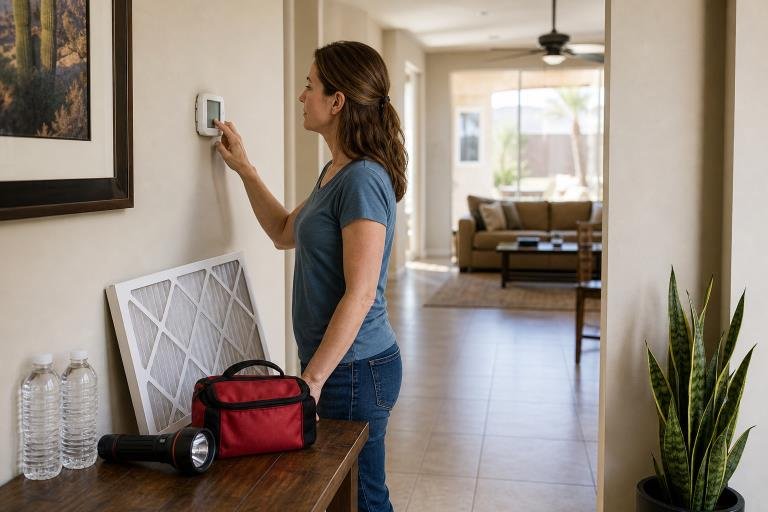
A cooling outage can quickly become a health concern in Phoenix. Start with safe, simple checks: confirm the thermostat is set to cool, replace a heavily clogged filter if you have one, check whether the breaker has tripped once, and make sure supply vents are open. Do not open electrical equipment, handle refrigerant lines, or continue operating a system that smells like it is burning, makes loud new noises, produces smoke, leaks near electrical parts, or has no airflow.
If indoor temperatures keep rising, move vulnerable household members, pets, and essential medications to a cooler place. Follow local alerts and cooling guidance through the City of Phoenix Office of Emergency Management, particularly during heat warnings or major weather events.
How to Handle Water Leaks and Flooding
For an active leak, find the main water shut-off valve, which is often near the water meter, an outside wall, the garage, or a utility area. Shut off the water if it is safe, then place buckets under small leaks and move furniture, documents, electronics, and rugs away from wet areas. Never stand in water near outlets, appliances, or an electrical panel.
Stopping the leak is only the first step. Wet drywall, insulation, flooring, and cabinets can hold moisture and develop secondary damage. Photograph the area before major cleanup, use fans only when electrical conditions are safe, and arrange prompt drying or restoration when materials are saturated.
What to Do After an Electrical Problem or Power Outage
Sparks, buzzing, hot outlets, burning odors, and repeated breaker trips are warning signs that should not be ignored. Do not keep resetting a breaker that trips again. If the issue appears limited to your home, contact an electrician. If neighbors are also without power, check official utility and local emergency notices instead of assuming the problem is inside your electrical panel.
During a power outage, unplug sensitive electronics when practical and use flashlights rather than candles. Avoid using damaged extension cords or overloading outlets with portable cooling equipment. Keep refrigerator and freezer doors closed as much as possible while you assess the situation.
How Phoenix Weather Can Trigger Home Problems
Extreme heat keeps air conditioners running for long periods, while dust can restrict airflow and clog filters or outdoor equipment. Monsoon storms may bring wind damage, roof leaks, debris, flooding, and power surges. After a storm, check for standing water, damaged screens, roof or ceiling stains, blocked outdoor HVAC equipment, and loose debris. Avoid climbing onto a roof or approaching downed lines.
What Information to Share When Calling for Help
- Your full address, gate code, access instructions, and a reliable callback number.
- When the issue began, what you saw or heard, and whether there are odors, leaks, error messages, or visible damage.
- Whether water, electricity, or equipment has already been turned off.
- Any children, seniors, pets, medical needs, or unsafe indoor temperatures in the home.
- Questions about licensing, arrival window, emergency fees, parts, temporary safety steps, and written estimates.
Document Damage Before Cleanup
Take clear photos and short videos from several angles. Write down the date, time, weather conditions, and first signs of the problem. Save receipts for supplies, lodging, cleanup, and repairs. Unless leaving damaged material in place creates a safety risk, ask your insurer or restoration provider before removing heavily damaged items. Keep inspection reports, invoices, and warranty information together for future reference.
When to Leave the Home
Leave immediately for fire, smoke, suspected gas leaks, severe electrical danger, major structural movement, or flooding that may involve energized equipment. Relocate to a cool public place or a trusted home if indoor heat becomes unsafe and no prompt cooling option is available. Bring identification, medications, phones, chargers, pet supplies, water, and important documents.
Small Steps That Can Prevent a Larger Crisis
- Replace HVAC filters regularly and inspect them more often during dusty weather.
- Keep outdoor equipment clear of weeds, storage items, leaves, and windblown debris.
- Test smoke and carbon monoxide alarms, and locate the water, electrical, and gas shut-offs.
- Check visible plumbing connections for moisture, corrosion, or mineral buildup.
- Schedule system inspections before the hottest part of the year.
What to Keep in a Home Emergency Kit
Keep flashlights, batteries, drinking water, first-aid supplies, spare HVAC filters, thermostat batteries, power banks, work gloves, towels, buckets, printed contact numbers, pet food, and essential medications in an easy-to-reach location.
Prepare Your Household Before an Emergency
Every household benefits from a brief conversation about emergencies before something goes wrong. Decide where family members should meet if part of the home is unsafe, choose an out-of-neighborhood contact, and make sure everyone knows how to call for help. Children should understand that they must not touch breakers, outlets, water heaters, or outdoor equipment. If someone in the household relies on powered medical equipment, ask their care provider about a backup plan and keep necessary contact information available. Renters should also know which concerns fall under the landlord, property manager, utility, or emergency responder.
Use Temporary Measures Carefully
Temporary measures should reduce immediate discomfort without creating another hazard. For example, close blinds and curtains to reduce solar heat, drink water, use battery-powered fans when available, and move activities into the coolest rooms. Portable generators must remain outdoors, far from doors, windows, and vents; never operate one in a garage, patio enclosure, or other enclosed space. Do not use an oven, stove, grill, or fuel-burning appliance to heat or cool indoor areas. When using a portable air conditioner, follow its manufacturer’s instructions, use a properly rated outlet, and avoid running cords beneath rugs or through doorways where they can be damaged.
Know When Conditions Are Changing
Continue reassessing the home until help arrives. A small drip can become a larger leak, a warm room can become dangerous during a heat wave, and a strange electrical odor can signal a developing fault. Watch for changes in ceiling stains, water pressure, appliance performance, indoor temperature, or the sound of running water. Keep pathways clear for technicians, secure pets in a separate safe area, and avoid moving damaged equipment unless doing so prevents an immediate risk. If you must leave, turn off systems only when it is safe, lock the home, tell the repair provider how to reach you, and leave a note with any important access details.
Review Your Plan Afterward
After the situation is resolved, replace used supplies and update your notes. Mark the shut-off locations clearly if they are difficult to find. Discuss what worked, what caused confusion, and what should change before the next event. This quick review can improve response times, help household members feel more confident, and provide useful information when scheduling maintenance or planning future repairs. Keep the plan accessible and revisit it annually.
Common Questions Homeowners Ask
Should a homeowner try to fix the problem first?
Safe checks are appropriate, but electrical, gas, refrigerant, and structural work should be left to trained professionals.
How fast should water damage be addressed?
Act quickly to stop the source and begin safe drying. The required response depends on the amount of water, affected materials, and whether contamination is present.
What should happen after an emergency repair?
Test the repaired system, review the invoice, look for secondary damage, and schedule preventive maintenance if needed. A calm plan turns a difficult home emergency into a manageable next step.