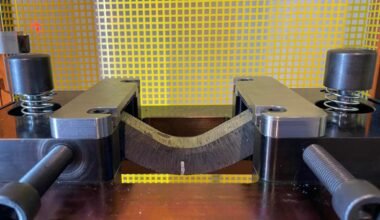
Geometry is more than something you learned in high school and at the heart of our physical world. For engineers of all stripes, geometry is the framework that they use to design, analyze and construct the infrastructure that strengthens our modern way of life. From the curve of a bridge to the slope of a property line, geometric principles inform everything we do to make our structures safe, efficient and functional.
Here, we’re taking a deep dive into the importance of geometry in engineering – and how it can influence everything from large-scale urban expansions to intricate site designs.
Design and Analysis Fundamentals
(At its heart, engineering is the solving of spatial problems. Whether an engineer is testing the strength of a steel beam or searching for the best angle to use in a drainage pipe, he or she depends on geometry. Triangulation is a favorite in the field of structural engineering, for example, since there is no shape more secure than a triangle; it can hold massive weight without buckling.
Geometry is important not only for stability, but it also lets engineers see a three-dimensional object in two dimensions such as CAD (Computer-Aided Design). Such a visualization is critical to catch any potential problem before striking the first brick.
Geometric modeling is used by engineers as a way to represent complex structural models.
Geometry for Site Design and Surveying
Before a new building can be built, the land on which it will stand must first undergo careful measuring and mapping. This is the point at which applied geometry in engineering becomes something we can see on the earth. Trigonometry and coordinate geometry are used by engineers and surveyors to determine exact boundaries of plots, heights and depths.
When a company is conducting a project in the heart of a vibrant metroplex such as Dallas, Texas accuracy is key – especially when land prices and development impact fees soar. Professional land surveying can help ensure that every square foot is calculated to the best of our abilities, ruling out any potential conflicts and making adjustments for engineering on paper so they process seamlessly with the real visage of Texas.
Urban Growth and Land Planning
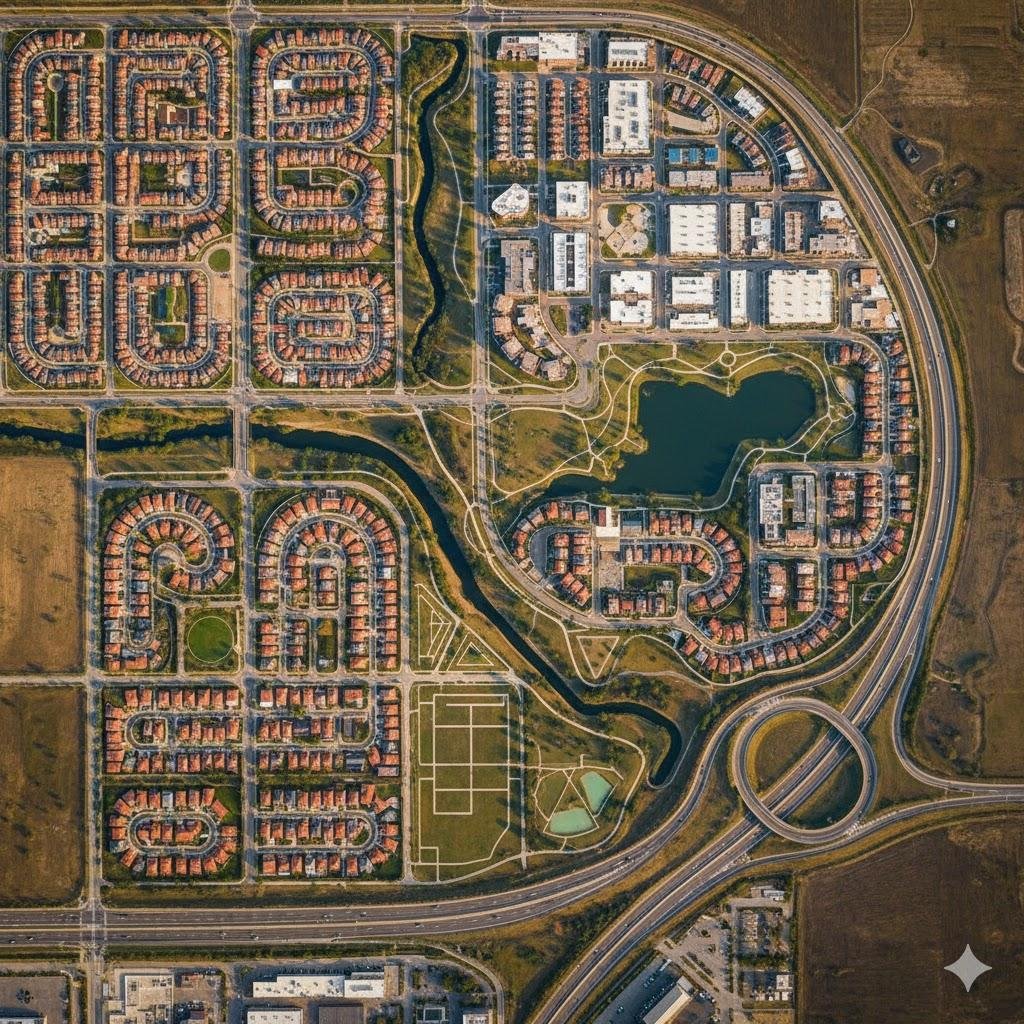
With the growth of cities well-regulated space is a matter of vital importance. It is geometry that determines how residential neighborhoods, commercial territories and public parks sit next to one another. Engineers have to take into account the traffic that’s flowing, the location of utility lines, and natural shapes formed by the earth.
In fast growing regions like Dallas,Texas, thoughtful planning is the key to growth that is sustainable. Utilizing professional land planning services, engineers can make the most effective use of land and assure that attractive new developments are designed in a way that is both geometrically sound and environmentally appropriate.
Efficient urban planning for land use involves the decorative patterns of geometry.
Geometry in Infrastructure and Transportation
Did you ever notice why highways have a certain degree of banking at curves? That is geometry in action. “Super-elevation” (banking) is a term transportation engineers use to describe the counter-action of centrifugal force, which makes it possible for cars or other vehicles to take curves safely at high speeds.
For example, tunnels and arches are constructed using the properties of catenaries and parabolas in order to allow for equal distribution of their loads. Without that bit of rigorous geometry, our current transportation networks would be less safe and far more expensive to maintain.
Geometry in Environmental Engineering
Modern engineering also places much emphasis on sustainability. Geometry also has a part to play by designing optimised shapes and decreasing the material wasted. For instance, the generally accepted shape for a storage tank of liquids and gases is spherical since it has the least surface area for any given volume and thus requires least steel and heat insulating materials.
Engineers also apply geometric modeling to determine how water will puddle upon a land surface (hydrology.) Using their knowledge of the “geometry of the landscape,” they can come up with stormwater management strategies to mitigate flooding in cities.
They are tools for the use of engineers, instruments with which they can operate in the world.
How Do Engineers Use Geometry? Applications of Geometry in Modern Engineering
Geometry is far more than a set of rules learned in a high school classroom; it is the fundamental language of the physical world. For engineers, geometry is the framework used to design, analyze, and build the infrastructure that defines our modern lives. From the curve of a bridge to the precision of a property line, geometric principles ensure that structures are safe, efficient, and functional.
In this article, we will explore the critical application of geometry in engineering and how it shapes everything from massive urban developments to intricate site designs.
The Foundation of Design and Analysis
At its core, engineering is about solving spatial problems. Whether an engineer is calculating the load-bearing capacity of a steel beam or determining the optimal slope for a drainage system, they rely on geometric formulas. Triangulation, for instance, is a staple in structural engineering because the triangle is the most stable shape, capable of supporting immense weight without deforming.
Beyond stability, geometry allows engineers to visualize three-dimensional objects in a two-dimensional space through CAD (Computer-Aided Design). This visualization is essential for identifying potential flaws before a single brick is laid.
Engineers utilize geometric modeling to visualize complex structural designs.
Geometry in Site Development and Surveying
Before any construction project can begin, the land must be meticulously measured and mapped. This is where the practical application of geometry in engineering becomes visible on the ground. Engineers and surveyors use trigonometry and coordinate geometry to establish precise boundaries and elevations.
When a firm manages a project in a bustling metropolitan hub like Dallas, Texas, accuracy is paramount due to high land values and dense infrastructure. Utilizing professional land surveying services ensures that every square foot is accounted for, preventing legal disputes and ensuring that the engineering plans align perfectly with the physical landscape of the Lone Star State.
Urban Growth and Land Planning
As cities expand, the need for organized spatial layouts becomes critical. Geometry dictates how residential neighborhoods, commercial zones, and public parks coexist. Engineers must consider the flow of traffic, the placement of utility lines, and the natural topography of the earth.
In rapidly growing areas like Dallas, Texas, strategic development is the key to sustainable growth. By employing expert land planning services, engineers can optimize land use, ensuring that new developments are not only aesthetically pleasing but also geometrically sound and environmentally responsible.
Effective land planning uses geometric patterns to maximize urban efficiency.

Geometry in Infrastructure and Transportation
Have you ever wondered why highways have specific bank angles on curves? That is geometry in action. Transportation engineers use “super-elevation” (banking) to counteract centrifugal force, allowing vehicles to navigate turns safely at higher speeds.
Similarly, the design of tunnels and arches relies on the geometry of parabolas and catenaries to distribute weight evenly. Without these precise mathematical shapes, our modern transportation networks would be far less safe and much more expensive to maintain.
The Role of Geometry in Environmental Engineering
Modern engineering also focuses heavily on sustainability. Geometry plays a role here through the optimization of shapes to reduce material waste. For example, spherical storage tanks are often used for liquids and gases because a sphere has the smallest surface area for a given volume, which minimizes the amount of steel needed and reduces heat transfer.
Furthermore, engineers use geometric modeling to predict how water will flow across a landscape (hydrology). By understanding the “geometry of the terrain,” they can design effective stormwater management systems that prevent flooding in urban environments.
Precision tools allow engineers to apply geometric principles to real-world environments.