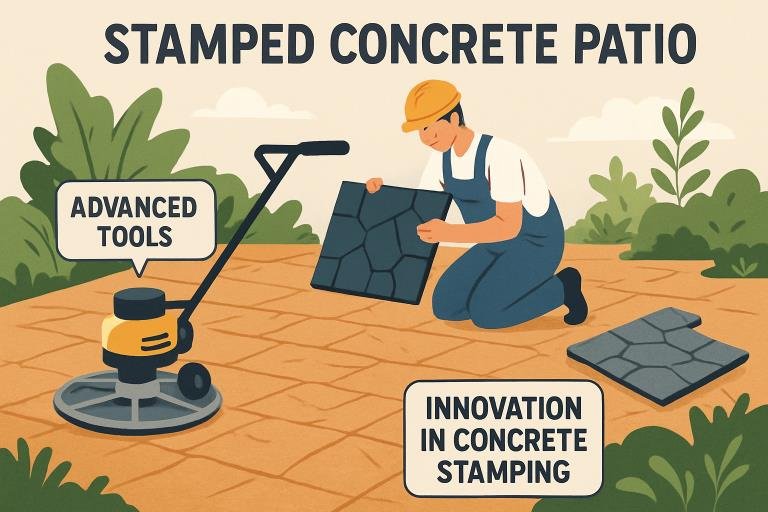
Concrete stamping continues to evolve, offering designers, contractors, and property owners superior ways to enhance and strengthen concrete surfaces. With 2025 approaching, the industry is embracing new tools and innovations. Anyone looking to elevate their craft or enhance their personal property should explore the latest concrete stamping tools for the best results in durability and design. These advancements are enabling creative, high-quality, and long-lasting installations, making concrete stamping a top choice for modern projects.
Whether you are a homeowner hoping for a custom patio or a contractor aiming to set your work apart, understanding these new materials and technologies is crucial. Professionals in the industry are witnessing a shift as both eco-friendly practices and digital innovation become mainstream, ensuring that projects not only look great but also stand the test of time.
From sustainable approaches to digital design tools, the world of concrete stamping is expanding. Current trends indicate an increasing demand for unique, customized aesthetics that reflect individual style, which is now more achievable than ever due to advancements in tools and diverse materials. By leveraging today’s modern methods, project outcomes are more beautiful, sustainable, and efficient—benefiting everyone from builders to end clients.
Advanced Materials: Enhancing Durability and Design
Cutting-edge materials are having a transformative effect on concrete stamping. Glass Fiber Reinforced Concrete (GFRC) is leading this charge, offering builders a lightweight yet robust option for creating complex, high-definition textures and innovative architectural components. Metallic epoxy coatings, meanwhile, are being integrated for their ability to add reflective, multi-dimensional effects that boost aesthetic value. These novel materials make stamped surfaces more durable, visually dynamic, and versatile than ever before, promising long-term performance for both indoor and outdoor applications.
3D Printing: Revolutionizing Concrete Stamping
The adoption of 3D printing in construction is revolutionizing concrete stamping, enabling the perfect reproducibility of previously difficult-to-achieve custom textures that were previously impossible to achieve. This technology builds up concrete in precise layers, drastically reducing waste and speeding up project timelines. As contractors utilize 3D printing to fabricate both functional structures and artistic details, it’s possible to achieve previously unimaginable stamped finishes—such as integrated patterns and bespoke reliefs for spectacular visual impact. 3D-printed concrete has already proven its value in residential and commercial construction, with more widespread adoption anticipated in the coming years.
Sustainable Practices in Concrete Stamping
Driven by consumer preferences and regulatory demands, the concrete stamping industry is becoming more eco-conscious. Manufacturers now develop recycled stamp mats and molds, utilizing plastics or rubber from post-consumer sources. Contractors are increasingly selecting eco-friendly and low-VOC concrete mixes that incorporate industrial byproducts, such as fly ash and slag, to reduce their environmental impact. Likewise, water-based stains and pigments have gained popularity for their vivid results and reduced toxicity, appealing to property owners concerned with sustainability and indoor air quality. Sustainability in concrete stamping is a rapidly growing differentiator that appeals to both building professionals and clients.
Digital Tools and Augmented Reality in Design
Digital tools are streamlining design, communication, and approval in concrete stamping projects. Augmented Reality (AR) apps now enable immersive pre-visualization, letting homeowners and decision-makers “walk through” a stamped surface in virtual space before a single material is poured or shaped. This minimizes errors, shortens project timelines, and improves satisfaction, as exact pattern alignment and color matching can be achieved virtually. Digital drafting and modeling further enable designers to experiment with layouts and motifs, promoting collaborative creativity and precise execution on every jobsite. AR technology is becoming a vital tool for modern construction projects.
Customization and Personalization Trends
As aesthetics become central to outdoor and indoor space planning, demand for personalized, site-specific concrete stamping is booming. Modern tools and overlays provide contractors with the flexibility to tailor textures, shapes, and colors for a wide range of applications, from intricate tile imitations and wood-plank looks to bold geometric or floral patterns. Collaborative design software lets clients be part of this creative process, ensuring every stamped installation is a true reflection of individual tastes and lifestyle needs. This singular approach not only elevates curb appeal but also increases long-term property value.
Training and Education for Modern Techniques
Mastering the latest concrete stamping techniques requires an ongoing commitment to education. To keep pace with new materials and digital platforms, industry pros rely on workshops, certifications, and e-learning. These resources ensure a workforce that can safely and efficiently implement complex designs and adapt to the challenges of evolving job-site scenarios. Trade associations and local unions are expanding offerings to help contractors and crews excel and differentiate themselves in an increasingly competitive market.
Conclusion
Innovation is the driving force behind the future of concrete stamping. With better tools, sustainable practices, and advances in digital design, projects can now feature more custom detail, exceptional longevity, and stronger environmental responsibility. Staying current with these trends and technologies gives both contractors and property owners a distinct advantage for years to come.