Key Takeaways
- Familiarize yourself with the types of water heaters on the market.
- Evaluate your household’s peak hot water usage and select the right capacity and style accordingly.
- Pursue models with strong energy efficiency ratings to minimize utility costs over time.
- Choose a fuel source that is both accessible and cost-effective for your location.
- Account for proper installation needs and recurring maintenance to extend system lifespan.
Selecting the ideal water heater is an important step in enhancing your home’s comfort and efficiency. The right choice will contribute to energy savings, convenience, and cost management for years to come. If you ever encounter issues or have questions about installation, you can contact local experts for Water heater repair near me to keep your system running smoothly.
Making an informed decision involves knowing what types of water heaters are available, evaluating your household’s demands, and understanding efficiency ratings. The following guide walks you through the process to ensure that your next water heater is the right match for your home and lifestyle.
It is also wise to think about which fuel types are accessible in your area, to weigh installation and maintenance requirements, and to assess the overall impact on both your budget and the environment. These factors together shape the long-term satisfaction you will get from your water heater choice.
By considering aspects such as lifetime operating costs and environmental friendliness, homeowners can find a solution that meets both immediate and long-term household hot water needs. For additional tips and information on energy-efficient appliances, large sites like Consumer Reports offer comprehensive buying guides.
Types of Water Heaters
Understanding the distinctions between water heater types helps narrow your options based on efficiency and suitability for your living space:
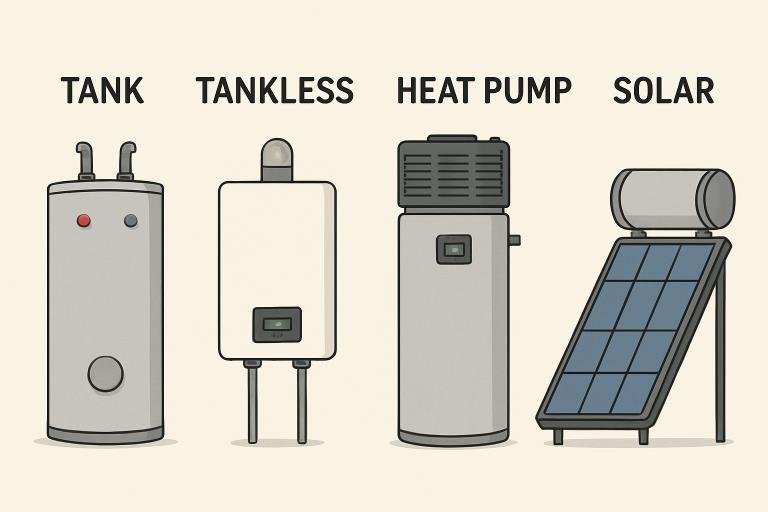
- Conventional Storage Water Heaters:These heaters keep hot water ready in a tank, which means you have an instant supply but may lose energy to standby heat loss.
- Tankless (On-Demand) Water Heaters:These devices heat water as required and do not rely on a storage tank, making them an energy-saving choice for households with lower simultaneous hot water demand.
- Heat Pump Water Heaters:Exceptionally energy efficient, these use electricity to transfer heat rather than generate it directly, pulling warmth from the air or ground into the water.
- Solar Water Heaters:Relying on solar panels, these units offer reduced operating costs, though they depend on sunny conditions and may require a backup system.
- Tankless Coil and Indirect Water Heaters:Connected to your home’s heating system, they can be a smart solution in colder climates with significant heating needs.
Assessing Your Household’s Hot Water Needs
Choose a water heater appropriately sized for your household to avoid both inconvenience and waste:
- Calculate Peak Hour Demand:Predict your home’s maximum water usage within a single hour, called the First-Hour Rating (FHR). For the average family, this may mean selecting a unit with a 60-gallon FHR
- Consider Usage Patterns:Examine how often showers, dishwashers, and laundry overlap to ensure you select a model that will not run out of hot water during busy periods.
Energy Efficiency Considerations
Because the water heater can significantly influence your energy bills, efficiency should be a central part of your decision:
- Uniform Energy Factor (UEF):A higher UEF signifies better efficiency. Modern heat pump and some tankless units tend to have top ratings.
- Energy Star Certification:Seek out models certified for their efficiency, providing both savings and potential access to incentives or rebates.
Fuel Types and Availability
The fuel source you select affects operational costs and installation ease, as well as availability based on your location:
- Electricity:Almost universally available, but often more expensive to operate.
- Natural Gas:Generally cheaper if available, but installation may require venting modifications or new piping.
- Propane:This fuel is a viable choice for properties without natural gas lines, though higher in price.
- Solar Energy:Delivers low operating costs and environmental benefits, yet climate and initial installation expenses can pose challenges.
Compare local costs and accessibility to make the best choice for your situation.
Installation Requirements and Costs
Assessing installation needs ensures the new water heater fits your available space and budget:
- Space Constraints:Some tankless and heat pump systems are more compact, ideal for smaller homes or tight utility areas.
- Ventilation Needs:Gas-powered models need proper venting to safely release combustion gases.
- Professional Installation:Especially for gas or heat pump units, hiring a professional is crucial for both installation and ongoing safety.
Maintenance and Lifespan
Understanding your water heater’s upkeep and expected longevity helps make a choice that will serve you well over time:
- Conventional Storage Water Heaters:Lasting 8-12 years, these need periodic tank flushing to prevent sediment problems.
- Tankless Water Heaters:With proper maintenance, these can run for 20 years or more. Annual descaling prolongs their lifespan.
- Heat Pump Water Heaters:Typically run 10-15 years, requiring filter and system inspections as part of routine care.
Cost Analysis: Initial vs. Operating Costs
Consider not just what you pay upfront, but the money you stand to save over the years:
- Initial Investment:Sophisticated technology, such as tankless or energy-efficient models, may cost more at first, but lower your monthly bills for years to come.
- Operating Expenses:Appliances with superior efficiency ratings can make a significant dent in your utility costs over time, helping balance the higher purchase price.
Homeowners often find that premium energy-efficient equipment pays for itself in savings after just a few years.
Environmental Impact
The move towards energy-efficient appliances reduces the ecological footprint of your household:
- Reduced Carbon Footprint:Using less energy results in fewer emissions, aiding broader environmental initiatives.
- Renewable Energy Integration:Solar water heaters leverage free, clean energy and further decrease reliance on fossil fuels.
Selecting an efficient, appropriately sized water heater is a responsible choice that benefits your family and the planet for years to come.