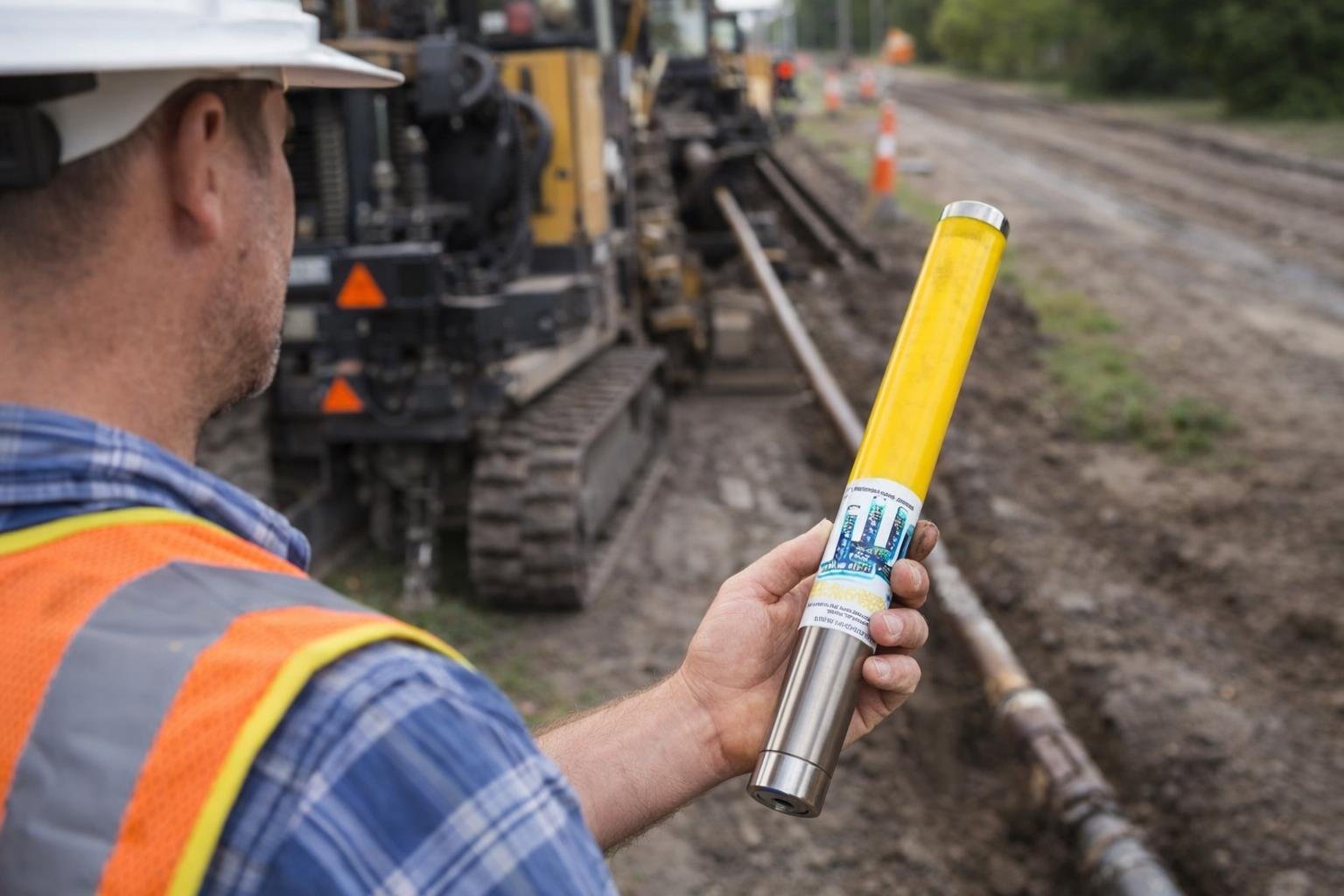
In HDD, the transmitter is the crew’s link to the drill head underground. A DigiTrak SE transmitter is installed in the drill head and tracked from the surface during the pilot bore. The SE platform is a 12 kHz walkover locating system, and its job is plain: help the crew locate the head, read its position and heading, and steer the bore with better control.
That sounds technical, but the field use is practical. The locator needs to know where the head is. The operator needs steering information. Both need to know whether the head is holding the intended path and whether the transmitter is still operating normally. DigiTrak SE transmitters support that work by sending the data the crew uses every day: location, depth, pitch, roll, temperature, and battery status.
For HDD contractors, that makes the transmitter part of the pilot-bore control system. It is not there for show. It helps the crew place the bore correctly before reaming and pullback begin. It also helps the crew work through common field problems such as limited access, surface obstruction, and signal interference. The result is simple: better information, better steering, and fewer blind decisions.
DigiTrak SE transmitters are used first and foremost for pilot-bore tracking
The most common use of a DigiTrak SE sonde or transmitter is tracking the drill head during the pilot bore. The transmitter sits in the drill head housing, and the locator uses a walkover receiver to find and track it from the surface. That gives the crew the basic information needed to guide the bore: where the head is, how deep it is, and how it is oriented as it moves forward.
This is the central job of the SE system. The locating system is used during HDD operations to locate and track a transmitter installed in the drill head. In practice, that means the transmitter turns an unseen drill head into something the crew can measure and respond to. The locator can mark the tool’s position, confirm heading, and relay information back to the rig display so the operator can make corrections during the run.
That role matters because the pilot bore sets up the rest of the project. HDD is a sequence: pilot bore first, then reaming, then pullback. If the pilot bore is off line or off grade, the later stages inherit that problem. A transmitter helps reduce that risk by giving the crew real data while the path is still being created.
For utility contractors, this is where DigiTrak SE transmitters earn their place. On bores for water, wastewater, electrical, telecommunication, cable, and energy lines, the pilot bore has to be controlled from the start. The SE transmitter supports that control by helping the crew track the head and keep the bore within the intended path.
A major use of DigiTrak SE transmitters is giving the crew steering data
A DigiTrak SE transmitter is not just a beacon. It is also a steering tool. The system provides drill-head location and heading information, along with the data contractors rely on to guide the pilot bore: pitch, roll, depth, and status readings. That is what allows the crew to do more than find the head. It allows them to steer it.
This is the daily work of HDD. The locator does not simply mark a point on the ground. The locator reads the transmitter, checks the locate points, and helps the operator understand what the head is doing underground. Roll shows the tool’s orientation. Pitch shows whether it is climbing or dropping. Depth shows where it sits below grade. Put together, those readings tell the crew whether the head is staying on plan or drifting away from it.
That information matters most when tolerance is tight. A utility bore can cross under roads, rights-of-way, and crowded underground corridors. On those runs, the crew needs more than rough direction. It needs facts. A head that begins to drift in one section can become a much larger problem farther down the bore. Steering data helps the crew catch that movement early and correct it before it grows.
The value here is practical, not abstract. Better steering data helps crews stay on line and grade, protect clearance, and avoid needless rework. It also helps the operator steer with more confidence because the decisions at the rig are based on measured information instead of guesswork.
Roll, pitch, and depth are central to everyday steering decisions
Roll, pitch, and depth are three of the most useful readings a transmitter provides. Roll tells the crew how the drill head is oriented. Pitch tells whether the head is angled up, angled down, or holding a steady climb or fall. Depth shows where the tool sits beneath the surface. These are the readings that keep the pilot bore honest.
They matter because small changes underground add up fast. A slight error in pitch can grow into a larger grade problem. A roll position that does not match the operator’s intent can send the head off course. A depth trend that goes unnoticed can affect clearance and bore placement. In HDD, the crew needs a clean view of what the head is doing before those small changes turn into expensive ones.
The DigiTrak SE system is built around that need. It supports standard locating at the front and rear locate points and gives the crew the orientation data needed to guide the head in real time. That makes the transmitter more than a tracking device. It makes it a working part of the steering process.
For contractors, this is where the transmitter proves its worth on ordinary jobs. It helps the locator make accurate calls, helps the operator make measured corrections, and helps the whole crew keep the pilot bore under control from entry to exit.
Temperature and battery status are also common field uses
DigiTrak SE transmitters also send drill-head status information, including temperature and battery status. That may sound secondary, but it matters in the field. A crew does not only need to know where the head is. It also needs to know whether the transmitter is operating within normal limits while the bore is underway.
Temperature is part of that picture. The SE remote display includes temperature information and warning indicators. That gives the crew a way to spot heat issues before they become a larger problem. Battery status matters for the same reason. If the transmitter weakens during the run, signal confidence can drop, the pace of the job can slow, and the crew may have to stop at the worst time.
These are practical uses, not extra features. A transmitter that provides location but leaves the crew blind to tool condition gives only part of the story. The SE system gives more. It helps the crew monitor the downhole tool while the pilot bore is in progress.
That supports better decisions on the jobsite. The crew can respond early instead of reacting late. In HDD, that difference matters. It protects production, reduces avoidable interruptions, and helps the crew keep the pilot bore moving with more confidence.
DigiTrak SE transmitters are best suited to standard walkover HDD work
DigiTrak SE transmitters are built for walkover locating, and that is where they are most commonly used. In a walkover system, the locator follows the bore path from the surface, tracks the transmitter in the drill head, and relays information back to the rig. This is the standard setup many contractors use on pilot bores where surface access is available.
That fit is important. Walkover locating remains the most common type of HDD locating system for pilot bores, and the SE platform is designed for that kind of work. The recommended locating method uses the front and rear locate points, which suits jobs where the locator can stay over the head or close to it as the bore advances.
For contractors, that means DigiTrak SE transmitters are a natural fit for routine utility installation work. They support the kind of bores crews perform every day: road crossings, shoulder work, developed-site installations, and utility runs where the pilot bore depends on steady surface tracking. The transmitter gives the crew the facts it needs without changing the basic walkover workflow.
The SE family also includes different transmitter configurations for different field needs. Current SE materials identify the ST 12 as the standard-range SE transmitter. They also document the SES as a short-range SE transmitter. The difference between them is simple and useful: one fits standard-range work, while the other fits shallower and more compact applications.
The ST 12 is the standard-range SE transmitter for ordinary HDD use
The ST 12 is the clearest standard-range SE transmitter documented in current SE materials. It is a 15-inch transmitter with a 1.25-inch diameter, a 50-foot depth range, and 1% pitch resolution. It operates at 12.0 kHz and is compatible with SE systems only. For contractors looking at common SE use cases, this is the transmitter that best represents standard walkover work.
Its use is straightforward. The ST 12 fits utility bores where the crew needs ordinary walkover range and a full-size transmitter for standard pilot-bore guidance. That makes it well suited to the kind of HDD work many contractors perform most often: tracking and steering a pilot bore where the locator can still work from the surface and where the depth falls within the transmitter’s normal range.
The value of that setup is not novelty. It is dependability. The transmitter supports the core guidance tasks the crew needs on the job: locating the head, reading pitch and roll, checking depth, and monitoring drill-head status. It does that within a standard-range configuration that matches ordinary HDD field conditions.
For U.S. contractors researching DigiTrak SE, the ST 12 is the clearest reference point for what an SE transmitter is intended to do in everyday work. It is built to support pilot-bore tracking and steering in the walkover jobs that define a large share of HDD utility work.
The SES fits shallow and compact-housing applications
The SES serves a different purpose. It is shorter and smaller than the ST 12, with an 8-inch length, a 1.00-inch diameter, a 15-foot depth range, and 1% pitch resolution. Based on those published dimensions and range, it fits shallower work and shorter housings better than a standard-range transmitter.
That is the practical use case. Some bores do not need a longer transmitter or deeper range. What they need is a tool that fits a compact setup and still gives the crew the tracking and steering data required for walkover guidance. The SES meets that need by offering a smaller form factor for jobs where space and shallow depth matter more than extended range.
This is not a claim that the SES does more. It does something narrower and more specific. It gives contractors an SE option that matches smaller tooling and lower-range work. That is useful because transmitter selection affects the whole setup. Housing fit, expected range, and job conditions all matter. A transmitter that suits the bore usually gives the crew fewer compromises in the field.
For contractors, the lesson is simple. The right sonde depends on the job. The ST 12 fits standard-range walkover work. The SES fits compact and shallow applications. Choosing the better match helps the crew work with the tool instead of around it.
DigiTrak SE transmitters are also used when walkover access is limited
Not every bore gives the locator a clean path above the drill head. Surface obstruction, restricted access, and interference can limit normal walkover tracking. This is another common use of DigiTrak SE transmitters: supporting the crew when ideal walkover conditions break down.
The SE system includes off-track locating and remote steering. Those features matter because real jobs are often less tidy than the bore plan. A locator may face streets, fences, paved features, parked vehicles, or structures that make it difficult or impossible to stand directly above the head. In those situations, the crew still needs guidance. The transmitter still provides the downhole signal, and the SE system gives the crew other ways to work with that signal.
This is especially useful on developed sites and urban utility work. The problem on those jobs is not that the bore stops mattering when access gets awkward. The problem is the opposite. The crew needs reliable information more than ever. Off-track locating and remote steering help the crew continue tracking heading and bore behavior even when direct walkover is not possible.
That does not erase the challenge of the site. It does give the crew a method. And in HDD, a workable method is what keeps a tough site from becoming a stalled site.
Off-track locating helps when the locator cannot walk over the head
Off-track locating is used when it is not possible to walk directly above the transmitter because of a surface obstruction or interference. In that situation, the crew still needs to know whether the drill head is holding the intended depth and heading. Off-track locating gives the system a way to keep providing that information.
This feature is useful because blocked access is common on many job sites. A clean overhead path is ideal, but not every bore offers one from entry to exit. The SE system allows the crew to continue tracking in a different way rather than losing control of the pilot bore whenever the surface becomes a problem.
The practical gain is continuity. The transmitter remains part of the guidance process even when the locator cannot stand in the normal tracking position. The crew can still monitor heading and check whether the head is maintaining the intended path. That can make a real difference on sites where surface access comes and goes.
For utility contractors, this means the transmitter is useful beyond the easy stretches of a bore. It supports the crew when the ground above the tool becomes difficult to work from, which is often when reliable guidance matters most.
Remote steering helps the crew keep moving when walkover is disrupted
Remote steering is another SE feature used when walkover tracking is limited. In this method, the receiver can be placed ahead of the drill head and used as a left-right steering target. That gives the operator another way to steer when the normal walkover path is interrupted.
The value of this feature is simple. The operator still needs direction even when the locator cannot follow the head in the usual way. Remote steering helps maintain that directional control. It allows the crew to keep using the transmitter signal as part of the steering process instead of treating the site problem as a complete stop.
This matters on jobs where obstacles prevent continuous walkover tracking. The bore still has to move. The operator still needs useful feedback. Remote steering gives the SE system a way to stay productive in those conditions.
For contractors, the point is practical. A locating system earns its place not only on a clean site, but also on a difficult one. Remote steering helps DigiTrak SE transmitters stay useful when conditions are less than ideal and the crew still needs the pilot bore to stay on target.
Another common use is pre-drill testing, predicted-depth checks, and interference assessment
DigiTrak SE transmitters are used before the drilling run as well as during it. One of the most important operational uses is pre-drill testing. Before each drilling run, the system should be tested with the transmitter inside the drill head to confirm proper operation and accurate drill-head location and heading. This helps the crew start the bore with confidence instead of uncertainty.
That is only part of the preparation. The crew should also perform a background noise check before drilling. Interference can reduce range, corrupt pitch and roll, and slow the job. In some cases, interference should be evaluated before the project is even bid. That is a practical point. If the site environment will challenge the locating system, the contractor should know early and plan around it.
Predicted depth is another useful part of the SE system. It is available at the front locate point and helps the crew estimate where the head is trending before it reaches the exact locate position. That gives the locator and operator another piece of information for steering and bore control.
Taken together, these uses show that the transmitter is part of planning as well as execution. It helps the crew confirm the system is ready, understand the site, and make better decisions before a minor issue becomes a larger one underground.
Predicted depth gives the crew an earlier read on the bore trend
Predicted depth is useful because it helps the crew think ahead. In the SE system, predicted depth is valid at the front locate point. That allows the locator to estimate the bore trend before the head reaches the exact locate position, which can support earlier steering decisions.
The practical value is timing. A crew that sees a depth trend sooner has more time to decide whether a correction is needed. That can help smooth out the pilot-bore process, especially on runs where line and grade matter and where a small drift can create a larger issue later.
Predicted depth does not replace standard locating. It adds another layer of guidance. It gives the locator and operator more context about where the head is headed, not just where it is at one exact moment. On HDD jobs, that kind of early information can help the crew stay ahead of the bore instead of reacting after the fact.
For utility work, this is a useful tool in a larger steering process. It supports better judgment, earlier correction, and tighter control during the pilot bore.
Pre-drill checks and interference work protect the job before it starts
A lot of HDD problems are easier to manage before drilling starts than after the head is already in the ground. That is why pre-drill checks are a common and important use of DigiTrak SE transmitters. Testing the system before each run helps confirm that the transmitter is working properly and that the locating system is providing accurate drill-head location and heading.
Interference assessment belongs in the same routine. Background noise can affect signal quality and make locating harder. The SE materials warn that interference can reduce range, corrupt pitch and roll, and slow the operation. That is why crews should check for it before drilling, and why contractors may need to consider it even before bidding on a project.
This is not glamorous work. It is careful work. But careful work is what protects a pilot bore. A transmitter is most useful when the crew knows the system is functioning properly and understands what the site may do to the signal.
For contractors, that makes pre-drill use just as important as in-bore use. It helps the crew avoid preventable trouble, set realistic expectations, and enter the run with a better understanding of the site conditions.
Where DigiTrak SE transmitters fit in the HDD process
DigiTrak SE sondes and transmitters fit most clearly in the pilot-bore phase of HDD. That is where they do their main work: tracking the drill head, supporting steering, monitoring drill-head status, and helping the crew respond to site conditions in real time. They are not the whole job, but they are a key part of controlling the first and most critical stage of it.
That matters because the pilot bore shapes everything that follows. Reaming and pullback depend on a bore path that has been placed correctly. A transmitter helps support that result by giving the locator and operator the data they need while the bore path is still being formed.
For utility contractors and equipment owners, the common uses of DigiTrak SE transmitters come down to a short list. They are used for pilot-bore tracking, steering control, drill-head status monitoring, standard walkover locating, shallow or compact applications, off-track locating, remote steering, predicted-depth checks, pre-drill testing, and interference assessment.
That is the practical answer. These tools help crews drill with more information and fewer blind spots. In HDD, that is not a small advantage. It is the difference between steering with confidence and steering on guesswork.