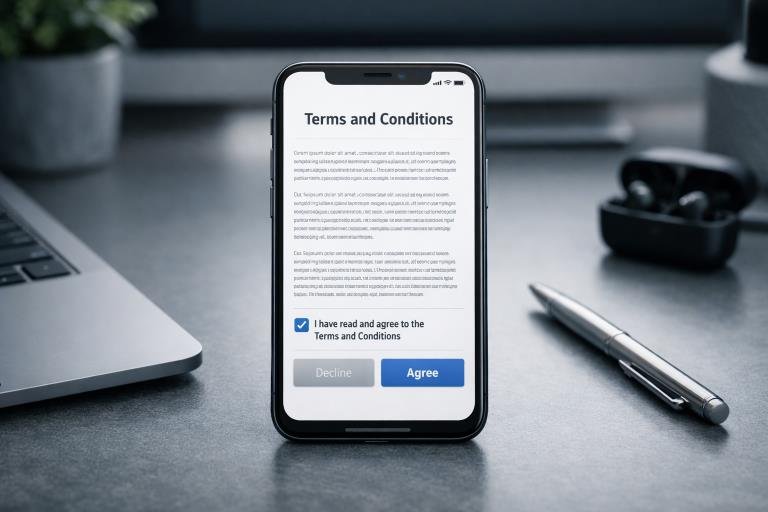
Key Takeaways
- Understand why robust T&C are fundamental to protecting your app and its users.
- Include key clauses that address both legal and everyday operational concerns.
- Draft user-friendly, accessible T&C that are easy for everyone to understand and agree to.
Creating clear and enforceable terms and conditions (T&C) for your mobile app is essential for both protecting your business and providing transparency for your users. Strong T&C set expectations from the outset and help prevent misunderstandings or disputes. For those looking for design inspiration, reviewing terms and conditions UI examples can help ensure the final document is not only comprehensive but also user-friendly and accessible. In today’s digital landscape, failing to address T&C could expose your business to unnecessary risks as well as erode user trust.
While terms and conditions protect your intellectual property and limit liability, they are also a point of reference when it comes to resolving issues between your business and app users. With the growing demand for privacy and security, users increasingly want to know exactly how their data will be used and what rules they are agreeing to when installing an app. Clear T&C benefits businesses by reducing legal exposure and delivering peace of mind to users through transparency and fairness. Taking a proactive approach to legally safeguarding your app ensures a smooth experience for everyone involved.
Importance of Terms and Conditions
Terms and conditions are much more than legal fine print. They are the foundation of your app-user relationship and act as a contract that defines both parties’ rights and responsibilities. Without this contractual clarity, user misunderstandings can quickly escalate into disputes or even litigation. T&C help you set app usage rules, protect your intellectual property, and clearly define the consequences for misuse. Importantly, they also provide your users with transparency and demonstrate your commitment to ethical operations and responsible data handling.
Essential Clauses to Include
To create T&C that truly protect your business and users, you need to cover several foundational areas. The following clauses are considered essential by legal experts and user-experience professionals alike:
- Acceptance of Terms:Your T&C should specify that by downloading, installing, or using the app, users actively accept and agree to the document’s provisions. This can be done via checkbox, an “I Agree” button, or other affirmative methods.
- User Accounts and Responsibilities:Define what is expected of users if they need to create an account. This includes the duty to provide accurate information, keep login details secure, and be responsible for all activities under their account.
- Acceptable Use Policy:Spell out actions and behaviors that are prohibited. Examples include engaging in unlawful activity, harassing other users, or attempting unauthorized access to your backend systems.
- Intellectual Property Rights:Make it clear that all software, trademarks, and content remain your property and that users receive a limited license for personal use only. This helps prevent unauthorized copying or distribution.
- Privacy and Data Collection:Link to your privacy policy and give users an overview of your data practices. Let users know what data you collect, why you collect it, and how it will be used or shared.
- Dispute Resolution:Explain how any conflicts will be handled, whether through arbitration or in a specific legal jurisdiction. This can help prevent expensive and time-consuming litigation.
Ensuring Clarity and Enforceability
For your T&C to serve their intended purpose, users must be able to read and understand them easily. Use plain language instead of complicated legal jargon. Formatting also matters; ensure that your terms are easy to navigate, with headings and bullets for quick reference. Implement a clickwrap agreement, requiring users to actively agree before they use the app, since this method carries much higher legal enforceability compared to passive measures (such as placing the terms in a link at the bottom of the app interface).
Keep your terms readily accessible within the app and make sure that updates or changes are clearly communicated as soon as they are made. This approach is supported by industry best practices and helps strengthen legal standing if your terms are ever challenged. For more on clear contract language and its impact, refer to this LegalClarity guide on using plain English in legal documents.
Compliance with Legal Requirements
Legal compliance is critical, especially given the global reach of many mobile apps. Legislation such as the General Data Protection Regulation (GDPR) in Europe and the California Consumer Privacy Act (CCPA) in the United States have specific requirements dictating how businesses must inform users about data collection, storage, and processing. Your T&C must reference your privacy policy, clarify user rights, and provide ways for users to contact you about privacy concerns.
Make sure your terms remain up to date with evolving data protection laws.
Regular Updates and Revisions
Your T&C should be viewed as a living document, subject to regular reviews and revisions. As your app evolves, new features or services may require additional clauses. Similarly, regulatory changes or shifts in business practices should be integrated into updated terms. Notify users promptly of any material changes, and if needed, collect fresh consent to remain compliant and maintain trust. This iterative approach ensures that your terms stay relevant and enforceable.
Conclusion
Drafting robust terms and conditions is one of the most important pillars in developing a successful mobile app. Well-crafted T&C not only protect your business but also reinforce transparency and facilitate a positive user experience. By following best practices in structure, clarity, and legal compliance, you create a solid foundation that enables your app and your users to thrive.