Walk into any baby store for the first time, and the pillow aisle alone can feel overwhelming. There are curved ones, wedge-shaped ones, enormous body-length ones — and somehow, they’re all labeled differently depending on whether you’re pregnant or already holding a newborn. For first-time mothers, this distinction rarely gets explained, which leads to a very common and costly mistake: buying the wrong pillow at the wrong stage.
A nursing pillow and an early pregnancy pillow may look similar on the surface, but they serve entirely different purposes. A nursing pillow is a postpartum tool designed to support your baby during feeding. An early pregnancy pillow, on the other hand, is built for your body — specifically to address the discomfort that begins well before your belly is even visible.
In the first trimester and into the early second, your body is already shifting. Hormones are loosening ligaments, your center of gravity is subtly changing, and many women begin experiencing backaches, hip tension, and disrupted sleep far earlier than expected. These changes create a very real need for targeted physical support — support that a standard nursing pillow simply isn’t designed to provide. So which type of pillow actually belongs in your early pregnancy toolkit? That’s exactly what this article will help you figure out.
Understanding the Nursing Pillow: A Postpartum Essential
A nursing pillow is a firm, contoured cushion designed primarily for one purpose: supporting your baby during feeding sessions after birth. Most nursing pillows — including widely used options from brands like Momcozy — come in a C-shape, wrapping around your midsection so the baby lies at breast or bottle height without you having to hunch forward or hold all of the infant’s weight in your arms. Some versions use a U-shape or horseshoe design to offer slightly more wraparound coverage, but the core function remains the same — bringing baby up to you rather than forcing you to lean down to them.
In the postpartum period, these pillows genuinely earn their place. Beyond feeding, they serve several practical purposes that new mothers quickly come to rely on:
- Reducing arm, shoulder, and upper back fatigue during long nursing sessions
- Supporting baby during supervised tummy time on a flat surface
- Propping a sitting infant once neck and core strength begin to develop
- Offering a hands-free moment where the baby rests safely while you adjust position
That said, a nursing pillow has clear physical limitations outside of its intended postpartum role. Its compact, wraparound shape is engineered around a newborn’s body, not yours. It doesn’t extend along your spine, it doesn’t cradle your hips, and it offers almost no meaningful support for your lower back or pelvis when lying down. Trying to use one for sleep comfort during pregnancy — a temptation many first-time mothers fall into — typically results in a pillow that shifts, bunches, or simply doesn’t reach the areas that need support most. Understanding what a nursing pillow is actually built to do makes it much easier to see why early pregnancy calls for something fundamentally different.
Demystifying Early Pregnancy Pillows: Support from the Start
Early pregnancy pillows are a distinct category of support products designed specifically for the physical changes that begin in the first trimester and carry through the early second. Unlike nursing pillows, which orient around a baby, these pillows orient around the mother’s body — her spine, hips, belly, and the way she sleeps. The goal isn’t to hold anything in place after birth; it’s to reduce the cumulative strain that builds night after night as your body quietly does the hard work of early pregnancy.
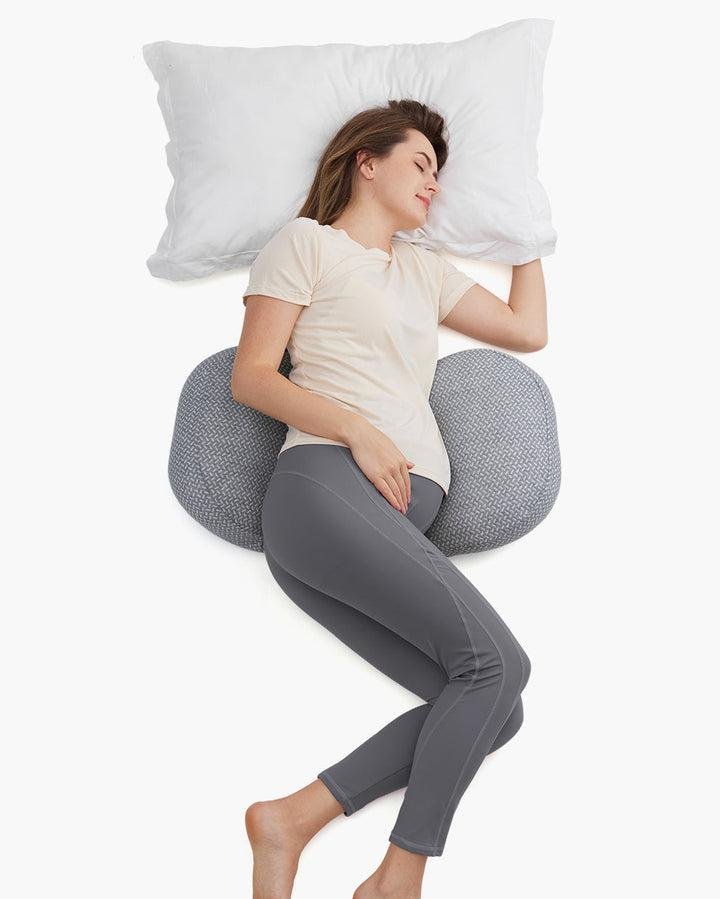
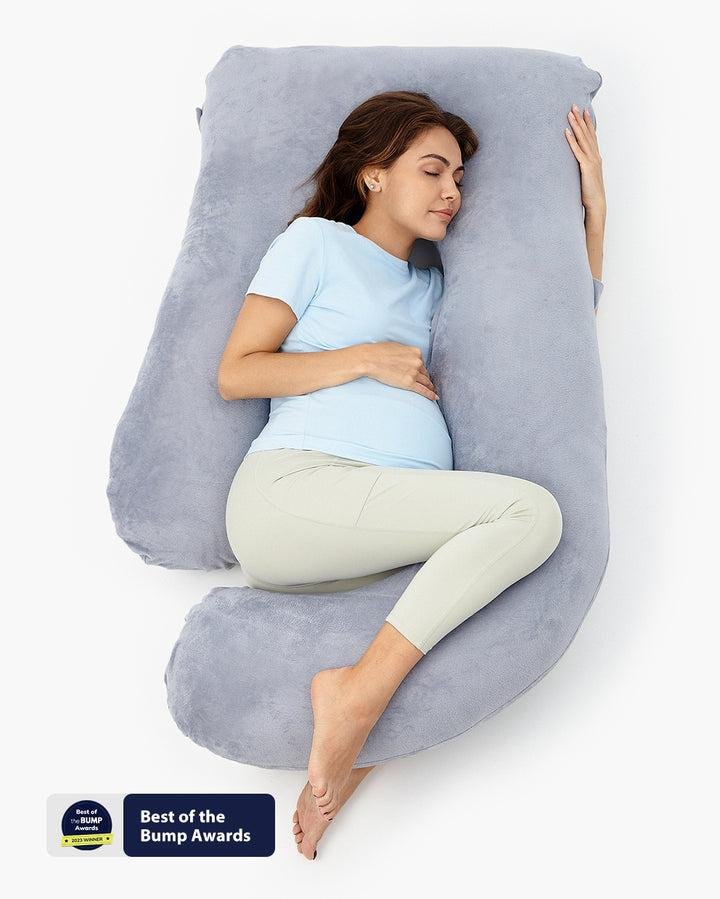
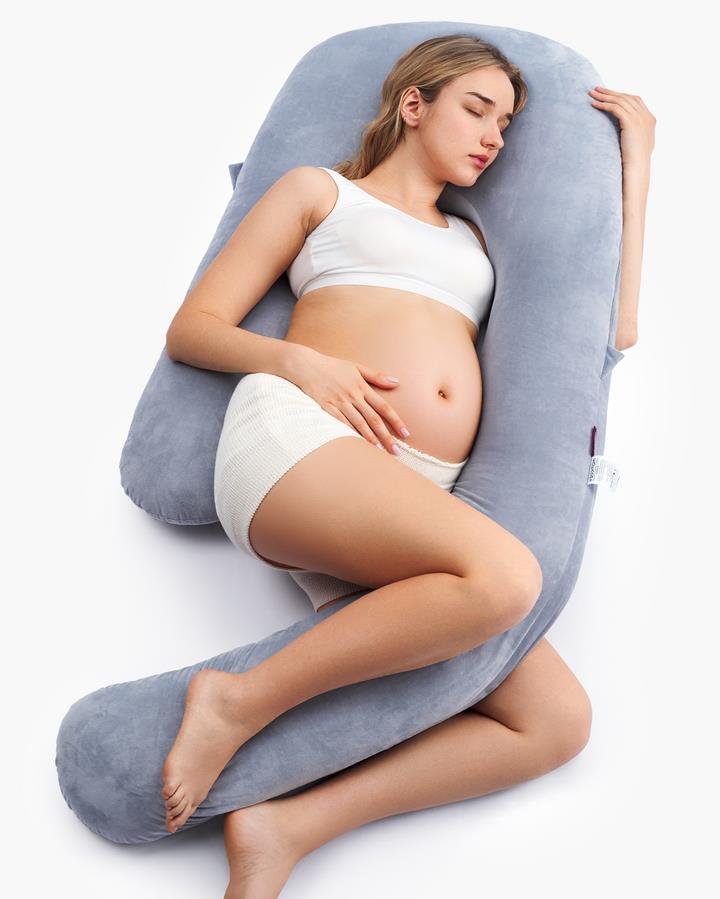
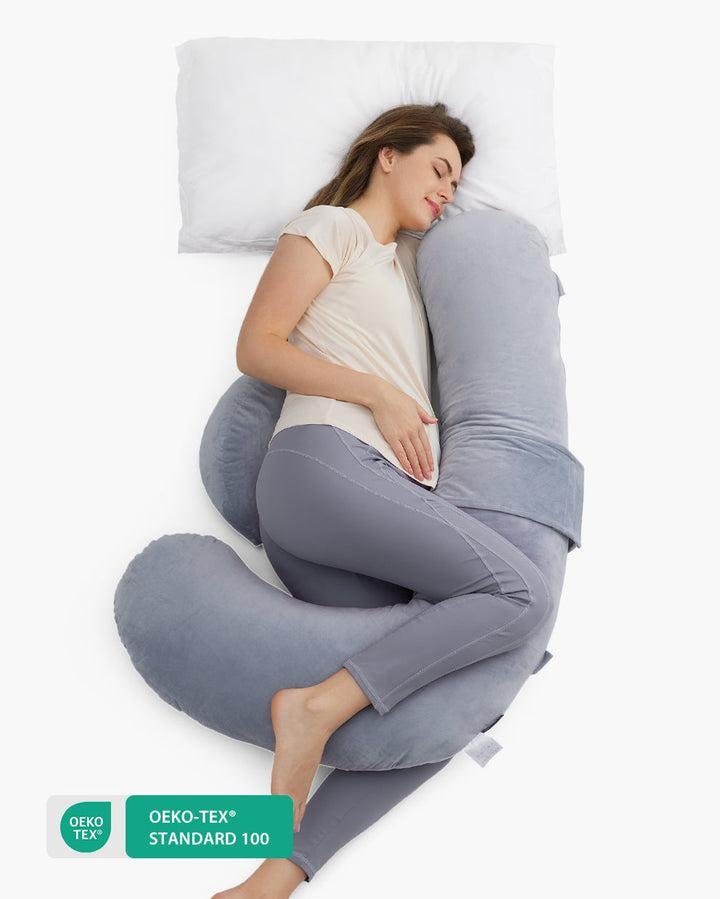
Two types are especially relevant for early pregnancy. The J-shaped pillow curves from the head down through the torso and between the knees, providing continuous alignment from your neck to your lower legs. This shape supports the spine naturally, prevents the hips from rolling forward during sleep, and adapts well as your belly grows — making it a practical investment that remains useful well beyond the first trimester. The wedge pillow takes a more targeted approach: a compact triangular cushion that can be positioned under the belly for gentle lift, behind the back to prevent rolling onto your back, or between the knees to relieve hip joint pressure. Its small size makes it easy to travel with and simple to reposition throughout the night.
Both options directly address the symptoms that catch many first-time mothers off guard in early pregnancy. Mild but persistent backaches often begin before a bump is visible, driven by hormonal changes that relax the ligaments supporting the lumbar spine. Hip discomfort, particularly when lying on your side, increases as those same ligaments loosen around the pelvis. And while true belly support isn’t yet a priority in the first trimester, a gentle wedge can ease the transition to side-sleeping for women who are accustomed to back or stomach positions.
Key Differences: Design, Function, and Timing
Understanding how these two pillow types compare makes the purchasing decision significantly easier. The differences aren’t subtle — they reflect entirely different design philosophies built for entirely different stages of life.
A nursing pillow’s primary purpose is functional and postpartum-specific: it brings a newborn up to feeding height, reducing the strain on a mother’s arms, shoulders, and upper back during what can be hours of daily feeding. An early pregnancy pillow’s primary purpose is restorative — it supports the mother’s body during sleep so that she wakes with less pain and more physical resilience for the day ahead.
In terms of shape and structure, nursing pillows rely on their compact C or U design to wrap around the body at waist level. Early pregnancy pillows are built around full-body or targeted alignment: a J-shaped pillow traces the length of your torso and legs, while a wedge concentrates support at one pressure point. Neither is interchangeable with a nursing pillow in practical use.
Timing is perhaps the starkest difference. A nursing pillow becomes useful the day your baby is born and typically sees its heaviest use in the first six months postpartum. An early pregnancy pillow earns its value from the moment sleep becomes uncomfortable — often as early as six to eight weeks — and continues to serve through the entire pregnancy. Buying a nursing pillow to use during pregnancy means purchasing a tool about nine months before it’s actually needed, while delaying an early pregnancy pillow purchase means enduring preventable discomfort in the meantime.
The support focus also differs fundamentally. A nursing pillow supports the baby and the parent’s forearms. An early pregnancy pillow supports the mother’s hips, lower back, belly, and spinal alignment — the structures most affected by pregnancy-related hormonal and postural changes. Recognizing this distinction helps first-time mothers stop treating these two products as alternatives and start seeing them as tools for entirely separate phases.
Choosing Your Pillow: Solutions for First-Time Mothers
The clearest way to approach this decision is to start with where you are right now, not where you’ll be in nine months. If you’re in the first or early second trimester and already noticing discomfort at night — stiffness when you wake up, difficulty settling into a comfortable position, or aching hips by morning — that’s your body signaling a present need, not a future one. An early pregnancy pillow addresses that need immediately. A nursing pillow does not.
For gentle support as your body changes in early pregnancy, a J-shaped pillow is the more versatile starting point. Tuck the curved top section under your head to replace your regular pillow, let the long body run along your torso, and position the lower end between your knees. This single placement aligns your spine from neck to ankle, keeps your hips stacked, and prevents the forward pelvic roll that worsens lower back tension overnight. Unlike a full U-shaped body pillow, a J-shaped design doesn’t surround you on both sides, which means it’s easier to reposition without fully waking up — an underrated quality when sleep is already fragmented.
For more targeted backache relief, a wedge pillow gives you precise control over pressure points. Place it between your knees while lying on your side to take strain off the hip joint and reduce the pull on your lumbar spine. If lower back pain is your primary complaint, try positioning the wedge behind your back as a gentle stopper that discourages rolling onto your back without forcing your body into a rigid posture. As your belly grows and lifting it slightly off the mattress becomes necessary, the same wedge can slide under your abdomen for that support. Momcozy’s maternity wedge pillow is one option worth considering for this kind of targeted, on-the-go relief, particularly for mothers who travel frequently or need a compact solution they can move between rooms.
To cut through the decision quickly, work through these four questions:
- Are you currently experiencing sleep disruption, back pain, or hip discomfort? If yes, prioritize an early pregnancy pillow now.
- Is your discomfort localized to one area, or does it run along your whole side? Localized pain points to a wedge; full-length discomfort suggests a J-shaped pillow.
- Are you primarily planning ahead for postpartum feeding? A nursing pillow is the right choice — but only once your baby arrives.
- Do you want one product to carry through your entire pregnancy? A J-shaped pillow adapts best across all three trimesters.
First-time mothers often try to solve both stages with one purchase. In reality, these are two separate tools with a natural gap between them. Addressing early pregnancy discomfort now with the right pillow doesn’t prevent you from buying a nursing pillow later — it simply means you’re not white-knuckling through preventable discomfort while waiting for a product that won’t be useful for months.
Beyond the Pillow: Maximizing Comfort in Early Pregnancy
The right pillow makes a real difference, but it works best as part of a broader approach to comfort. Sleeping on your left side improves circulation and reduces pressure on the spine, while gentle stretching before bed — particularly hip flexor and lower back releases — can ease the tension that builds during the day. Staying well hydrated helps reduce nighttime leg cramps, and keeping your bedroom cool supports deeper, more restorative sleep. If back or hip pain persists despite positional changes and proper pillow support, that’s a signal worth bringing to your healthcare provider. A pillow supports your body; your overall self-care routine sustains it.
The Right Pillow for the Right Stage of Motherhood
Nursing pillows and early pregnancy pillows are not competing products — they’re purpose-built tools for two completely different chapters of motherhood. A nursing pillow shines in the postpartum period, giving you the support you need to feed comfortably and care for a newborn. An early pregnancy pillow addresses what your body needs right now: spinal alignment, hip relief, and the kind of restorative sleep that helps you show up for the demands of early pregnancy day after day.
For first-time mothers in the first or early second trimester, the math is straightforward. If sleep is already uncomfortable, if you’re waking with stiffness or hip pain, or if you’re struggling to find a position that lets you fully rest — an early pregnancy pillow is the immediate answer. A J-shaped pillow offers the most versatility, carrying you through all three trimesters without constant readjustment. A wedge offers precision for localized pain and travels easily. Either choice puts you ahead of the discomfort rather than behind it.
The nursing pillow will have its moment — and it’s a genuinely valuable one. But that moment comes after birth, not before. Your early pregnancy deserves the right support for where you actually are right now. Choosing a pillow that truly fits this stage isn’t overthinking a small purchase; it’s recognizing that your comfort and rest matter, and giving yourself the tools to protect both.