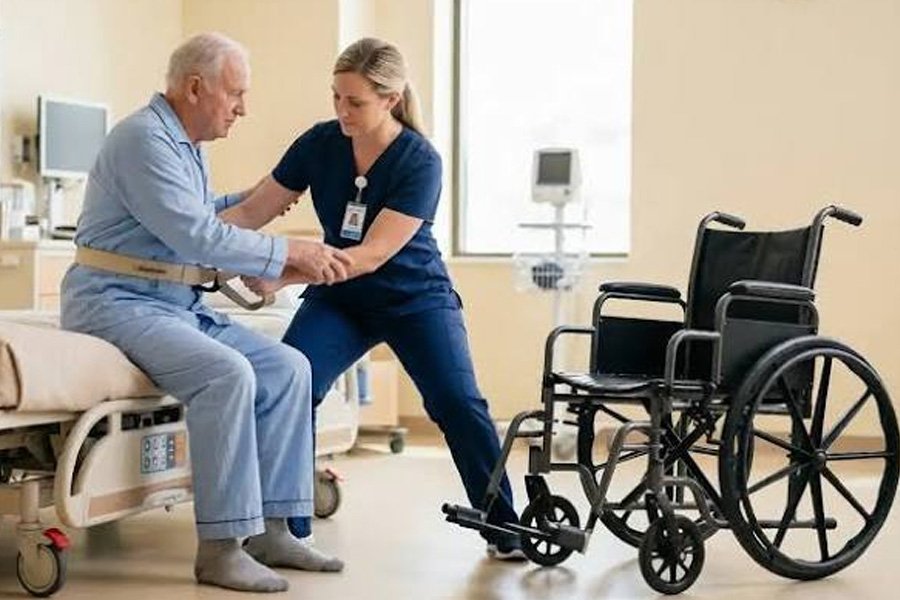
Resident transfers are one of the most common activities in nursing homes and other kinds of assisted living facilities. They involve a lot of equipment, and the staff members at nursing homes need extensive training to use them correctly. Consequently, resident transfers are a major source of injury in any assisted living environment.
Worse, the recurring nature of resident transfers means that even experienced assistants, nurses, and doctors start to take them for granted. Facilities also frequently assume that staff members have training and experience without bringing them up to speed on the specific equipment at their nursing home.
Here is a closer look at what’s necessary for safe resident transfers, what may go wrong, and whether a resident’s treatment constitutes medical negligence. You can then make a more informed decision about whether you or a loved one should get in contact with a experienced nursing home abuse lawyer like the attorneys at Curcio Law.
How to Safely Perform a Resident Transfer
The foremost job of any medical professional performing a resident transfer is to take care of the person’s body mechanics. Keeping the spine neutral is very important because even a small amount of pressure on the spine or a nerve can injure or paralyze a person. This is especially true in an assisted living setting, where people often already have existing mobility problems.
Workers have to be sure about bending at the knees and keeping the transferee’s weight load close. They need to coordinate with other medical professionals in many cases, and that includes communicating properly. Likewise, they need to understand that signaling isn’t enough. They have to wait and respond as the person helping them handles the lift and the move.
Even something as simple as lateral sliding has complex techniques and possible failure points that may injure a resident. Pivoting creates more trouble, especially if other equipment, furniture, or a bed is nearby.
Notably, resident transfer needs to be a documented part of a resident’s individualized care plan. The specific technique and equipment combination needs to make sense for their unique medical condition. Also, team members in the facility need to know the plan and communicate it to others. The facility staff has to keep up with changes, too; otherwise they may injure a resident by using an outdated care plan.
A major factor is knowing when to stop. Staff members often feel pressured to get through rounds, and this can lead to unsafe transfers. It may not help the staff get through their day, but stopping and seeking additional assistance is often the difference between a safe transfer and an injured resident.
Staff turnover at most nursing homes is notoriously bad. Many facilities perform one-time onboarding with no follow-up to measure competency. Some facilities even just use training videos, which are never a substitute for hands-on training under the supervision of a qualified professional.
The Role of Equipment
Resident transfer almost always involves some kind of equipment. Mechanical and hydraulic lifts are especially important when dealing with patients who can’t bear any of their own weight during the process. Transfer belts are also important for helping staff members assist patients, especially with walking and standing transfers. Slide boards and transfer sheets are the go-to options for lateral transfers, but the process itself is tricky for people with limited training.
Many facilities also have adjustable-height equipment. Adjustable beds and wheelchairs make a big difference, but the facility also has to keep them in operating condition.
Note that federal nursing home laws require facilities to have adequate equipment for residents’ needs on hand. However, industry competition, simple misunderstandings, and general pressure to house residents create the conditions for putting people into poorly equipped assisted living facilities.
A patient’s care plan determines what equipment is necessary. If a facility can’t handle transfers within the care plan, then they should refuse or relocate that person as soon as possible.
Equipment checks are a problem, too. Staff members find routine checks to be costly in terms of time. Some staff members store broken equipment without ever reporting it because that burns more time. Maintenance schedules for equipment aren’t always prioritized at nursing homes, either.
Cleaning and laundering are just as important. Unclean transfer equipment can lead to infections. Also, it tends to wear faster and fail mid-transfer.
When Does an Unsafe Resident Transfer Become Negligence?
The line between an accident and medical malpractice or even nursing home abuse can be hard to distinguish, especially if you’ve never worked in a residential care setting. A situation becomes negligence when an injury happens because a nursing home’s staff lacked sufficient training or equipment. The essential question is: would the resident have still suffered these injuries if the necessary training or equipment had been present?
You should also never assume that the facility will properly inform you of an injury. You may need to look for signs that something happened, such as a new fracture, bruising, or a notable decline in function.
Also, watch for the signs that a facility isn’t approaching the problem correctly with other residents. If you don’t see anyone going into a mechanical lift or an adjustable wheelchair ever, then it’s time to be suspicious. You can check the state reporting system to see if the facility has a history of similar incidents, too.
If you suspect negligence or abuse, document everything. Take pictures of injuries as soon as you notice them. If the resident went to the hospital, collect and copy the medical reports. This information may give a nursing home abuse lawyer a leg up on starting a claim.
You and your loved ones have rights while in a nursing home. If you believe there was a problem, start documenting what’s going on and consider taking legal action.