Key Takeaways
- Start with a water test instead of choosing a system based on advertising or price alone.
- Match the treatment method to the actual issue, whether it is sediment, chlorine, hard water, iron, sulfur, bacteria, or another concern.
- Compare flow rate, capacity, maintenance requirements, installation space, and long-term operating costs.
- Review independent certification details and the manufacturer’s performance data before purchasing.
- Consider whether a whole-house system, a point-of-use filter, or a combination of both best fits the home.
Choosing the right water treatment setup is not about finding one product that does everything. The best choice depends on the water source, the household’s daily water use, and the specific substances or conditions that need attention. Homeowners researching whole house water filtration systems in Atlanta, Georgia should begin by identifying the water problem first, then compare systems designed to address it.
A whole-house filter treats water as it enters the plumbing system, which means it can affect water used for showers, laundry, dishwashing, cleaning, and drinking. However, a system that improves chlorine taste may not solve hard water, rusty stains, bacteria, lead, or other contaminants. A clear plan based on reliable information helps prevent an expensive mismatch between the filter and the home’s needs.
Why Water Quality Should Guide The Purchase
Water may appear clear while still containing harmful substances, and issues such as odor or cloudiness warrant investigation rather than indicating a specific filtration solution. Desired outcomes should guide treatment choices: chlorine odor may require carbon filtration, while sediment issues call for sediment filtration. Hardness leads to softening systems, and specific contaminants such as iron or bacteria require specialized treatments. No single unit effectively addresses all water quality problems.
Step One: Identify The Water Source
Municipal Water
Homes served by a public utility can begin by reviewing their local Consumer Confidence Report, also called a water quality report. Municipal water is treated before delivery, but conditions can still vary based on the provider, neighborhood, service line materials, and a home’s own plumbing. Common concerns include chlorine or chloramine taste, sediment from aging pipes, and mineral content.
Private Well Water
Private well owners are responsible for monitoring their own water supply. Well water can change after heavy rain, flooding, nearby construction, a repair to the well system, or shifts in local groundwater conditions. The CDC recommends that well owners test at least annually for total coliform bacteria, nitrates, total dissolved solids, and pH, while also considering local contaminants of concern.
Step Two: Test Before Buying
A basic home test kit may be useful for identifying simple indicators such as hardness, pH, or chlorine. For a broader and more dependable assessment, use a certified laboratory. Lab testing can help identify bacteria, nitrates, metals, minerals, and other substances that influence the treatment decision.
- Choose a laboratory and follow its sample collection instructions exactly.
- Review the results, including measured levels rather than only pass-or-fail labels.
- List the concerns that affect health, plumbing, fixtures, taste, odor, or cleaning.
- Match each concern with a treatment approach that is designed for that purpose.
- Retest after installation when the issue involves drinking-water safety or a significant change in water quality.
Common Whole-House Filter Types
Most homes need one treatment stage or a combination of stages. The following options serve different roles:
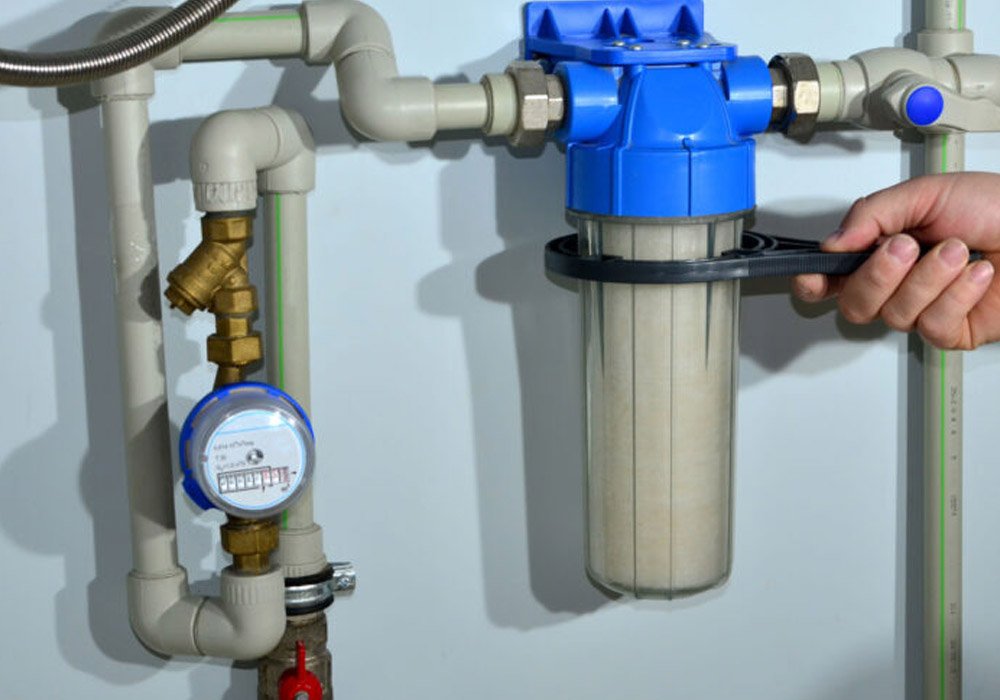
- Sediment filters: Capture visible particles such as sand, silt, dirt, and pipe rust. They are often installed as a first stage to protect other equipment.
- Activated carbon filters: Often used to reduce chlorine taste, odor, and certain organic compounds. They do not automatically remove dissolved minerals, bacteria, or every chemical.
- Water softeners: Reduce calcium and magnesium, the minerals associated with hard water, scale, spotty dishes, and reduced soap performance. A softener is not the same as a general-purpose filter.
- Iron and sulfur treatment: Designed for water that causes orange staining, metallic taste, black staining, or rotten-egg odors. Proper sizing depends on test results.
- Ultraviolet treatment: Uses UV light to inactivate certain microorganisms. It requires clear water and does not remove sediment, chemicals, or dissolved minerals.
- Reverse osmosis: Usually installed at a kitchen sink or another drinking-water location. It can be useful for targeted drinking-water treatment rather than supplying filtered water to every fixture.
Whole-House Versus Point-Of-Use Filtration
A whole-house, or point-of-entry, system treats water near the main line entering the home. A point-of-use system treats water at a single location, such as a kitchen faucet, refrigerator line, or a separate drinking-water tap. The EPA notes that point-of-use and point-of-entry devices can use many of the same treatment technologies, but the appropriate choice depends on the source water and treatment goal. Learn more through the EPA’s overview of drinking water technologies.
A combination approach is often practical. For example, a home may use sediment and carbon filtration for general household water, then add reverse osmosis at the kitchen sink for drinking and cooking. This can help focus higher-level treatment where it matters most without overbuilding the entire system.
How To Check System Size And Flow Rate
A filter must support peak household demand, not just one running faucet. Consider how many bathrooms the home has, whether multiple showers run at once, and whether appliances such as a washing machine, dishwasher, or irrigation system may operate at the same time.
- Compare the system’s rated gallons-per-minute flow rate with expected peak use.
- Ask whether the unit may cause a noticeable pressure drop as cartridges age.
- Confirm there is enough space for housing, tanks, bypass valves, and future service.
- Check whether the system needs electricity, a drain connection, or periodic backwashing.
- Make sure replacement filters can be accessed without moving other equipment.
Certification Claims And Maintenance Costs
Marketing language can be broad; look beyond phrases like “removes contaminants” or “purifies water.” Check the exact contaminant, tested capacity, and relevant NSF/ANSI standard. Certification for chlorine reduction doesn’t confirm performance for lead, PFAS, bacteria, or hardness. Calculate full ownership cost, including replacement cartridges, media, salt, electricity, wastewater, service, and testing, as these matter as much as the initial cost. Set reminders for filter changes and inspections to prevent reduced water pressure, loss of effectiveness, or sanitation risks.
Common Buying Mistakes To Avoid
- Buying before testing the water.
- Assuming a water softener removes chemicals or microorganisms.
- Choosing the lowest-priced system without considering capacity or replacement costs.
- Ignoring peak flow rate and household water pressure.
- Trusting claims that a single unit removes everything.
- Leaving too little space for maintenance and cartridge changes.
Conclusion
The right whole-house water filter is the one that fits the home’s actual water conditions, plumbing layout, water demand, and maintenance budget. Test first, identify the specific concern, verify performance claims, and plan for long-term care. That process can lead to more consistent water quality and a system that works effectively for years.