Key Takeaways
- Commercial roof decisions should be based on a documented inspection, not only on the location of an active leak.
- Washington Weather Shield Commercial is listed by GAF as a GoldElite™ Commercial Contractor in Tukwila.
- Planned inspections, drain checks, repair records, and condition reports can help owners manage roofing risks before they affect building operations.
- Single-ply roof work should consider membrane condition, drainage, insulation, penetrations, flashing, building use, and budget.
- A useful service request includes the building address, roof history, visible symptoms, access restrictions, and desired schedule.
Commercial roof problems rarely stay small for long. A leak can disrupt tenants, damage finishes or stored materials, and complicate normal operations. Tukwila building owners who need a clear assessment of roof condition, repair needs, maintenance priorities, or replacement options can begin with GAF certified commercial roofing company Washington Weather Shield.
Washington Weather Shield Commercial is listed by GAF at 834 Industry Dr in Tukwila, Washington. Its GAF profile indicates the business has been operating since 2012, lists contractor ID 1111582, and identifies single-ply roofing among its supported technologies. A professional roof evaluation gives an owner a practical starting point for deciding whether the building needs immediate repairs, a maintenance program, or a larger capital project.
What Commercial Roofing Problems Need Attention?
Commercial roofs are exposed to rain, wind, temperature changes, foot traffic, rooftop equipment, and standing water. Over time, these conditions can contribute to membrane punctures, open seams, deteriorated flashing, blocked drains, or damage around curbs and penetrations. Interior stains and active drips may be visible signs, but they do not always identify the full source or extent of moisture intrusion.
A more complete approach identifies the condition of the roof assembly and separates urgent work from longer-term planning. That can help an owner understand whether a localized repair is reasonable, whether recurring defects point to a broader issue, or whether replacement planning should begin. It also creates a clearer scope for comparing proposals.
How Should Washington Weather Shield Commercial Evaluate a Roof?
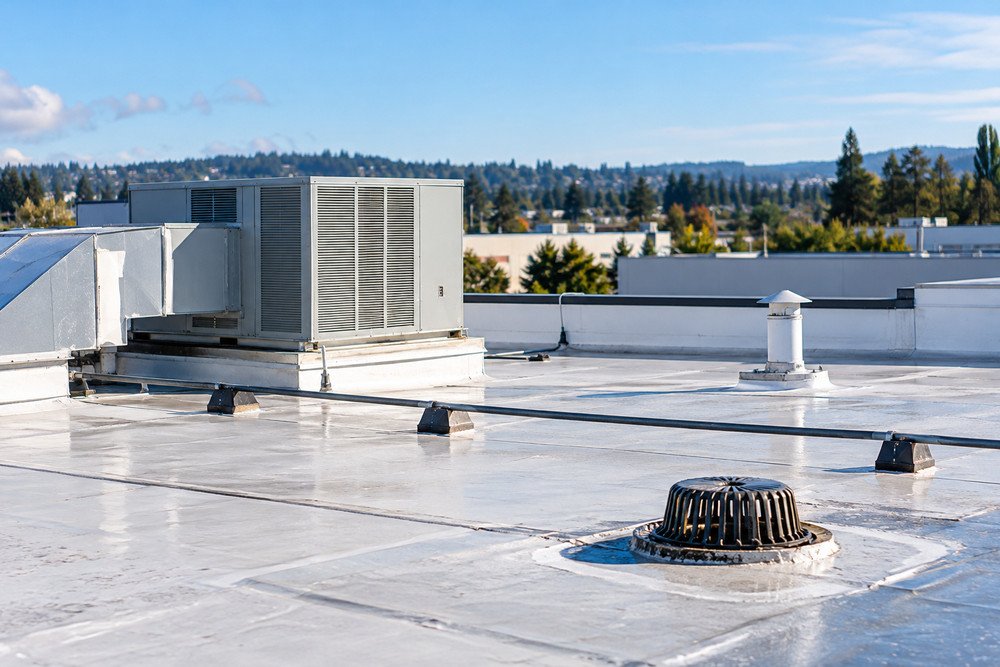
A commercial roof assessment should begin with the building’s available history: roof age, material, previous repairs, leak patterns, and any past installation records. The field review can then examine membrane surfaces, seams, edge details, flashing, drains, rooftop equipment curbs, skylights, and other penetrations.
Important Inspection Questions
- Is there ponding water, debris buildup, physical damage, or visible membrane deterioration?
- Are drains and drainage paths functioning as intended?
- Do seams, flashing transitions, and penetration details show signs of separation or wear?
- Are there interior indications of moisture that warrant further investigation?
- Which items need prompt repair, and which can be budgeted as future work?
A written condition report with photographs, observations, repair recommendations, and defined priorities can be especially useful for property managers and owners who manage multiple stakeholders. It gives the owner a record to use when planning maintenance budgets, capital expenditures, and work schedules around tenant or business needs.
Why Does Planned Commercial Roof Maintenance Matter?
Waiting until water enters the building can limit an owner’s options. A regular maintenance process can identify blocked drains, loose flashing, punctures, and other visible issues before they become disruptive. The National Roofing Contractors Association notes that planned commercial roof maintenance can help protect the investment in a roof system and extend its useful life.
For each building, a practical maintenance checklist may include clearing drains and scuppers, reviewing seams and flashing, checking edge metal, observing rooftop equipment areas, documenting repairs, and recording interior leak reports. Washington Weather Shield Commercial can be asked about its approach to inspection scheduling, repair tracking, and maintenance requirements for the selected roof system.
What Does GAF GoldElite™ Commercial Contractor Status Mean?
Manufacturer certification may be one factor in choosing a roofing contractor. GAF lists Washington Weather Shield Commercial as a GAF GoldElite™ Commercial Contractor. GAF says these contractors may offer the GAF Diamond Pledge™ NDL Roof Guarantee for qualifying systems, with coverage up to 25 years, and must be properly insured and licensed where required.
Certification does not replace proper roof design and installation, ongoing inspections, or compliance with guarantee terms. Owners should confirm project-specific system eligibility, coverage limits, maintenance requirements, exclusions, and completion documents.
How Can Single-Ply Roofing Projects Be Compared?
GAF lists Washington Weather Shield Commercial as a single-ply roofer. Single-ply roofing projects require more than simply choosing a membrane. The existing roof assembly, substrate condition, insulation, coverboards, attachment method, drainage, flashing details, and rooftop penetrations all affect the recommended scope.
When comparing repair, restoration, and replacement paths, building owners should ask:
- Can the existing roof be repaired safely and reliably?
- What work is needed around drains, curbs, HVAC equipment, skylights, and other penetrations?
- How will the work be scheduled to reduce disruption to tenants, deliveries, employees, or customers?
- What documentation will describe the materials, scope, repairs, inspections, and guarantee options?
- What future maintenance should be expected after the work is complete?
How Does Roofing Relate to Building Performance?
A roof is part of the building envelope, along with other elements that separate indoor and outdoor conditions. Insulation, roof condition, air-sealing details, membrane color or reflectivity, and HVAC coordination can all be relevant when making a major roofing decision. The U.S. Department of Energy explains that the opaque building envelope accounts for 28% of building energy use, and roofs are included in that envelope.
No responsible contractor should promise a fixed energy-savings result without building-specific analysis. However, a roofing discussion can include performance goals, insulation considerations, and coordination with other planned building improvements, so the owner evaluates the roof as part of a broader capital plan.
What Should a Washington Weather Shield Commercial Request Include?
- The building address and approximate roof size.
- The roof type, estimated age, known repair history, and available records.
- Photographs or descriptions of active leaks, stains, or damaged areas.
- Information about rooftop HVAC units, solar equipment, skylights, drains, and access limitations.
- Tenant schedules, operating hours, safety requirements, and other site constraints.
- The preferred timeline, budget considerations, and questions about repair, replacement, guarantees, and maintenance.
Frequently Asked Questions
Does Washington Weather Shield Commercial serve Tukwila building owners?
GAF lists Washington Weather Shield Commercial at a Tukwila address. Owners should confirm current service area, scheduling availability, and project fit directly when requesting an assessment.
Can an active leak always be fixed with a small repair?
Not necessarily. A roof inspection can determine whether the visible leak is isolated or part of broader membrane, flashing, drainage, or moisture issues.
What is the best next step for a commercial property owner?
Request a documented roof assessment that identifies immediate concerns, recommended repairs, maintenance needs, and longer-term replacement considerations. That information helps the owner make a decision based on the building’s actual conditions rather than assumptions.