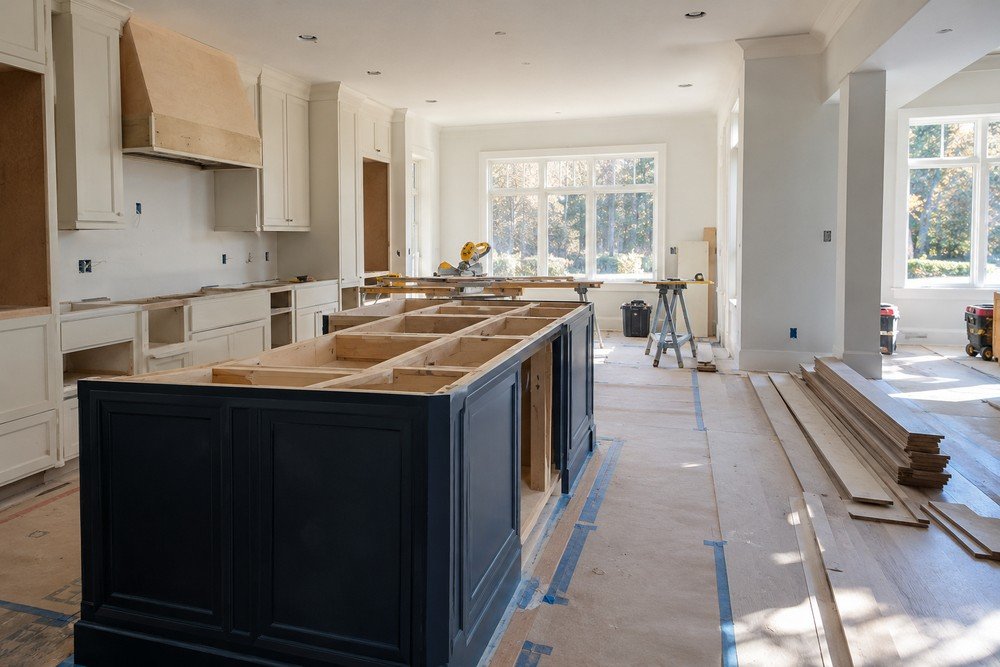
If you’ve called a contractor in the last few weeks and heard “I can’t start until after the new year,” you’re not alone. October is when home improvement calendars tighten fast. Homeowners who want their kitchens, floors, and living spaces finished before Thanksgiving and the December holidays all call at once, and available slots disappear quickly.
This post breaks down why the fall crunch happens, which projects need the most runway, and how to plan so you’re not the household eating takeout on a plywood subfloor come January.
Why October Is the Tipping Point
The holiday deadline is the real driver. People picture hosting dinner, having relatives stay over, or simply enjoying a finished space during their time off. Working backward from late November, October is the last comfortable window to begin anything substantial.
A few forces stack up at once:
- Shared deadlines. Everyone wants the same finish line, so demand spikes in a narrow window.
- Material lead times. Cabinets, specialty tile, and certain flooring products are ordered, not pulled off a shelf. Those weeks count against your schedule before you even start.
- Permit and inspection queues. Local offices get busier in the fall too, and waiting on an inspection can stall an otherwise on-track job.
- Crew capacity. Good crews book out. Once their calendar fills, your “quick” project lands behind everyone who called first.
The takeaway is simple: starting a project in mid-October is realistic for the holidays. The identical project started in mid-November usually isn’t.
Full Remodels Need the Longest Runway
A full kitchen remodel is the most schedule-sensitive project in the house because so many steps depend on the one before it. You can’t install countertops until cabinets are set. You can’t set cabinets until floors and walls are ready. Each stage must line up in order, and an early delay pushes everything behind it.
The Lead Times That Catch People Off Guard
Cabinetry is almost always the pacing item. Semi-custom and custom cabinets often take several weeks from order to delivery. That clock starts only after you lock the final design and measurements. Countertops add their own timeline, since slabs are templated after cabinets are installed, then fabricated and returned for installation.
Permits matter just as much. If your remodel touches plumbing, electrical, or structural elements, you’ll likely need approvals and inspections at specific checkpoints. You can’t rush those, and skipping them creates problems at resale.
The Sequence That Determines When You Can Actually Cook
Homeowners often ask when the kitchen will be “done.” The more useful question is when it will be usable. A rough sequence looks like this:
- Demolition and any structural changes
- Rough-in for plumbing and electrical, with inspections
- Flooring, walls, and paint prep
- Cabinet installation
- Countertop templating and installation
- Backsplash, fixtures, appliances, and final finishes
Notice that the sink and stove come late. Even when a project is “on schedule,” there’s a stretch in the middle with no working kitchen at all. Planning for that gap, including a temporary setup elsewhere in the house, saves a lot of frustration.
If you’re weighing a top-to-bottom renovation, talk with a team early about design and ordering rather than waiting for a crew to be free. Firms that handle custom kitchen remodeling in Loudoun County tend to book their fall and early-winter slots well in advance. Hence, an early conversation protects your timeline even if the physical work starts later.
The Shorter-Timeline Work That Still Has to Happen
Not every remodel project takes months. Flooring work in the rooms next to a kitchen is a good example. It moves faster than a full renovation, but you still need to schedule it thoughtfully, and it’s easy to forget until it becomes a problem.
Repairs and Replacement in Adjoining Rooms
When a kitchen gets a facelift, the dining room, hallway, or family room next door often looks tired by comparison. Replacing or refreshing carpet in those spaces is a shorter job. Still, it competes for the same fall calendar as everything else. A company like G&A Carpet Services in Chantilly stays busy this time of year precisely because so many homeowners tackle these adjoining rooms alongside a larger remodel.
Transitions Where New Flooring Meets Existing Carpet
One detail people underestimate is the seam between the kitchen’s new hard flooring and the carpet in the next room. A clean transition strip, set at the right height and color, is the difference between a polished result and an obvious patch job. Plan this before the kitchen floor goes in, not after, so the heights line up.
Keep an eye on these transition points:
- Kitchen-to-dining doorways
- Hallways leading to bedrooms
- Steps or level changes near the remodel
- Open-concept edges where tile or hardwood meets carpet
Damage From Construction Traffic
Remodels are messy, and the rooms you weren’t renovating can take a beating. Crews, tools, and material hauls track dust and grit across existing carpet for weeks.
Smart ways to protect it:
- Lay down adhesive film or heavy runners on carpeted paths before demolition day.
- Seal off the work zone with plastic sheeting to contain dust.
- Schedule carpet cleaning or replacement after the heavy work, not before, so you don’t pay to clean it twice.
Common Mistakes That Push Projects Into January
A few avoidable missteps are what actually send people into the new year:
- Shopping for materials too late. Picking cabinets or flooring in November means lead time alone will push you past the holidays.
- Treating permits as an afterthought. Approvals take time; build them into the plan from day one.
- Booking trades in the wrong order. Flooring, cabinets, and finish work have to be sequenced. Calling the carpet installer the week before you want them rarely works in October.
- Underestimating the “no kitchen” gap. Not planning a temporary setup turns a manageable project into a daily headache.
- Waiting for a perfect quote. Comparing bids is wise, but dragging it out for weeks can cost you the only remaining start date before January.
A Simple Plan to Beat the Crunch
If you want finished work before the holidays, move in this order:
- Decide the scope now. Full remodel, partial update, or flooring only. Scope sets your timeline.
- Get on calendars early. Contact the contractors and installers you’re considering before their fall slots fill.
- Order long-lead materials first. Lock in cabinets, counters, and specialty flooring as soon as the design is final.
- Sequence the trades. Confirm who comes when, so flooring, cabinetry, and finishing don’t collide.
- Protect the rest of the house. Plan dust control and carpet protection before work begins.
The Bottom Line
The fall booking rush isn’t a sales tactic; it’s a scheduling reality driven by a shared holiday deadline, real material lead times, and limited crew availability. Full kitchen remodels need the longest runway because each step depends on the last. At the same time, flooring work around the project moves faster but still needs careful scheduling.
Homeowners who decide on scope, get on calendars early, and order materials ahead of time give themselves a genuine shot at finishing before the new year. Those who wait for the “right moment” in November often find that the calendar has already been decided for them.