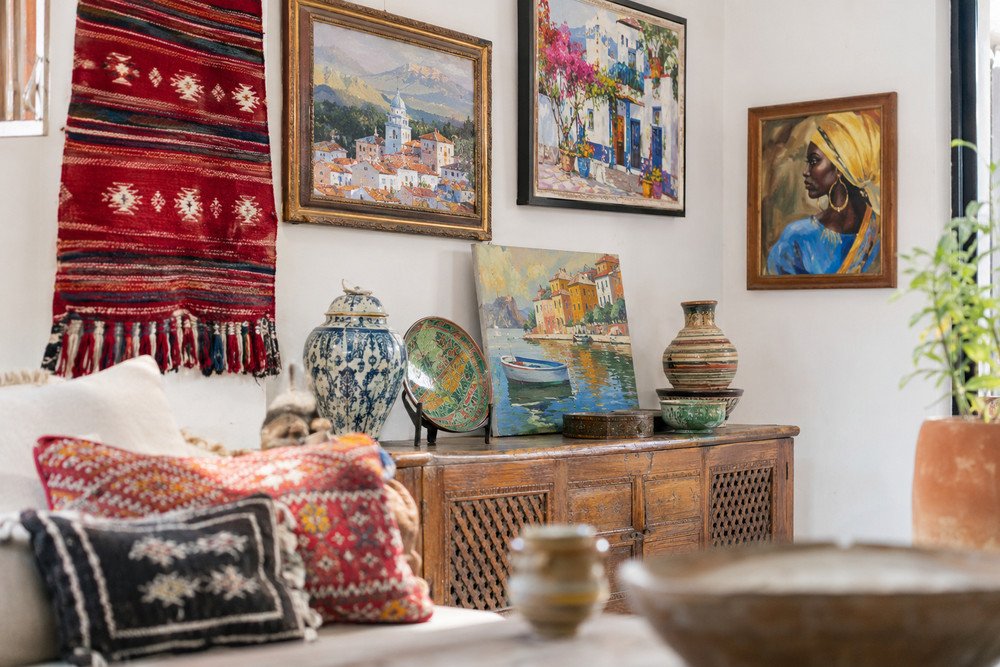
When you return home from traveling, do you find yourself searching for a way to preserve those memories beyond photographs and souvenirs? Building an art collection from your travel experiences transforms those moments into meaningful pieces that decorate your walls and tell the stories of places you’ve visited. Unlike mass-produced art, pieces you’ve discovered while traveling carry genuine emotional weight and personal significance. This approach to collecting art turns your home into a gallery that reflects your adventures, your taste, and your connection to different cultures and artistic traditions around the world.
1. Explore Local Artists and Markets in Every Destination
The most authentic art finds happen when you step away from tourist-oriented galleries and seek out where local artists actually work and sell their creations. Many cities have street markets, artist collectives, and studio neighborhoods where emerging and established artists display their work directly to visitors. For example, neighborhoods like the Marais in Paris or the arts districts in Mexico City host regular open studio events where you can meet artists, learn about their inspiration, and purchase pieces fresh from their studios. Shopping at these venues not only gives you access to genuine local art but also allows you to negotiate prices and commission custom pieces that reflect your specific interests. Take time to wander through neighborhoods frequented by locals rather than tourists, ask hotel staff or other travelers for recommendations, and visit smaller galleries that showcase regional artists. By approaching art collection this way, you’ll acquire pieces with authentic cultural value rather than derivative reproductions.
2. Understand the Practical Aspects of Purchasing and Transporting Art
Buying art while traveling requires careful consideration of logistics, especially for larger or fragile pieces. Before making a purchase, assess whether you can realistically transport the artwork home without damage, or whether the seller offers shipping options. Smaller pieces like prints, watercolors, or photographs present fewer challenges than sculptures or large canvas paintings, and some travelers purchase rolled canvas or watercolor papers during their trip and have them professionally framed after returning home to reduce transportation difficulties. Request a certificate of authenticity or receipt from the artist or gallery, as this documentation becomes valuable if you ever decide to sell the piece or have it appraised. Understanding customs regulations beforehand helps you avoid surprises at the airport, since certain materials and items face restrictions in different countries. Taking these practical steps ensures that your travel art collection remains in good condition for years to come.
3. Develop a Curatorial Vision That Reflects Your Journey
A truly cohesive home art collection tells a unified story, even when pieces come from different countries and cultures. Rather than randomly purchasing any art that appeals to you, consider establishing a collecting theme based on color palette, artistic medium, subject matter, or the regions you visit most frequently. Some collectors focus on landscapes that remind them of meaningful destinations, while others prefer abstract pieces or figurative work from specific countries. Travelers who enjoy collecting art at sea often discover that cruise ship art auctions provide a curated selection of international works that fit neatly into a regionally themed collection, adding pieces tied to specific voyages alongside those gathered on land.
Your collection might celebrate a particular artistic tradition, such as African masks and sculptures, Japanese prints, or contemporary Latin American art. This curatorial approach prevents your collection from feeling scattered and instead creates a living gallery that visitors can appreciate as a cohesive display. As you travel, you’ll naturally gravitate toward pieces that fit your established vision, making selection easier and more intentional. Over time, your collection becomes a visual autobiography of your travels and artistic evolution.
4. Document Your Acquisitions and Their Stories
Keeping detailed records of each artwork you purchase transforms your collection from a group of decorative objects into a meaningful archive. For every piece, note the artist’s name, the location where you purchased it, the date of acquisition, and the price paid. More importantly, write down the story behind your purchase: what drew you to it, what you were experiencing during that trip, or what the artist told you about their inspiration and technique. Consider photographing each artwork with the artist or in the original context where you found it, as these images add dimension to your collection’s narrative. Creating a simple spreadsheet or journal of your art collection provides reference material for insurance purposes, appraisals, and your own future enjoyment. When guests visit your home, having these stories readily available transforms your collection from background decoration into conversation pieces that illuminate your travels.
5. Create Display Spaces That Honor Your Collection
How you display your travel art collection significantly impacts its presence in your home and how visitors experience your space. Rather than scattering pieces randomly throughout your house, consider creating a gallery wall or dedicated room that showcases your acquisitions as a unified exhibit. Proper framing, matting, and lighting dramatically enhance how artwork appears on your walls and protect pieces from environmental damage. Rotate your collection occasionally if you have limited wall space, similar to how museums display rotating exhibits, so you can appreciate different pieces seasonally and prevent any single artwork from fading into the background through familiarity. Consider the relationship between artwork and furniture, wall color, and architectural elements in the room where you display pieces. Thoughtful curation and presentation elevate your home art collection from personal keepsake to a genuinely impressive display that enriches your living environment.
Conclusion
Building a home art collection from your travel experiences requires intentionality, practical planning, and a willingness to seek out authentic local artists rather than mass-market reproductions. By exploring markets and studios directly, understanding transportation and logistics, developing a cohesive curatorial vision, documenting your pieces, and displaying them thoughtfully, you create a collection that genuinely reflects who you are and where you’ve been. Your home becomes a personal museum that celebrates your adventures while supporting the artists whose work moves you. Each piece carries weight beyond its aesthetic value, serving as a tangible reminder of specific moments, places, and people you encountered during your travels. Over time, this approach to collecting transforms your walls into a living narrative of exploration and cultural appreciation that you and your guests will treasure for years to come.