Every homeowner with a chainsaw in the garage has looked at a problem tree and thought the same thing: how hard can it be? The tree is right there. The saw is right there. A professional quote for tree removal sits in your inbox at $1,200, and the DIY version costs a Saturday afternoon and a tank of gas. It feels like the easiest $1,200 you’ll ever save.
Sometimes it is. A six-inch ornamental pear in the middle of an open yard is a genuinely doable weekend job for a handy homeowner. But the math that makes DIY look cheap falls apart fast once you look at what actually drives tree work costs, and what happens when a cut goes wrong. The real question isn’t “can I save money by doing this myself?” It’s “which parts of this job am I actually equipped to do, and which parts am I underestimating?”
Let’s break it down honestly, because the answer changes depending on the tree, the location, and your tools.
What You’re Actually Paying For When You Hire a Pro
A professional quote can feel inflated until you itemize what’s behind it. Most tree removal estimates include some combination of the following:
- Bucket trucks, cranes, rigging gear, chippers, and stump grinders. A homeowner rental for a chipper and stump grinder alone can run a few hundred dollars per day.
- Labor and crew. Most removals take a crew of two to four people several hours. That’s skilled labor, not just muscle.
- Insurance and licensing. Legitimate companies carry liability coverage and workers’ comp. If a worker falls on your property and the company isn’t insured, that liability can land on you.
- Hauling away hundreds or thousands of pounds of wood and debris, or arranging for it to be chipped on site.
- Risk management. Ropes, rigging, and sectional dismantling so a 60-foot trunk doesn’t land on your fence, your roof, or the neighbor’s car.
That last one is the part people skip when they price out DIY, and it’s the part that can cost the most when it goes wrong.
Where DIY Genuinely Makes Sense
To be fair, there are situations where handling it yourself is reasonable. You’re a good candidate for DIY removal if most of these are true:
- The tree is small, generally under about 15 to 20 feet
- The trunk is thin, well under a foot in diameter
- There’s open space around it, with nothing valuable within at least twice the tree’s height
- No power lines are anywhere nearby
- The tree is healthy enough to cut predictably, not rotten, leaning, or split
- You own or can rent proper safety gear: chainsaw, chaps, helmet, eye protection, gloves
A small dead shrub-tree in an open corner of the lot is a fair DIY project. So is cutting down a young volunteer sapling before it becomes a real tree. In these cases, the savings are real. You pay for a rental saw if you don’t own one, maybe a disposal fee at the local yard waste facility, and your own time. That might total $100 to $300 against a $400 to $600 professional quote.
Notice what all the qualifying conditions have in common: they describe the easy jobs. The trees that generate big professional quotes are big, close to structures, or hazardous, and those are exactly the trees where DIY savings evaporate.
Where the DIY Math Falls Apart
Here’s where the “savings” start to look different once you run the real numbers.
Equipment rentals add up quickly. A decent chainsaw rental, a stump grinder, a wood chipper, and a trailer to haul debris can easily push a weekend project past $400 before you’ve made a single cut. Add a second day because the job went slower than planned, and you’re approaching the low end of professional pricing with none of the insurance protection.
Disposal is its own cost. A mature tree can produce several tons of material. Some landfills and transfer stations charge by weight, and not all accept yard waste. Homeowners regularly underestimate this line item by hundreds of dollars.
Mistakes are expensive in ways that aren’t obvious. A dropped limb through a roof, a trunk landing on a fence, or a gouged driveway turns a $1,500 job into a five-figure repair bill. And here’s the detail that surprises people: many homeowners insurance policies are skeptical of damage caused by the homeowner doing hazardous tree work themselves. Coverage for a DIY accident is not guaranteed the way coverage for a hired contractor’s accident usually is.
Injury risk is real, not theoretical. Chainsaws, falls from ladders, and struck-by injuries from falling limbs are among the most serious injuries in home maintenance. Tree work consistently ranks among the most dangerous occupations in the country for a reason. Professionals train for years on rigging and cutting technique. A homeowner watching videos is not at the same skill level, no matter how comfortable they are with tools.
Power lines change everything. If a tree is anywhere near a service drop or utility line, this stops being a DIY question entirely. In most areas, homeowners are not legally allowed to work near energized lines, and utilities handle or coordinate that clearance themselves. Call before you plan anything.
The Middle Path Most People Miss
There’s an option between full DIY and full-service removal that often captures most of the savings with a fraction of the risk: hire the pros for the dangerous part and handle the rest yourself.
In practice, that looks like one of these arrangements:
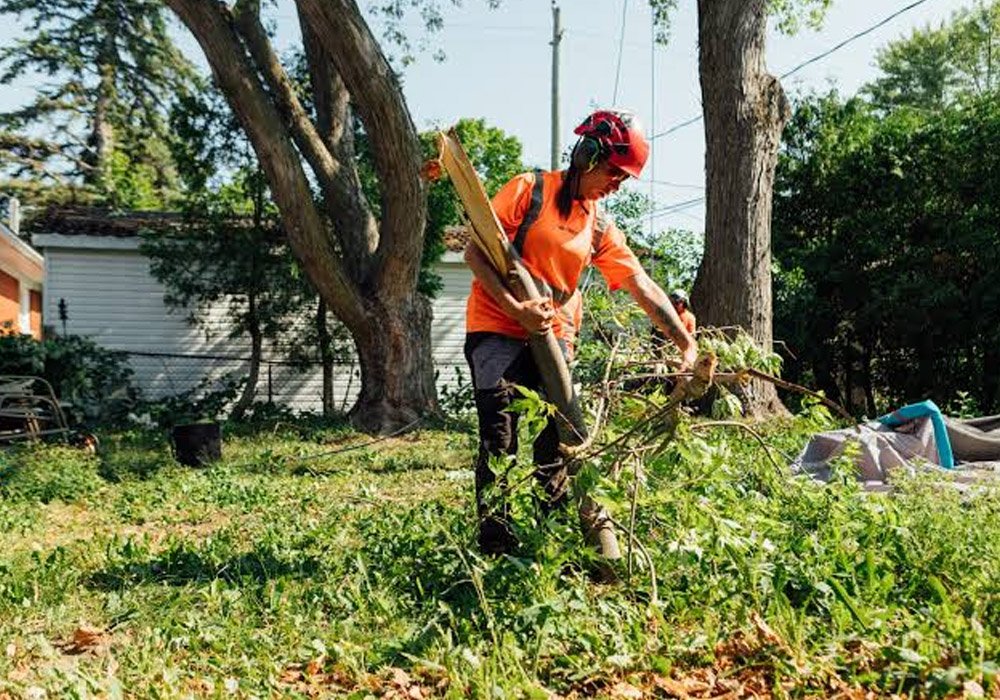
- Pay for felling, do the cleanup. Some companies will cut the tree down and leave the wood where it lands. You handle branches, logs, and disposal, which is labor but not high-risk labor.
- Split the wood yourself. If you have a fireplace or a neighbor who does, free firewood has real value and offsets disposal costs.
- Rent the stump grinder for the leftover stump. Grinding a stump after the pros have felled and hauled the trunk is a manageable solo task in an open yard.
- Get multiple quotes. Prices for the same job vary widely between companies. Three quotes often reveal a spread of 30 to 50 percent, which can be a bigger saving than DIY ever offered.
This hybrid approach works because it puts the risky, technical work in the hands of insured professionals while keeping the cheap-but-tedious work on your own calendar.
So Where Are the Real Savings?
After running the numbers on dozens of scenarios, the honest summary looks like this:
For small, healthy, isolated trees with open landing space, DIY can save you a few hundred dollars, and it’s a legitimate project for a well-equipped homeowner. For anything tall, near a structure, near a line, or compromised by rot and storm damage, the professional quote isn’t a markup. It’s the price of equipment, insurance, and expertise that protects your property and your body. Trying to save that money yourself is where the expensive lessons happen.
The savviest move is usually not choosing one side of the fence. It’s knowing exactly which parts of the job carry risk and paying for only those, then rolling up your sleeves for the cleanup. That’s where the real savings live, and unlike the DIY shortcut, they don’t come with a trip to the emergency room attached.