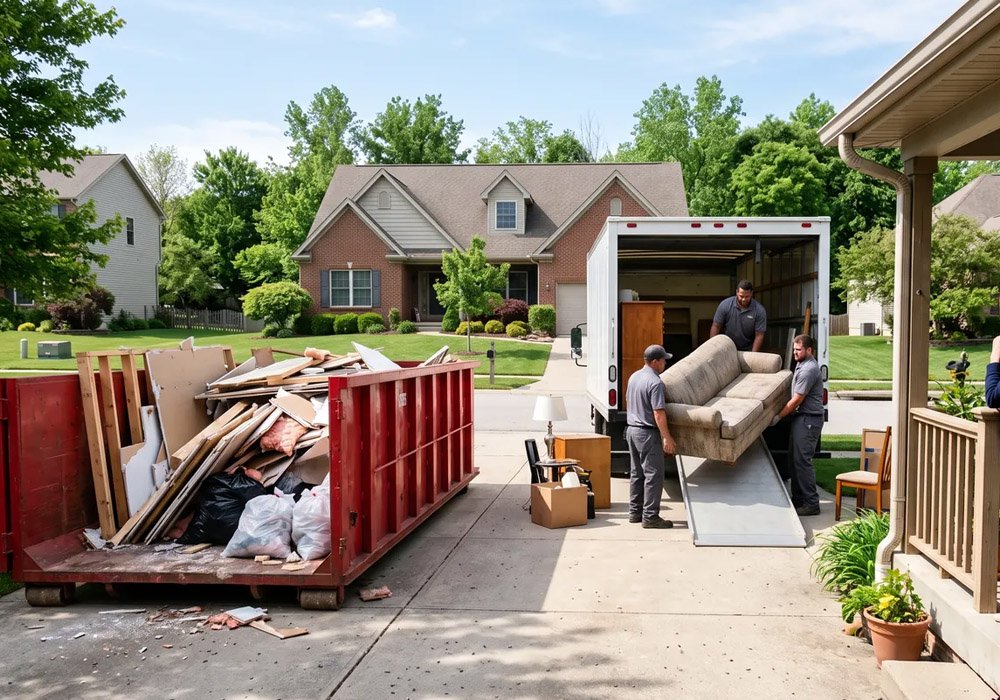
Downsizing sounds simple in theory. You move to a smaller place, you take what matters, and you let the rest go. Then you open the garage, and reality hits you like a stack of unopened moving boxes. Most people who downsize underestimate one thing above all else: the sheer volume of stuff that has to leave the house before the movers ever show up. That is exactly why a large dumpster rental is one of the smartest moves you can make during a downsizing project. It turns a job that eats up three or four weekends into something you can knock out in a single week of focused effort.
If you have never considered renting a dumpster for a move, you are not alone. Most people picture dumpsters at construction sites, not in driveways on quiet suburban streets. But ask anyone who has helped with an estate cleanout or a big downsizing purge, and they will tell you the same thing. The hauling is the hard part. The deciding is emotionally hard. The hauling is physically brutal.
The Hidden Math of Downsizing
Let’s talk numbers for a minute, because downsizing is really a math problem wearing an emotional disguise.
Say you are moving from a four-bedroom house into a two-bedroom condo or cottage. On paper, you are cutting your living space roughly in half. But storage space shrinks even faster than living space. That two-car garage you used for overflow storage? Gone. The basement where the holiday decorations, the old exercise bike, and seventeen years of tax records lived? Gone. The attic, the hall closet, the spare room that quietly became a storage unit? All gone.
Most downsizers find they need to get rid of somewhere between a third and half of what they own. For a typical household, that is not a few carloads. That is 30 to 60 cubic yards of furniture, boxes, broken tools, outdated electronics, and things nobody in the family wants but nobody wanted to throw away either.
Now look at the DIY alternative. A pickup truck bed holds about two and a half cubic yards when loaded reasonably. A midsize SUV holds maybe one. If you are moving 40 cubic yards of stuff out of the house, you are looking at 16 to 20 separate trips to the dump, the donation center, and the recycling facility. At four or five trips per weekend, factoring in loading time, driving, waiting in line at the transfer station, and unloading, you have just committed three full weekends to hauling garbage. Weekends you could spend saying goodbye to neighbors, planning your new space, or honestly, just resting. Moving is exhausting enough without adding a part-time job at the landfill.
Why the Trip-by-Trip Approach Falls Apart
Almost everyone starts downsizing with the best intentions. You will sort everything carefully. You will donate what you can. You will recycle responsibly. And for the first weekend, it actually works. You fill the car, drive to the charity shop, feel good about it, and come home.
By the second weekend, the sorting fatigue sets in. Decisions get harder. The car gets heavier. The dump charges you a fee at the gate, then another one, and you start doing mental math on how much this “free” DIY approach is actually costing in fuel, dump fees, and hours.
By the third weekend, the pile in the garage has barely shrunk, your back hurts, and you are quietly wondering if you can just… leave some of it. This is the moment where a lot of downsizing projects stall out completely, and it is also the moment when a dumpster in the driveway changes everything.
Here is the psychological difference. When you have a dumpster sitting in your driveway, the decision is final the moment the item goes in. There is no “I’ll deal with that later” pile. There is no half-loaded car sitting in the garage for a week. You pick it up, you walk it out, and it is done. That momentum matters more than people expect. What used to take a weekend of loading, driving, and unloading now takes twenty minutes of walking things to the curb.
How It Actually Saves You Three Weekends
Let’s break down where the time goes, because this is not an exaggeration.
Weekend one, saved: With a dumpster on site, you eliminate the trips to the landfill and transfer station entirely. No loading the truck twice, once at the house and once into the dump. No waiting in line on a Saturday morning behind every other homeowner in town who had the same idea. No gate fees adding up trip after trip.
Weekend two, saved: You stop handling things multiple times. In the trip-by-trip method, you touch an item when you decide to toss it, when you stage it in the garage, when you load the vehicle, and when you unload it at the dump. With a dumpster, you touch it twice: once when you decide, once when it goes in. Over hundreds of items, that adds up to entire days of labor.
Weekend three, saved: You can work in short bursts instead of marathon sessions. A dumpster lets you do 45 minutes of purging on a Tuesday evening after work, which is impossible when every load requires a 90-minute round trip. Those small sessions add up fast, and by the time the weekend arrives, you are ahead of schedule instead of dreading it.
Choosing the Right Size for a Downsizing Project
For most whole-house downsizing projects, a 20-yard container is the sweet spot. It holds roughly eight pickup truck loads, which covers a serious purge of a three or four-bedroom home. If you are also getting rid of large furniture, a basement’s worth of stored items, or you are clearing out a home that has decades of accumulation, a 30-yard gives you breathing room so you are not playing Tetris at the top of the bin on the last day.
One practical tip: place the dumpster as close to the house as your driveway allows. Every extra 50 feet of walking, multiplied by a few hundred trips, is real fatigue. Also check whether your municipality requires a permit for a street-placed container. Many driveway placements need no permit at all, but it is worth a two-minute phone call to confirm before delivery day.
A Few Things Worth Knowing Before You Book
Not everything can go in the bin. Most rental companies prohibit tires, batteries, paint, chemicals, and electronics in standard containers, and rules on appliances vary. Ask for the prohibited items list when you book so you are not surprised on delivery day.
Also, do your donating before the dumpster arrives, not after. Once that container is in the driveway, the temptation to toss everything becomes strong, and perfectly good furniture ends up as landfill. Schedule a charity pickup for the usable items first. Then let the dumpster handle what is genuinely left over: the broken, the worn out, and the things no charity wants. That order of operations is better for your wallet, better for the environment, and honestly, better for your conscience.
The Bottom Line
Downsizing is an emotional project disguised as a logistical one. The sorting, the memories, and the goodbyes to a home you lived in for decades take enough out of you. The physical removal of it all should not take three more weekends on top of that.
A large container in the driveway does one thing remarkably well: it removes friction. It converts a slow, painful, multi-weekend slog into a focused week of steady progress. You decide faster, you move things once, and you get your weekends back for the parts of the move that actually matter, like planning where your reading chair will face in the new living room.
If a downsizing move is on your horizon, do the math on your own situation. Count the boxes, estimate the truckloads, and be honest about how many weekends you really have to spare. For most people, the answer becomes obvious pretty quickly.