Key Takeaways
- Explore various sustainable flooring materials suitable for modern homes.
- Understand the environmental benefits and aesthetic appeal of each option.
- Learn about innovative materials and trends shaping the future of eco-friendly flooring.
As environmental concerns become central to home design, more property owners are seeking sustainable solutions to reduce their carbon footprint. One transformative yet sometimes overlooked aspect is flooring selection. The right choice not only enhances the look of your space but also supports your commitment to the environment. For those wishing to take meaningful action, consulting a knowledgeable flooring contractor is a pivotal first step toward a greener home.
The market for sustainable flooring materials has never been broader, with innovative products and timeless classics offering eco-friendly options suitable for nearly any aesthetic. Homeowners no longer have to sacrifice style or durability when embracing responsible materials. Instead, each choice can tell a story of stewardship, creativity, and resilience.
Some of these greener choices are ancient materials reintroduced for today’s market, while others are on the cutting edge of manufacturing technology. A modern eco-home can showcase floors that are as beautiful as they are responsible, combining clean design with forward-thinking values.
Opting for sustainable flooring contributes to a healthier indoor environment and aligns with global efforts to combat deforestation, landfill waste, and climate change. This shift not only benefits future generations but also positions your home as a model for conscious renovation. Eco-friendly flooring options are gaining popularity not just for their environmental credentials but also for their design versatility and durability.
Bamboo Flooring
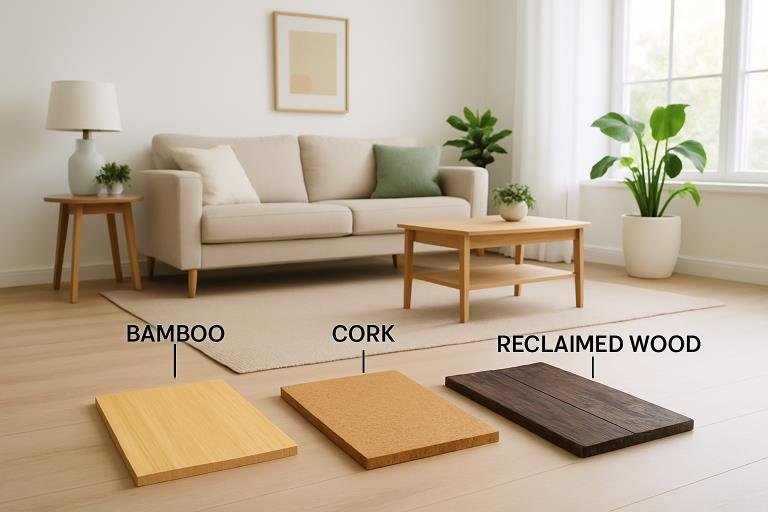
Bamboo flooring is renowned for its sustainability and strength. Unlike traditional hardwoods, which can take decades to mature, bamboo reaches a harvestable stage in just 3 to 5 years. The process of cultivating bamboo has a low environmental impact, as the plant regenerates after harvesting, providing a continuous supply. Bamboo’s durability makes it suitable for busy, high-traffic areas. Its natural grain ensures a sleek, modern appearance, and manufacturing processes have evolved to offer a range of finishes that can mimic the look of exotic hardwoods.
Cork Flooring
Cork flooring is made from the renewable bark of cork oak trees. The bark is harvested without damaging the tree, allowing it to regrow over time. This process makes cork a highly sustainable material. In addition to its environmentally friendly production, cork is prized for its comfort and insulation properties. The natural feel of cork is pleasant underfoot, and its antimicrobial properties can help improve indoor air quality. Its distinctive texture and warm hues give rooms a cozy, organic feel while providing a durable surface for busy households.
Reclaimed Wood
Reclaimed wood flooring utilizes timber salvaged from old barns, factories, and other decommissioned buildings. Choosing reclaimed wood conserves natural resources by reducing the need for new lumber and prevents valuable materials from winding up in landfills. Each reclaimed-wood board comes with its own character, showcasing history and craftsmanship that new lumber often lacks. Whether you seek rustic charm or prefer a more contemporary finish, reclaimed wood can be adapted to suit a variety of design styles.
Linoleum
Linoleum, a material used for more than a century, is enjoying a resurgence due to its eco-friendly credentials. It is made from natural ingredients such as linseed oil, wood flour, cork dust, and natural pigments. Linoleum is biodegradable and generally free from the harsh chemicals found in some traditional flooring materials. It is available in a broad array of colors and patterns, providing flexibility for various aesthetics. Furthermore, linoleum is prized for its durability and ease of maintenance, making it a practical choice for kitchens, hallways, and playrooms.
Recycled Materials
Modern manufacturing technology has enabled the creation of beautiful flooring from waste products. Flooring made from recycled glass tiles, rubber from old tires, or reclaimed plastics diverts significant waste from landfills and reduces the need for new raw materials. These options are highly durable and can give your home a striking, unique appearance. Recycled glass, for example, can be turned into shimmering tiles that reflect natural light, while recycled rubber is a soft, resilient option for play areas or gyms.
Botanol
Botanol is a relatively new alternative to traditional flooring materials. It is composed mostly of natural, renewable components such as canola oil, castor oil, and chalk. Its production requires less fossil fuel input than conventional polyurethane-based products. Botanol’s versatile nature allows manufacturers to create flooring with textures and appearances similar to vinyl, but with a much lower environmental impact. It is durable, easy to clean, and free from harmful emissions, making it ideal for modern, eco-conscious households.
Eco-Friendly Tiles
Eco-friendly tiles made from recycled glass or ceramics are both sustainable and stylish. These tiles frequently contain a high percentage of post-consumer materials, substantially reducing resource extraction and energy use in manufacturing. Recycled ceramic and glass tiles are available in a variety of colors, shapes, and finishes, allowing endless customization. Their hard, nonporous surfaces make them easy to maintain and suitable for areas prone to moisture, such as bathrooms and kitchens. For more details on the lifecycle benefits of recycled tiles, the Green America Guide to Eco-Friendly Flooring offers a comprehensive overview.
Future Trends in Sustainable Flooring
The flooring industry is on a path of constant innovation, with new materials and designs offering homeowners increasing opportunities for sustainability. Bio-based terrazzo, made from renewable materials such as castor oil or recycled glass chips, is gaining traction for its unique patterns and eco-friendliness. Smart flooring technology is also emerging, with surfaces that can adapt to environmental conditions or even harvest energy from footsteps. These advancements suggest a future where flooring not only supports sustainability but also enhances daily living through technology and design.
Choosing eco-friendly flooring options allows homeowners to create beautiful, functional spaces while aligning with their environmental values. As the popularity and availability of sustainable materials grow, there’s never been a better time to invest in green flooring. Every step taken toward sustainability in home design contributes to healthier living spaces and a more responsible relationship with the planet.