Key Takeaways
- A brief yard inspection can uncover warning signs before a storm increases the risk of tree failure.
- New leans, trunk cracks, decay, lifted soil, exposed roots, and hanging limbs deserve attention.
- Tree risk depends on both the tree’s condition and what it could strike if it fails.
- Pruning can help with some hazards, but topping and rushed major cuts can create new problems.
- Damaged trees near power lines, roofs, roads, or occupied areas should not be a do-it-yourself project.
Storm season can turn a manageable tree issue into an urgent safety problem. Before high winds, heavy rain, or saturated ground arrive, take time to look for changes in the trees around your home. If you spot a concern that involves a large tree, a structure, or utility lines, timbermantreeremoval.com can help you decide on the safest next step.
A pre-storm inspection does not mean every mature tree needs to be cut down. It means identifying visible defects, reducing avoidable hazards, and knowing when a situation requires a qualified arborist or tree-care professional.
Why A Pre-Storm Tree Check Matters
Wind loads branches and trunks, while prolonged rain can soften soil around the root system. Lightning, ice, and falling debris can also damage trees that appeared sound before the weather changed. A tree may look healthy from the street but still have structural concerns at its base, in the trunk, or high in the canopy.
Early action gives you more options. You may have time to remove dead wood, improve clearance, monitor a minor issue, or arrange a professional evaluation before emergency conditions make the work more difficult. Guidance on proper pruning and strong branch attachments also cautions against topping trees, which can lead to weakly attached regrowth.
Start With The Tree’s Surroundings
Begin by considering the target area, meaning anything a falling tree or branch could hit. Look for trees that could reach your home, garage, fence, driveway, vehicles, sidewalks, play areas, neighboring property, or utility equipment.
A tree defect and a tree risk are not always the same thing. For example, a dead limb in an isolated wooded area may require monitoring, while a similar limb directly above a front entry deserves prompt attention. Walk around each high-priority tree in daylight and view it from more than one angle. Changes are often easier to notice from a distance.
Look For Changes In The Trunk And Base
The trunk and root flare can reveal important clues about stability. You do not need to poke, climb, or cut into the tree to perform a useful visual check. Instead, look for recent changes and document them with clear photos from a safe distance.
- A new or worsening lean, especially after rain, wind, construction, or flooding.
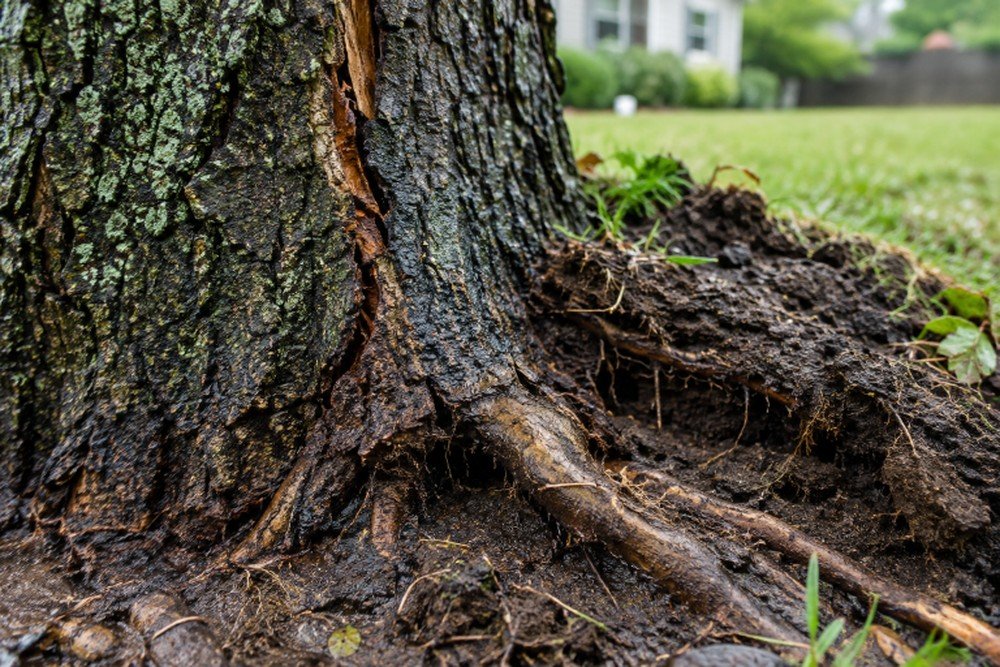
- Long cracks, deep splits, fresh wounds, unusual bulges, or separated sections of trunk.
- Hollow areas, soft wood, loose bark, or extensive bark loss.
- Mushrooms near the base, which can be associated with fungal activity and decay.
- Fresh soil mounds, gaps in the soil, exposed roots, or roots lifting from the ground.
- Standing water around the base that was not previously present.
A long-standing lean may be part of a tree’s natural form. A sudden lean is more concerning, particularly when paired with lifted soil or cracking near the base. Mushrooms do not automatically mean a tree will fail, but they are a good reason to arrange a closer inspection when the tree could strike people or property.
Inspect The Branches And Canopy
Scan the canopy from outside the area beneath the tree. Never stand directly under hanging limbs or use a ladder to get a better view. Look for dead branches, broken tops, branches caught in other limbs, and large limbs with visible cracks or bark splitting at the connection point.
Pay special attention to branches above roofs, walkways, vehicles, decks, and outdoor seating. Branches that rub together, grow from narrow unions, or carry most of their weight at the tips can be more vulnerable during strong winds. An uneven, overly dense canopy can also concentrate weight and wind pressure in one part of the tree.
Know When Pruning Can Help
Appropriate pruning can remove dead, damaged, or poorly placed branches and improve clearance over structures and access areas. It can also guide the structure of young trees before branches become larger and more difficult to manage.
However, avoid topping, indiscriminate thinning, or removing large live limbs without a plan. Tree-care guidance for storm preparation recommends watching for dead or broken branches, trunk damage, soil movement, and mushrooms at the base, then contacting a certified arborist well before severe weather is expected. Preparing trees well ahead of hurricane season is safer than making rushed cuts when a storm is already approaching.
When Removal May Be The Safer Choice
Removal may be appropriate when a tree has extensive decay, major trunk damage, severe root disturbance, or a dangerous new lean toward an occupied area. It is not the automatic answer for every tree with a defect. The decision should account for the tree’s condition, its size, nearby targets, access for equipment, and whether pruning or monitoring can reasonably reduce the risk.
Large trees and trees close to homes require particular care. Keep clear of power lines and contact the utility provider if limbs are touching or appear to be close to energized wires. Do not attempt to trim around utility lines yourself.
A Simple Pre-Storm Tree Checklist
- Walk the property and prioritize trees near buildings, people, vehicles, and utilities.
- Check trunks for cracks, wounds, decay, hollow areas, and changes in lean.
- Look at the base for mushrooms, exposed roots, lifted soil, or new gaps.
- Scan the canopy for dead, broken, hanging, or rubbing branches.
- Move outdoor furniture, vehicles, and loose items away from large trees when practical.
- Photograph visible concerns from a safe location.
- Schedule an assessment before severe weather if you identify a warning sign.
What To Do After A Storm
Check for downed power lines and other immediate hazards before walking around your yard. Stay away from broken limbs, uprooted trees, and branches under tension. Storm-damaged wood can shift, roll, or snap unexpectedly, and chainsaw work on damaged trees carries added risks.
Take photos for documentation only when the area is safe. If trees or limbs block a road, threaten a building, or involve electrical wires, contact the utility company, local emergency services, or a qualified tree professional rather than trying to clear the hazard yourself.
Common Questions About Storm-Ready Trees
Can A Healthy Tree Still Fall?
Yes. Severe weather can damage even a healthy tree. Inspections reduce avoidable risk, but they cannot eliminate every possibility of storm-related failure.
How Often Should Trees Be Checked?
A yearly walk-through is a practical routine, along with additional checks after major storms, flooding, lightning, root-area construction, or a noticeable change in the tree.
Is A Leaning Tree Always Dangerous?
No. Some trees naturally grow with a lean. A recent lean, especially one accompanied by root movement, soil lifting, or trunk cracking, needs faster attention.
Final Steps For A Safer Yard
Add a tree inspection to your seasonal property-maintenance routine. Focus first on trees that can reach occupied areas, homes, driveways, and essential services. Early attention can provide more choices than emergency cleanup after a branch or tree has already failed.