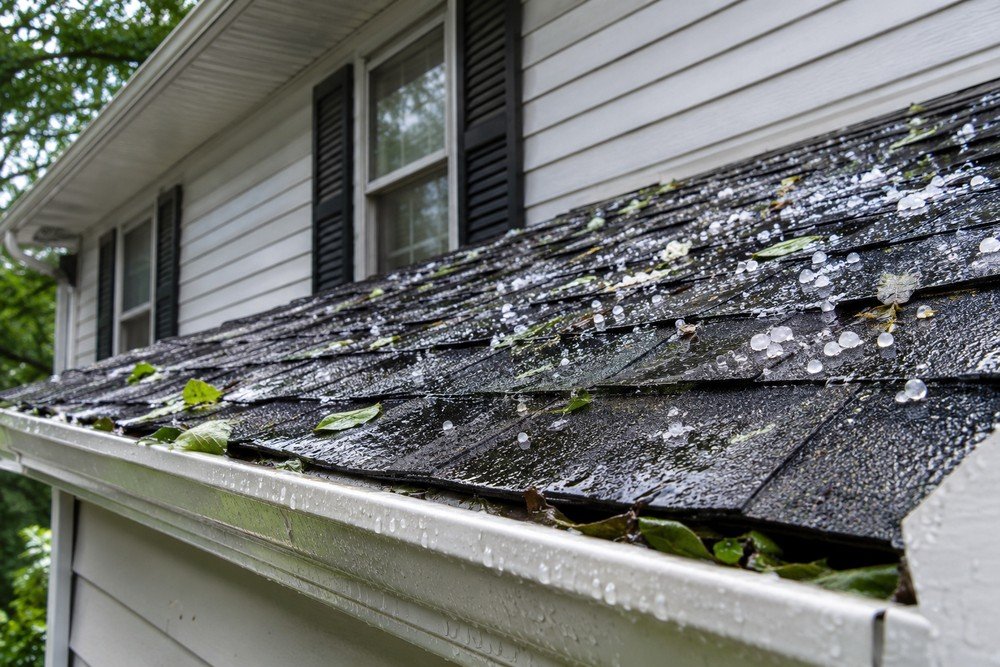
Every spring, half the driveways on my block collect a fresh crop of shingle granules. Most people sweep them up and forget. That little pile of sand is your roof quietly telling you it took a beating, and the next Prairie storm is already on the calendar.
I’m not going to walk you through filing an insurance claim, because that’s a conversation for your adjuster. What I can do is show you how to read the clues before you call anyone, so you walk into that conversation already knowing what you’re looking at. If you’d rather hand the ladder to a pro, the crews doing exterior home services in Omaha have seen every hail pattern this city produces. The rest of this piece is about earning that call.
What a Hail Bruise Actually Looks Like
You won’t spot damage from the ground, no matter how hard you squint. Hail doesn’t usually punch a clean hole. It knocks the mineral granules loose and leaves a soft spot that looks like a thumbprint in clay, often with a small bruise of exposed asphalt underneath.
Grab binoculars on a clear morning and look at the metal first. Softball hail roughs up vents, gutters, and the flashing around your chimney long before it cracks a shingle. If the aluminum looks dimpled like a golf ball, you have a starting point for the inspection.
Then check the ground for clues. Granules in the downspouts. Dings in the window screens on the north side. Not every piece of grit means a damaged roof, but a steady shed of granules after one storm is worth writing down.
The National Weather Service tracks hail size and frequency across Nebraska, and the summer storm season here is one of the busier ones in the country. That’s not a reason to panic. It’s a reason to know what you’re looking at.
The Three Season Test I Use on Every House
Here’s the framework I’d hand to any neighbor. I call it the three season test, and it sorts roof damage into three buckets you can judge yourself: this season, last season, or still fine.
- This season. Damage that happened in the last storm. Fresh bruises, new granule loss, dented metal. This is the window where getting an estimate matters most, because a small repair beats a full replacement later.
- Last season. Wear that’s been growing quietly for a year or two. Curling shingle edges, rust stains trailing down the siding, dark streaks that don’t wash off. These are slow leaks waiting for a hard freeze to make them worse.
- Still fine. An aging roof that hasn’t taken a real hit. A fifteen year old roof with even edges and no dents doesn’t need replacing because a salesman says so. It needs a written note in your phone with the date you checked it.
The point of the test is confidence. You don’t need to diagnose the roof. You need to know which bucket you’re standing in before someone knocks on the door.
Should You Climb Up Yourself?
Short answer: no. A single story roof is still a hard fall, and a wet shingle gives no warning. Your phone camera, a pair of binoculars, and a drive around the block will tell you most of what you need to know.
Where homeowner eyes really help is the edges. Walk the perimeter and look up. Damaged finishes and cracking at the eaves usually show up in the first two feet. If you see more than small cosmetic wear, stop there and schedule a visit.
One hazard worth mentioning: watch the trees. Hail strips branches, and a limb resting on a power line or a shingle field is a problem for a pro, not a Saturday project. Do not climb up to move it.
Ask These Questions Before You Sign Anything
The exterior trades are a real, established industry in the U.S., and according to the Bureau of Labor Statistics, roofing work depends heavily on skilled crews who show up and handle the physical labor. That’s a polite way of saying you’re hiring people, and the people matter as much as the price.
Here’s a short list I’d keep on my phone:
- Is your crew licensed and insured to work in Nebraska?
- Can you walk me through the difference between a repair and a replacement for my situation?
- When can you start, and what happens if it rains?
- Will you put the terms in writing before anyone touches the roof?
The National Association of Home Builders has long called exterior work like roofing and siding a major share of home improvement spending, which means you’re not picking from a thin field. The National Association of Home Builders notes that exterior replacement projects are among the most common upgrades homeowners undertake. Take your time and compare at least two or three written estimates.
What a Good Contractor Does That a Pitchman Doesn’t
Anyone with a clipboard can walk a roof. The right contractor will climb up in daylight, photograph the damage, and show you the shots before mentioning price. That’s my whole case for hiring someone who lives locally and has a reputation to protect.
Ask for recent local jobs. A crew that works Omaha streets sees the same hail, the same wind, and the same aging stock, and they can tell you which sections of town take the worst abuse. That local read is hard to fake.
Then judge the process. A real estimate should break down repair versus replacement, not push you toward the biggest job on the menu. If they start with a story about storms, they’re selling. If they start with a photo of your roof, they’re diagnosing.
If anyone shows up right after a storm and says they’ll handle everything with your insurance, slow down. That’s a sales conversation, not a repair conversation, and it’s usually a bad deal.
Read the House, Not Just the Roof
Wind and hail don’t stop at the ridge line. Look at the gutters, the soffit, and the siding around the outside, and check the ceilings in the top floor rooms for water stains after a rain.
The big picture matters here. The National Weather Service has tracked how severe hail events cluster through the Midwest, and Nebraska sits right in the middle of that pattern. A roof on the edge of a hail swath is more likely to need attention than one a few blocks away.
My rule of thumb: if one exterior system is beat up, check the others before you finalize a plan. Occasionally a roof issue turns out to be a siding or gutter problem, and the repair is cheaper than you feared.
The Takeaway
Walk the yard, look up, photograph the metal, and sort what you see into this season, last season, or still fine. That’s the whole process. Everything else is about picking a crew that shows you the evidence instead of telling you a story.
Here’s a question worth chewing on this week: if a storm rolled through tonight, could you describe the condition of your roof? If the answer is honestly no, that’s your project.