The Evolution of Advanced Composite Materials in Modern Engineering
The journey of advanced composite materials from specialized aerospace applications to widespread industrial use has been marked by continuous innovation in material science and engineering. At their core, composites combine two or more distinct materials to create a new material with superior properties. This synergy is typically achieved by embedding high-strength reinforcement fibers within a binding matrix system. The choice of matrix and fiber dictates the composite’s ultimate performance characteristics, including its mechanical performance, corrosion resistance, and thermal stability.
Modern engineering demands materials that can withstand extreme conditions while contributing to efficiency and sustainability. For instance, in aerospace, strict standards and compliance with guidelines from bodies like ANSI and ISO are paramount, driving the development of composites that offer unparalleled strength-to-weight ratios and durability. As of September 2026, the industry continues to push boundaries, exploring novel fiber architectures and matrix chemistries to unlock even greater potential.
Structural Properties of Advanced Composite Materials
The defining characteristic of advanced composites is their exceptional structural performance. Materials like carbon fiber and glass reinforcement are engineered to provide extraordinary tensile strength, often surpassing that of traditional metals on a per-weight basis. This inherent strength-to-weight ratio is a critical factor in applications where mass reduction directly translates to improved performance, such as in aircraft, high-performance vehicles, and wind turbine blades.
Beyond raw strength, composites exhibit excellent fatigue life, meaning they can endure repeated stress cycles without degradation, a crucial property for long-term reliability. Their specific modulus, a measure of stiffness relative to density, allows for the design of structures that are both rigid and lightweight. Furthermore, composites offer significant environmental durability, resisting corrosion and degradation from harsh chemicals or UV exposure, which extends product lifespans and reduces maintenance needs. This combination of properties makes them indispensable for critical structural components across various sectors.
Thermoset Resins and Polymer Matrix Composites
The matrix system in a composite plays a pivotal role in binding the fibers, transferring loads between them, and protecting them from environmental damage. Among the most prevalent matrix materials are thermoset resins, which form polymer matrix composites (PMCs). These resins undergo an irreversible chemical reaction during curing, creating a rigid, cross-linked molecular structure.
Epoxy systems are perhaps the most widely used thermosets due to their excellent adhesion, mechanical properties, and resistance to chemicals and heat. They are versatile and can be formulated for various applications, from high-performance aerospace components to consumer goods. Phenolic resins, known for their high temperature resistance and low smoke emission, are often chosen for fire-critical applications. Other thermosets, such as polyesters and vinyl esters, offer different balances of cost, performance, and processing characteristics. The development of advanced, high-performance thermosets, such as those found in an engineered thermoset advanced composite, is continually evolving, focusing on optimizing properties like cure kinetics, dielectric properties, and overall structural integrity for demanding environments. Understanding the nuances of these materials is crucial for selecting the right composite for specific engineering challenges.
Next-Generation Manufacturing Processes and Tooling
The remarkable properties of advanced composite materials are only fully realized through sophisticated manufacturing processes and innovative tooling. As demand for lighter, stronger, and more complex parts grows, traditional fabrication methods are being augmented and, in some cases, replaced by next-generation techniques. These advancements aim to improve efficiency, reduce waste, and enhance the consistency and quality of composite structures.
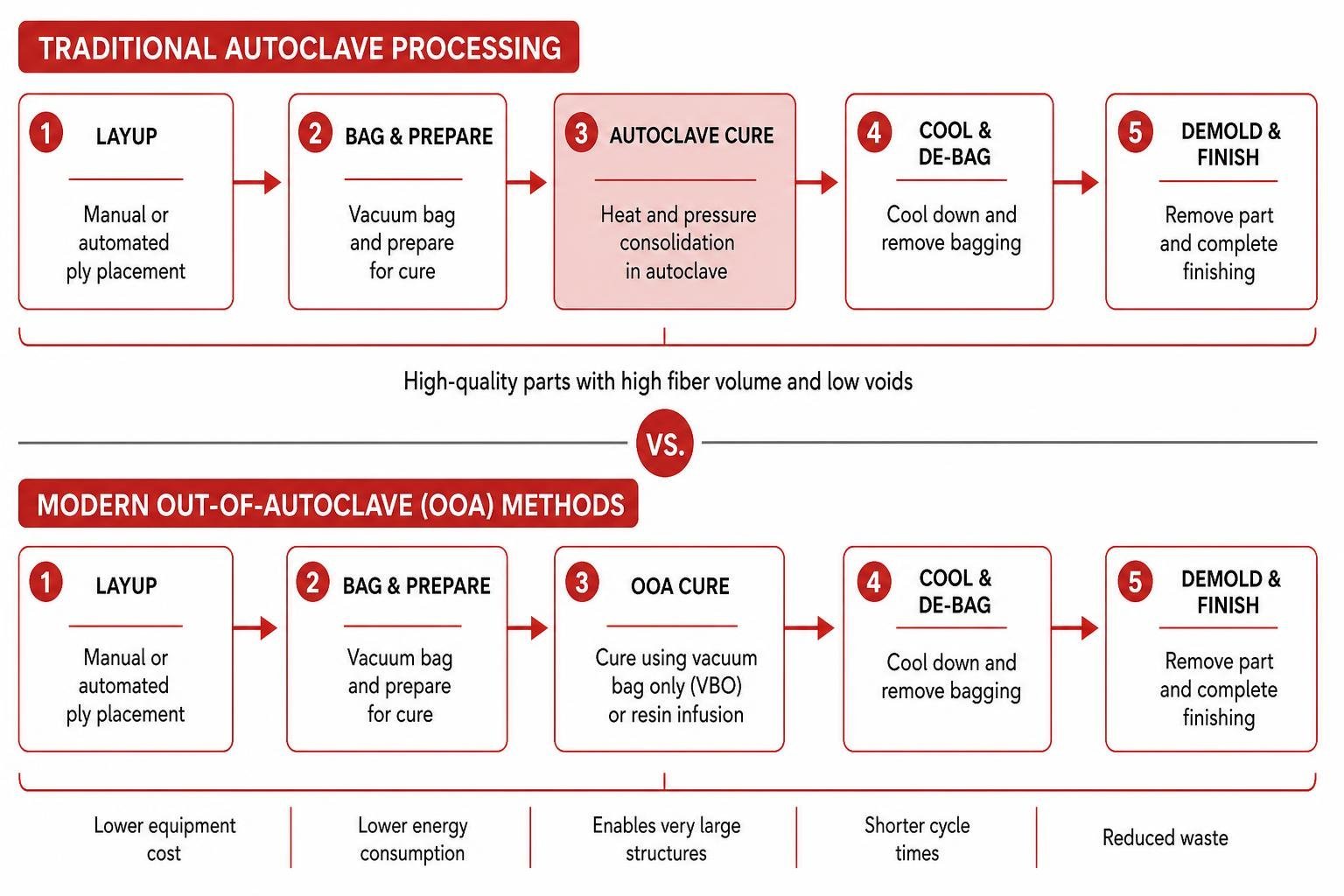
Processes such as compression molding and resin transfer molding (RTM) offer pathways to produce complex geometries with good surface finish and reduced cycle times. However, for large, intricate, or high-performance structures, methods like automated tape laying (ATL) and automated fiber placement (AFP) have become indispensable. These automated techniques precisely position individual plies or tows of material, building up the laminate layer by layer. While autoclave consolidation remains a benchmark for achieving high fiber volume fractions and low void content, out-of-autoclave (OOA) processes are gaining traction. OOA methods, which include vacuum bag only (VBO) processing and resin infusion, offer significant advantages in terms of equipment cost, energy consumption, and the ability to manufacture very large structures that might not fit into an autoclave.
Automated Layup and Additive Tooling
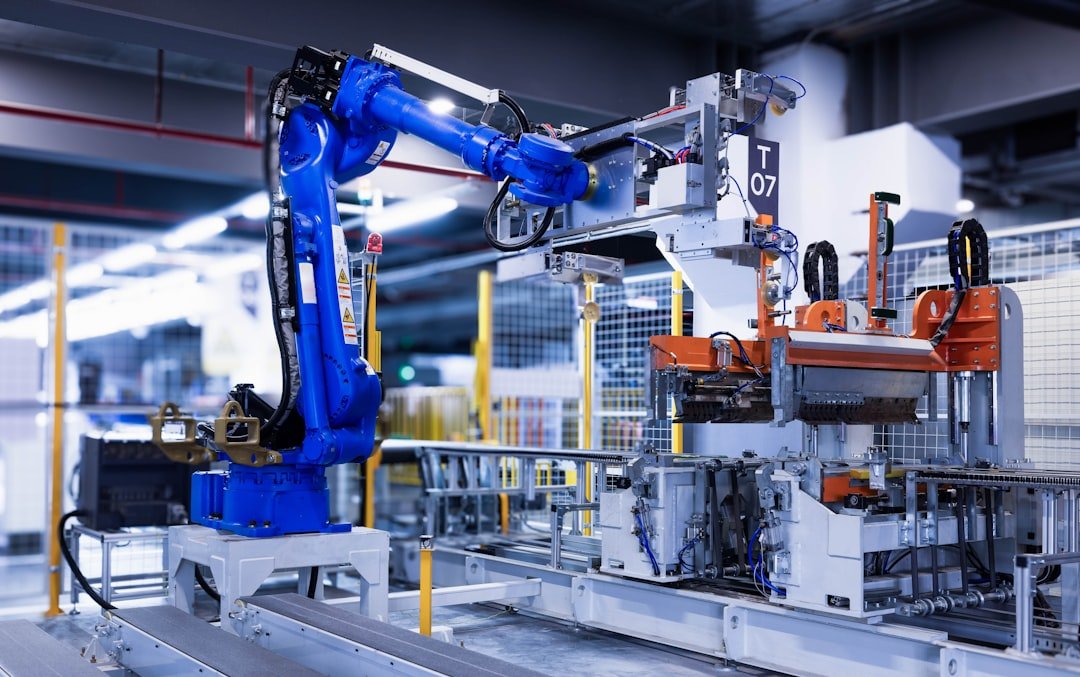
The drive for higher production rates and greater precision in composite manufacturing has led to the widespread adoption of automated layup technologies. Robotic placement systems, including ATL and AFP, are at the forefront of this evolution. These systems precisely dispense and consolidate composite plies or tows onto a mold surface, following complex paths dictated by CAD models. The benefits are substantial: significant scrap reduction due to optimized material utilization, dramatically reduced cycle times compared to manual layup, and highly repeatable layup quality that minimizes human error. This enables high-rate manufacturing of components for industries like automotive electrification and renewable energy.
Complementing automated layup is the emergence of additive tooling. Traditionally, composite molds were machined from metal or Invar, which is expensive and time-consuming to produce, especially for large or complex shapes. 3D printed tooling, often made from high-temperature polymers or composites, offers a rapid, cost-effective alternative. This allows for faster iteration of tool designs, reduced lead times for new product development, and the creation of highly intricate tool geometries that would be difficult or impossible to machine. The synergy between automated layup and additive tooling is accelerating the pace of innovation in composite manufacturing.
Design for Manufacturability in Advanced Composite Materials
Achieving optimal performance and cost-efficiency in composite parts begins long before manufacturing, with a strong emphasis on Design for Manufacturability (DfM). Unlike metals, composites have anisotropic properties and are built layer by layer, which introduces unique DfM considerations. Early design decisions can profoundly impact manufacturing complexity, cost, and part quality.
Key DfM principles for composites include part consolidation, where multiple metallic components are integrated into a single composite structure to reduce assembly time and weight. Features like appropriate draft angles are crucial for easy demolding, while careful planning of ply dropping sequences helps manage stress concentrations and avoid resin-rich areas. Designers must also consider corner radii to prevent fiber bridging and ensure proper resin flow. Crucially, tooling access must be designed in from the outset to allow for efficient material layup, consolidation, and inspection. Furthermore, meticulous tolerance stack-up analysis and adherence to Geometric Dimensioning and Tolerancing (GD&T) standards are essential to ensure that individual components fit together correctly and that the final assembly meets performance requirements. Integrating DfM early in the design process, often facilitated by added design engineering support, is critical for successful composite product development.
Integrating Design Engineering Support with Composite Production
The complexity inherent in designing and manufacturing advanced composite materials necessitates a deeply integrated approach to engineering support. It’s not enough to simply design a part; the design must be optimized for the chosen manufacturing process, material properties, and performance requirements. This is where comprehensive design engineering support becomes an invaluable asset, bridging the gap between theoretical concept and tangible production.
Effective integration involves more than just CAD optimization; it requires a holistic strategy that leverages cross-functional teams, sophisticated prototyping workflows, and robust lifecycle management systems. From the initial ideation phase through to end-of-life considerations, engineering support ensures that every decision contributes to a product that is not only high-performing but also manufacturable, cost-effective, and compliant with industry standards. This collaborative ecosystem is essential for navigating the unique challenges of composite materials, from predicting material behavior under load to ensuring consistent quality across production runs.
Finite Element Analysis and Digital Prototyping
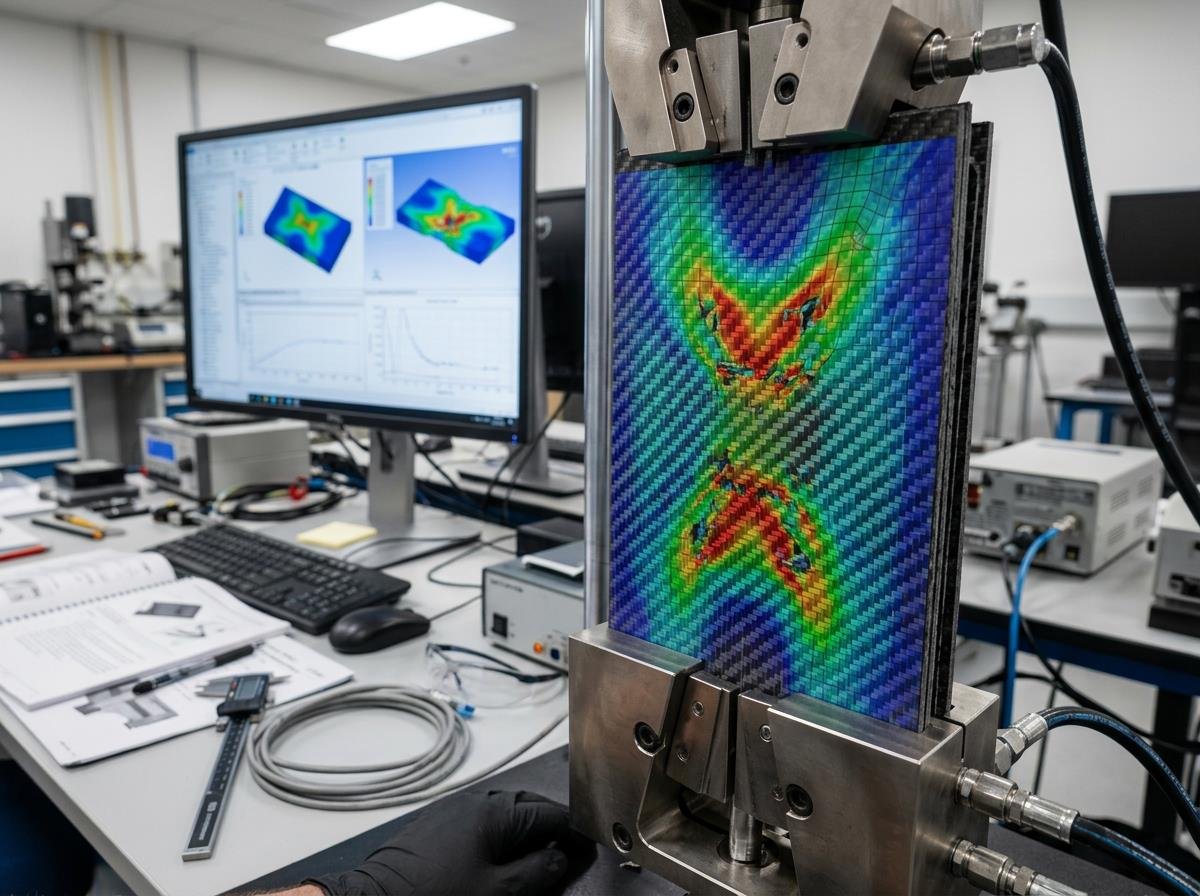
One of the most powerful tools in modern composite design engineering support is Finite Element Analysis (FEA). FEA simulation allows engineers to virtually test and validate composite designs long before physical prototyping begins. By modeling individual laminae (layers) and their orientation within a laminate, engineers can perform detailed stress analysis to predict how a composite part will behave under various loading conditions. This includes understanding stress concentrations, predicting failure modes, and optimizing fiber orientation for maximum strength and stiffness.
Digital prototyping, powered by FEA and other simulation tools, enables rapid iteration of designs. Engineers can quickly modify geometries, material selections, and ply layups, then re-run simulations to assess the impact of these changes. This virtual validation process significantly reduces the need for expensive and time-consuming physical prototypes, accelerating the development cycle and preventing potential defects from reaching production. By identifying and resolving design flaws in the digital realm, companies can save substantial resources and bring innovative composite products to market faster.
Quality Assurance, GD&T, and Standards Compliance
Ensuring the quality and reliability of composite components is paramount, especially in critical applications. Design engineering support plays a crucial role in establishing and maintaining rigorous quality assurance protocols throughout the product lifecycle. This includes specifying nondestructive testing (NDT) methods, such as ultrasonic inspection, to detect internal flaws like voids, delaminations, or fiber misalignment without damaging the part. Dimensional inspection, often using advanced metrology equipment, verifies that manufactured parts conform to precise geometric specifications.
The application of Geometric Dimensioning and Tolerancing (GD&T) is fundamental. GD&T provides a standardized language for defining and communicating engineering tolerances, ensuring that parts fit and function as intended, even when produced by different manufacturers. Furthermore, adherence to industry standards like AS9100 (for aerospace quality management systems) and ISO 14001 (for environmental management) is often a regulatory requirement and a mark of commitment to excellence. Design engineering support teams are responsible for ensuring that all designs and manufacturing processes are compliant with these standards, as well as any specific regulatory compliance mandates. This meticulous attention to detail, from design to inspection, ensures full traceability and the highest level of quality in every composite product.
Frequently Asked Questions About Composite Manufacturing
What are the main manufacturing advantages of composite materials over metals?
Composite materials offer several distinct manufacturing advantages over traditional metals. Firstly, their superior strength-to-weight ratio allows for the creation of lighter, yet stronger, components, leading to fuel efficiency in aerospace and automotive applications. Secondly, composites enable significant parts consolidation; complex geometries that would require multiple metallic parts and assembly steps can often be molded as a single composite unit, reducing part count, assembly time, and potential failure points. They also provide inherent corrosion immunity, eliminating the need for protective coatings and reducing maintenance. Furthermore, composites generally exhibit better fatigue resistance than metals, leading to longer service lives. Finally, the ability to tailor material properties and create complex geometries through molding processes opens up design freedoms often unachievable with conventional metal fabrication.
How does design engineering support reduce composite manufacturing lead times?
Added design engineering support significantly reduces composite manufacturing lead times through several key mechanisms. Early Design for Manufacturability (DfM) integration identifies and mitigates potential manufacturing challenges during the design phase, preventing costly and time-consuming redesigns later. Virtual simulation tools like FEA allow for rapid iteration and validation of designs, minimizing the need for physical prototypes and their associated lead times. Automated CAD validation ensures that designs are production-ready and conform to manufacturing constraints, reducing errors and rework. By optimizing designs for specific manufacturing processes, such as automated layup or out-of-autoclave curing, engineering support streamlines production workflows. This proactive approach leads to reduced retooling, faster prototyping cycles, and a more efficient transition from concept to final product.
Which industries benefit most from advanced composite innovations?
Advanced composite innovations are delivering transformative benefits across a wide array of industries. Aerospace structures have long been a primary beneficiary, leveraging composites for lightweighting aircraft, improving fuel efficiency, and enhancing performance. The automotive sector, particularly with the rise of electrification, uses composites for lighter chassis, battery enclosures, and body panels to extend range and improve performance. Renewable energy, especially wind power, relies heavily on composites for the massive, durable, and lightweight blades that capture wind energy. Medical devices utilize composites for their biocompatibility, strength, and radiolucency in applications like surgical instruments and prosthetic limbs. Finally, industrial equipment benefits from composites’ corrosion resistance, strength, and reduced weight for components in harsh environments or where dynamic performance is critical.
Conclusion
The landscape of advanced composite materials manufacturing is continually evolving, driven by the relentless pursuit of performance, efficiency, and innovation. As we look towards the future from September 2026, it is clear that the sophisticated interplay between cutting-edge material science, next-generation manufacturing processes, and comprehensive digital engineering will define the next era of product development.
The integration of added design engineering support is no longer a luxury but a fundamental necessity. It underpins manufacturing agility, enabling companies to rapidly move from concept to scalable production with confidence. Through meticulous CAD optimization, advanced simulation, cross-functional collaboration, and stringent quality assurance, engineering support ensures that every composite component meets the highest standards of performance and reliability. By embracing digital engineering and fostering a culture of continuous innovation, we can unlock the full potential of advanced composites, shaping a future where products are lighter, stronger, more durable, and more sustainable than ever before.