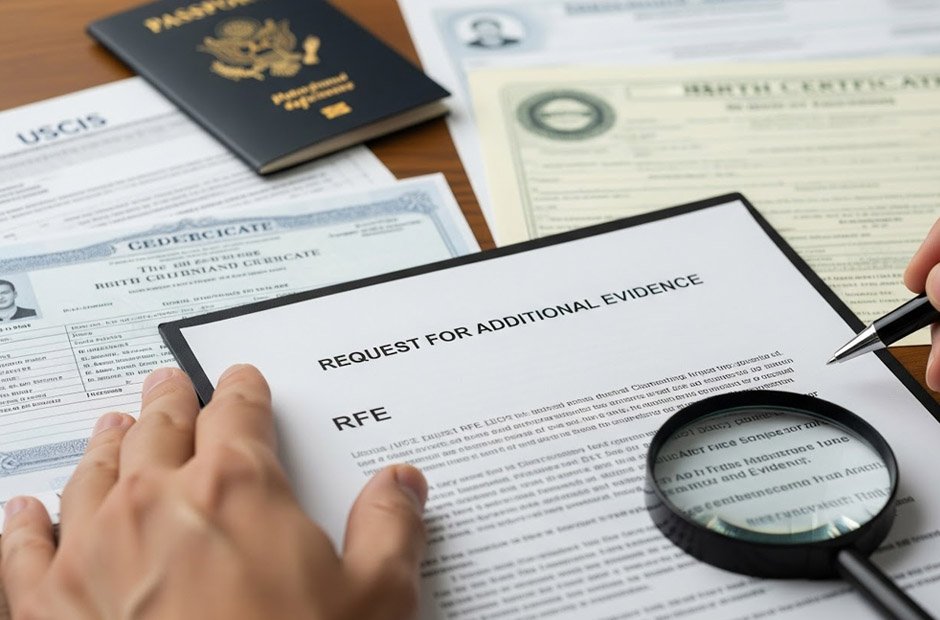
Requests for Evidence (RFEs) have become a defining feature of EB-1A adjudications. Even strong petitions filed by accomplished professionals increasingly face detailed critiques from USCIS officers questioning originality, impact, or sustained acclaim. While an RFE can feel discouraging, it is not a rejection. When approached strategically, it can become an opportunity to strengthen the record and improve the chances of approval.
Working with an experienced EB-1a visa attorney is often critical at this stage. An effective response requires more than simply providing additional documents; it demands a legal strategy that anticipates how USCIS evaluates extraordinary ability and addresses the underlying concerns behind the request.
Why EB-1A RFEs Are Increasing
EB-1A petitions are self-sponsored and highly discretionary. USCIS officers are tasked with determining not only whether the applicant meets at least three regulatory criteria, but whether the totality of the evidence shows sustained national or international acclaim. In recent years, officers have applied a more exacting lens, particularly when reviewing technical fields, emerging industries, or accomplishments developed within corporate environments.
RFEs often arise not because the applicant lacks achievements, but because USCIS questions how those achievements are perceived outside the applicant’s immediate professional sphere. Officers routinely ask whether contributions are truly influential, whether recognition is independent, and whether success is likely to continue in the United States.
Understanding the Real Purpose of an RFE
Although RFEs are framed as requests for additional evidence, they are better understood as signals. Each critique reflects an area where the officer remains unconvinced. Treating an RFE as a checklist exercise is a common mistake. Successful responses address the why behind the request, not just the wording on the page.
In EB-1A cases, RFEs frequently question issues such as originality, major significance, authorship impact, or leadership. These concerns often stem from a lack of contextual explanation rather than from insufficient accomplishments.
Common EB-1A RFE Themes
While every RFE is unique, several patterns appear repeatedly in EB-1A adjudications:
- Challenges to whether contributions are of “major significance” to the field
- Skepticism regarding accomplishments developed within a single employer or organization
- Requests for proof that influence extends beyond internal or proprietary use
- Discounting recommendation letters as subjective or insufficiently corroborated
Recognizing these patterns allows attorneys to craft responses that go beyond surface-level rebuttals.
The Attorney’s Tactical Response Strategy
An effective EB-1A RFE response follows a disciplined legal framework. The first step is a line-by-line legal analysis of the RFE language. Attorneys identify whether the officer is questioning eligibility under a specific regulatory criterion or expressing concerns at the final merits determination stage.
Once the legal posture is clear, the response is structured to regain control of the narrative. This involves reorganizing evidence, reframing accomplishments, and presenting the applicant’s work through the lens USCIS expects not through industry shorthand or assumed expertise.
Rather than overwhelming officers with raw documentation, experienced attorneys curate evidence to demonstrate recognition, adoption, and influence in a way that is immediately clear to a non-specialist adjudicator.
Strengthening Evidence Beyond the Original Filing
RFEs frequently require more than simply resubmitting existing materials. Attorneys often enhance the evidentiary record by introducing new forms of corroboration that reinforce earlier claims. This may include third-party validation, independent usage metrics, or industry-wide references that demonstrate broader relevance.
In many cases, the most effective responses focus on connecting the dots showing how individual achievements fit into a larger pattern of influence and recognition. Officers are rarely persuaded by isolated accomplishments presented without context.
Reframing “Original Contributions of Major Significance”
One of the most common EB-1A RFE challenges centers on whether an applicant’s work rises to the level of original contributions of major significance. USCIS often acknowledges that the applicant created something new, but questions whether the field at large considers it important.
A strong response reframes this issue by shifting the focus from authorship to impact. Attorneys demonstrate how the contribution changed practices, influenced other professionals, or shaped subsequent developments. This may involve showing independent citations, industry adoption, or downstream applications that extend beyond the applicant’s employer.
Using Expert Letters More Effectively
Recommendation letters are frequently criticized in RFEs as being overly complimentary or insufficiently objective. Rather than submitting additional generic letters, attorneys focus on enhancing credibility and specificity.
Effective expert letters do not merely praise the applicant. They explain why the contribution matters, how it influenced the field, and what distinguishes it from routine professional work. When paired with independent documentary evidence, these letters regain evidentiary weight and support the overall argument.
A Real-World RFE Resolution Example
In one EB-1A case involving patented technology, USCIS questioned whether the applicant’s innovations were truly significant beyond their employer. The officer acknowledged the existence of patents but expressed doubt about broader impact.
The response strategy focused on external validation. The legal team presented evidence of independent citations by unrelated companies, documentation showing adoption of the technology in multiple markets, and expert analysis explaining how the innovation altered industry standards. Media references and conference presentations further demonstrated visibility beyond corporate use.
By reframing the narrative from internal achievement to field-wide influence, the response addressed the officer’s core concern and resulted in approval.
Avoiding Common RFE Response Mistakes
Several missteps can weaken an otherwise strong response:
- Treating the RFE as argumentative rather than analytical
- Repeating evidence without reframing its significance
- Ignoring the officer’s implicit concerns
- Submitting excessive documentation without explanation
An attorney’s role is to filter, contextualize, and legally position evidence so that it directly resolves the adjudicator’s doubts.
Looking Forward: RFEs as Part of the EB-1A Landscape
RFEs are now a routine part of EB-1A adjudications, not an anomaly. While scrutiny has increased, approvals continue for applicants who respond strategically and comprehensively. The key is preparation, legal insight, and the ability to adapt the case narrative to USCIS expectations.
A well-executed RFE response does more than answer questions; it clarifies the applicant’s standing as a leader in the field and reinforces the case for extraordinary ability under the law.
Conclusion
An EB-1A RFE is not the end of the road, but it is a critical juncture. Success depends on understanding the legal subtext of USCIS critiques and responding with precision, context, and persuasive legal reasoning. With the guidance of an experienced EB-1a visa attorney, applicants can transform an RFE into an opportunity to strengthen their case and significantly improve their chances of approval.