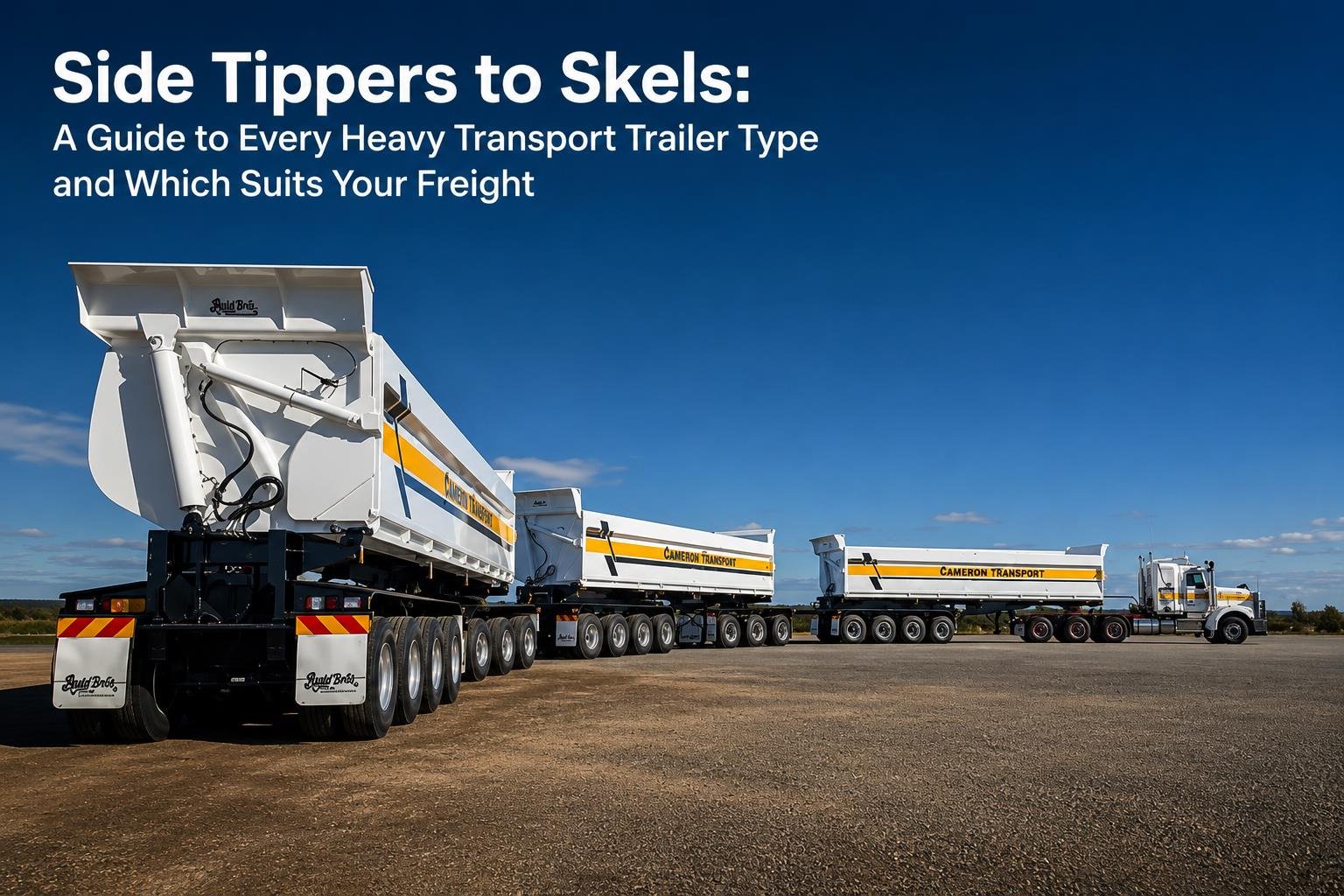
Australian freight operators choose from more trailer types than most buyers realise, and getting the match right affects payload, safety and cost for years. This guide is a reference you can return to whenever a new job or fleet decision comes up, covering the full spectrum from side tippers to skeletal trailers. Before comparing options, it helps to see how a manufacturer like Bruce Rock Engineering builds across the entire range.
1. Side Tippers: Fast Unloading for Bulk Commodities
Side tippers dump their load sideways in seconds, making them a favourite for grain, ore and aggregate hauls. Because the tipping action is quick, operators can turn a truck around at a receival site without the downtime a rear tipper demands. They also sit lower than many bulk trailers, which helps stability on uneven ground. For mining and agricultural routes where volume matters most, a side tipper built from high strength steel keeps tare weight down and payload up.
2. End Tippers: Bulkex Grain, Tarex General Purpose and Scrap Variants
End tippers raise the body and dump straight out the back, and BRE builds three distinct versions. The Bulkex is purpose built for grain, with a body shaped to empty cleanly at silos and receival points. The Tarex handles general purpose loads such as sand, gravel and construction waste, where a tougher, simpler body suits mixed cargo. Scrap variants are reinforced further again, because scrap metal punishes a tray in ways ordinary aggregate never does.
3. Dollies: The Link That Makes Multi Trailer Combinations Work
A dolly is not glamorous, but it is what turns two trailers into a road train. It sits between the first trailer and the second, carrying its own axle group and turntable so the combination can steer properly through corners. Without a well built dolly, a multi trailer set cannot track safely at highway speed. If your operation runs road trains across long distances, the dolly deserves as much attention as the trailers either side of it.
4. Belly Dumpers: Bottom Discharge Trailers for Continuous Bulk Work
Belly dumpers release their load through gates underneath the trailer rather than tipping the body. This lets the truck keep moving while it spreads material, which suits road base, quarry products and jobs where an even spread matters more than a fast dump. Because the load exits low and central, belly dumpers also tend to stay stable even when partly loaded. They are less common than side or end tippers, but for the right application they save real time on site.
5. Flat Tops and Drop Decks: Versatile Platforms for Oversized and General Freight
Flat tops carry palletised, machinery and general freight on a single level deck, and remain the default choice for straightforward loads. Drop decks lower the deck height between the axle groups, which increases the legal height available for tall machinery or stacked cargo. Widener and extendable options add further flexibility for loads that do not fit a standard width or length. Because these trailers handle such a broad range of freight, most general freight and construction fleets run at least one.
6. Refrigerated and Dry Vans: Enclosed Transport for Sensitive and General Cargo
Refrigerated vans keep temperature sensitive freight, produce, dairy and other perishables at a controlled temperature from pickup to delivery. Dry vans offer the same enclosed, weatherproof body without refrigeration, suiting general freight that simply needs protection from rain, dust and theft. Both designs rely on a well sealed, well insulated body, since gaps or weak insulation cost efficiency and, for refrigerated freight, can spoil an entire load. For operators moving into food distribution, van trailers open up contracts that open trailers cannot touch.
7. Skel Trailers: Container Transport, PBS Combinations and Tipping Variants
Skeletal trailers carry shipping containers on a lightweight frame, stripping away everything not needed to lock a container in place. PBS approved combinations extend this further, allowing longer, higher productivity skel sets on approved routes for operators moving high container volumes. Tipping skel variants add a tipping function to the frame, letting a container be unloaded without separate handling equipment. If your freight moves through ports regularly, the efficiency gain from a well matched skel combination compounds over thousands of trips a year.
8. Tankers: Purpose Built Transport for Liquid and Bulk Product
Tankers move liquid, powder and other bulk products that need a sealed, purpose engineered vessel rather than an open tray. The internal baffling, mounting points and discharge systems depend heavily on what the tanker is designed to carry, so a tanker built for one product rarely suits another without modification. Getting this specification right matters more here than almost anywhere else in the range, because the wrong tanker design can be a safety issue as much as an efficiency one.
9. Custom Builds and PBS Road Trains: Engineering for Non Standard Freight
Not every job fits a standard trailer, and this is where custom builds and PBS multi combination road trains earn their place. Custom trailers are engineered around a specific load, route or piece of equipment that off the shelf designs cannot handle well. PBS road trains combine multiple trailers under a performance based scheme, approved for routes where extra length and mass deliver a genuine productivity gain. Operators running remote or high volume routes often find a tailored combination pays for itself faster than a standard fleet.
10. Narrowing the List Down to What Your Fleet Actually Needs
With this many trailer types on the table, the real work starts once you match one to your freight, route and volume. Think about what you haul most often, how often that changes, and whether your routes allow for larger combinations. A mixed fleet often makes more sense than one trailer trying to do every job. So treat this guide as a starting point, then talk through your specific freight with a manufacturer who builds across the full range.