Key Takeaways
- Implementing eco-friendly pruning techniques promotes the health and structural integrity of trees.
- Natural pest management solutions protect trees without harming the environment.
- Soil enrichment and water conservation are vital for sustainable tree care.
- Preserving wildlife habitats helps support biodiversity and maintain ecosystem balance.
With the rising focus on environmental conservation, homeowners are increasingly seeking ways to care for their trees that promote both beauty and sustainability. Making eco-friendly choices not only ensures vibrant, healthy trees but also supports the broader ecosystem in your community. By following sustainable practices and relying on the expertise of professionals such as Zazueta Tree Specialists, you can help create thriving outdoor spaces that have a positive, lasting impact on the environment.
Maintaining trees through responsible methods reduces chemical runoff, conserves water, and protects wildlife habitats, enhancing property value and curb appeal. Homeowners can partner with nature by practicing sustainable tree care, which includes mindful pruning, natural pest management, and water-smart techniques. This approach not only supports the health of landscapes but also contributes to air quality, climate regulation, and biodiversity, showcasing the vital role that trees play in environmental well-being.
Eco-Friendly Pruning Techniques
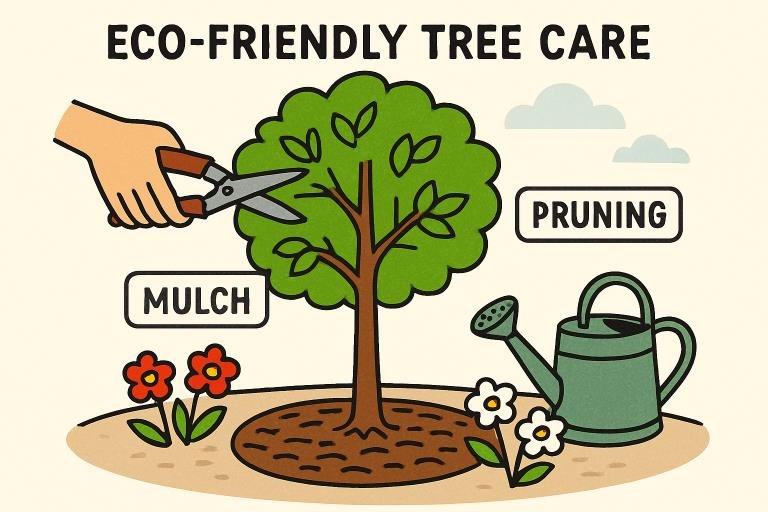
Pruning is an essential aspect of tree care, as it guides tree growth, removes hazards, and ensures overall health. Eco-friendly pruning prioritizes selective removal of branches to maintain the tree’s natural structure and strength. By pruning during the tree’s dormant season and using clean, sharp tools, homeowners and professionals effectively reduce the risk of disease transmission and minimize stress to the tree.
Sustainable pruning involves strategies such as crown thinning and canopy lifting, which allow light and airflow to reach interior branches, thereby creating a self-sustaining environment for the tree. Shaping the tree’s structure in harmony with its natural form promotes resilience to wind and weather and limits the amount of green waste generated. For additional pruning guidelines, the Arbor Day Foundation provides a comprehensive resource on best practices.
Natural Pest Management Solutions
Pest problems can spring up without warning and, if left unchecked, threaten the vitality of even the healthiest trees. Rather than defaulting to harsh chemical controls, a sustainable approach employs integrated pest management (IPM) techniques. IPM starts with monitoring tree health and identifying pests early, followed by establishing action thresholds and deploying the least intrusive corrective measures first.
Encouraging beneficial insects, such as ladybugs and lacewings, helps keep pest populations in check naturally. Supplementing these efforts with organic treatments, such as neem oil or insecticidal soap, minimizes the risk to pollinators and other non-target species. Insect traps and barriers can also serve as physical deterrents, reducing the need for synthetic pesticides and fostering a balanced ecosystem.
Soil Health and Enrichment
Healthy soil is the foundation of vigorous trees and lush landscapes. Sustainable practices focus on boosting soil fertility with organic matter, such as compost and mulched leaves, that feed beneficial microorganisms and retain moisture. A thick layer of mulch not only moderates temperature extremes at the root zone but also reduces evaporation and suppresses weeds that might otherwise compete for nutrients.
Regular soil testing is essential for identifying nutrient deficiencies and tailoring fertilization to achieve optimal tree health. Avoiding synthetic fertilizers protects groundwater and neighboring ecosystems while improving soil structure over the long term. Compost tea—an organic alternative that replenishes soil microbes—can be applied to invigorate tree roots and discourage diseases. According to the USDA, maintaining healthy soils is essential for climate resilience, agricultural productivity, and clean waterways.
Water Conservation Practices
Efficient water use is a cornerstone of sustainable tree care, especially in regions facing drought or water restrictions. Strategic measures, such as installing drip irrigation systems or soaker hoses, deliver water directly to the root zone with minimal waste. Rain barrels and rain gardens are additional solutions that harvest and redirect runoff to support tree hydration without taxing municipal resources.
Mulching plays a dual role in both conserving soil moisture and minimizing the growth of water-hungry weeds. Homeowners should plan to water deeply but less frequently, which encourages tree roots to grow deeper and become more drought-resistant. The EPA provides guidance on water-smart landscaping practices that reduce overall consumption and maintain healthy vegetation.
Preserving Wildlife Habitats
Trees serve as lifelines for countless species, offering food, shelter, and breeding sites for birds, mammals, and beneficial insects. Sustainable tree care requires a sensitive approach—pruning or felling outside of nesting and breeding seasons helps protect vulnerable wildlife populations. In some cases, leaving standing deadwood, or “snags,” provides natural cavities and foraging grounds.
Integrating native plants and shrubs alongside trees supports a richer diversity of pollinators, birds, and other organisms. By understanding each tree’s role within the local ecosystem, homeowners help foster the interconnected web of life that maintains balanced environments and natural pest resistance.
Thoughtful tree stewardship goes beyond property lines, nurturing not only the landscape but also the well-being of the wider community. Homeowners who make sustainable choices create lasting benefits—healthier trees, abundant wildlife, and a legacy of environmental responsibility.
Wrap-Up
Sustainable tree care is more than a set of practices—it’s a commitment to nurturing the environment, protecting wildlife, and enhancing the beauty and health of your property. By integrating eco-friendly practices such as pruning, natural pest management, soil enrichment, water conservation, and habitat preservation, homeowners can make a meaningful impact on both their landscapes and the broader ecosystem. Thoughtful stewardship ensures that trees continue to thrive for generations, supporting biodiversity, enhancing air quality, and creating resilient outdoor spaces that benefit both people and nature.