Key Takeaways
- Seasonal exterior checks help identify small issues before they become larger repairs.
- Roofs, gutters, siding, windows, doors, and outdoor structures work together to protect the home.
- Water management and safety concerns should take priority over cosmetic improvements.
- Ground-level inspections are useful, but steep roofs, structural concerns, and active leaks require professional help.
- A simple schedule with photos and notes makes maintenance easier to track throughout 2026.
Your home’s exterior is a connected protective system, not a collection of separate surfaces. The roof sheds water, gutters direct it away, siding shields wall assemblies, and windows and doors close gaps against weather and pests. When an issue appears beyond a safe visual check, a local roofing contractor can help evaluate roof-related damage and explain practical repair options.
A useful maintenance routine does not require inspecting every inch of the property in one afternoon. Instead, schedule a detailed walkaround in spring and fall, then perform quick checks after severe storms, strong winds, or long periods of rain. Take photos of questionable areas so changes are easier to notice over time.
Why Exterior Checkups Matter
Rain, snow, sun, wind, temperature swings, and vegetation all wear on exterior materials. A cracked caulk joint, loose shingle, blocked gutter, or damaged board may seem minor at first. However, each can create a path for water to reach framing, insulation, ceilings, or the foundation.
Regular checks also make repair planning less stressful. Rather than reacting only when a leak appears indoors, homeowners can separate immediate work from projects that can wait. The National Association of Home Builders’ outdoor maintenance guide similarly highlights routine attention to roofs, gutters, windows, doors, and siding.
Spring Check: Look for Winter Damage
Roofline and Attic Clues
Begin from the ground after winter weather has passed. Look along the roofline for missing, lifted, cracked, or uneven shingles. Notice any sagging areas, damaged flashing near vents, or branches rubbing against the roof. Inside the attic, watch for damp insulation, water marks on framing, musty smells, or daylight where it should not appear.
Gutters and Downspouts
Clear leaves, twigs, and winter debris from gutters once it is safe to do so. Check for loose fasteners, cracks, rust, standing water, or sections pulling away from the fascia. Confirm that downspouts remain connected and discharge water away from the foundation. Soil erosion, mulch washout, or puddles below an outlet can signal poor drainage.
Start With the Roof and Gutters
The roof and drainage system deserve early attention because they manage the largest volume of water around the home. A healthy roof directs water toward the gutters, while properly positioned downspouts move it away from walls, windows, and the foundation.
Warning Signs to Watch For
- Shingle granules are collecting at the downspout exits.
- Curled, cracked, blistered, or visibly uneven shingles.
- Water stains near ceilings, skylights, or upper exterior walls.
- Gutters that overflow during ordinary rain.
- Disconnected downspouts or outlets aimed toward the house.
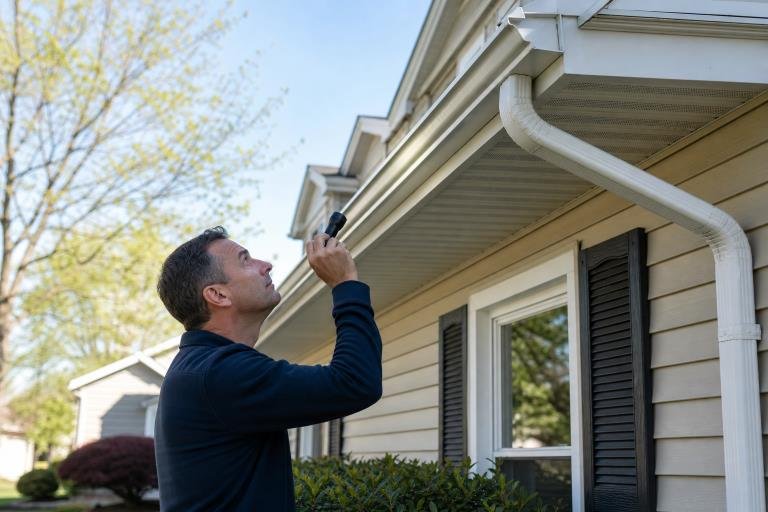
Do not walk on a steep, wet, or visibly damaged roof. A ground-level inspection with binoculars can reveal many warning signs without introducing a fall hazard.
Review Siding, Windows, and Doors
Siding Inspection
Walk slowly around the home and inspect siding for cracks, warping, loose panels, holes, peeling paint, or soft spots. Pay close attention to corners, trim joints, and areas around windows and doors, where water can work behind the exterior finish. Trim shrubs and vines so they do not trap moisture against walls or hide developing damage.
Windows and Doors
Open, close, and lock windows to confirm they operate smoothly. Look for fogging between glass panes, torn screens, damaged seals, and peeling exterior caulk. At exterior doors, check for light around the frame, worn weatherstripping, or drafts. Replacing failed caulk and weatherstripping can help limit moisture intrusion and unwanted air movement.
Summer Work: Clean, Seal, and Watch for Moisture
Dry weather and longer daylight make summer a practical time for cleaning and small exterior repairs. Wash surfaces using methods appropriate for the material, clean window tracks and screens, touch up failing paint, and renew deteriorated caulk around trim, vents, windows, and doors.
Check shaded areas for moss, algae, mildew, and moisture that may be trapped behind plants or stored items. Inspect outdoor faucets, hose connections, and irrigation components for slow leaks. Avoid aggressive pressure washing unless the material and technique are appropriate, since excessive pressure can damage wood, siding, painted finishes, and seals.
Inspect Decks, Patios, and Porches
Outdoor living spaces need more than occasional sweeping. Sun exposure, moisture, insects, and foot traffic can weaken boards, concrete, fasteners, and railings over time.
- Press gently on suspicious wood to identify soft or rotted areas.
- Check boards, stairs, railings, nails, screws, and connectors for looseness.
- Inspect posts and support points near the ground for moisture damage.
- Look for cracked concrete, uneven pavers, and drainage that flows toward the house.
- Clean and reseal wood only after it is properly prepared and fully dry.
Fall Check: Prepare for Wind, Rain, and Cold
Fall maintenance focuses on preventing cold-weather problems before they begin. Clean gutters again, secure downspouts, remove dead limbs near the home, and inspect flashing and exposed sealants. Check window and door weatherstripping, store or anchor outdoor furniture, and disconnect garden hoses in areas that expect freezing temperatures.
Choose Repairs in the Right Order
Cosmetic work should not come before water control, safety, or structural repairs. Fresh paint cannot solve a leak, and replacement siding will not correct moisture-damaged sheathing hidden behind it. Use this order when creating a repair list:
- Stop active leaks.Address water entering the home immediately.
- Restore drainage.Repair clogged, loose, damaged, or poorly directed gutters and downspouts.
- Correct safety hazards.Secure loose railings, steps, wires, and unstable materials.
- Repair structural damage.Investigate rot, pest damage, sagging, and long-term moisture exposure.
- Improve efficiency.Repair seals, weatherstripping, windows, and doors as needed.
- Update appearance.Finish with paint, trim, landscaping, and other cosmetic projects.
Know When to Call a Professional
Homeowners can handle many visual inspections, but some conditions need trained evaluation. Call a qualified professional when a roof is steep or difficult to access, water has entered walls or ceilings, structural movement is visible, rot appears near load-bearing areas, or a deck, porch, stair, or railing feels unstable. It is also wise to seek help when storm damage is widespread or the source of a leak is unclear.
Build a Simple 2026 Maintenance Plan
Put one exterior check on the calendar for spring, another for fall, and add brief inspections after major storms. Keep a phone note or folder with photos, dates, and repair estimates. A simple plan that is repeated every year is more useful than a complicated checklist that never gets used.