Key Takeaways
- The first 90 days are a practical window for establishing safe routines and identifying recovery needs.
- A shared care plan helps families track medications, appointments, symptoms, therapy, and responsibilities.
- Recovery should address physical health, emotional well-being, home safety, finances, work or school, and caregiver capacity.
- Regular check-ins help the family adjust when symptoms, abilities, or treatment plans change.
A serious injury can turn ordinary routines into a series of urgent decisions. After emergency treatment, families may need to manage appointments, medications, mobility needs, insurance questions, work responsibilities, and emotional stress at the same time. Nurse case management can be one option for families who need help organizing complex care. Still, every recovery plan should begin with clear communication between the injured person, family, and treating providers.
Why the First 90 Days Matter
The transition from hospital treatment to rehabilitation and home life can be difficult because instructions that seem clear in a clinical setting may become harder to follow in daily life. A family may be arranging a ride to therapy, helping with bathing or meals, filling prescriptions, and trying to understand when a new symptom needs attention. Recovery also rarely follows a straight line. Fatigue, pain, sleep disruption, memory concerns, or changes in mood may become more noticeable after the person returns home.
Discharge planning should provide patients and caregivers with a starting point for follow-up care, medications, services, and necessary support. Families can use information about your discharge plan to guide the questions they ask before and after your transition home.
Days One Through Seven: Build a Clear Starting Point
The first week should focus on safety, clarity, and follow-through in a hospital, rehabilitation facility, or other care setting. Ask for a plain-language explanation of the injury, current treatment, and the next steps. Keep the following checklist in one accessible place:
- Confirm every medication, including its purpose, dose, timing, and refill information.
- Schedule follow-up visits and confirm how transportation will be handled.
- Ask which symptoms require a call to the provider, urgent care, or emergency care.
- Identify help needed for walking, transfers, bathing, eating, communication, and sleep.
- Choose one family contact to receive key updates from providers, when appropriate.
- Start a central file for records, instructions, and questions.
Discharge instructions are important, but they are not a complete long-term recovery plan. New questions often appear when the injured person encounters stairs, fatigue, pain, transportation barriers, or everyday household demands.
Build a Recovery Binder or Digital File
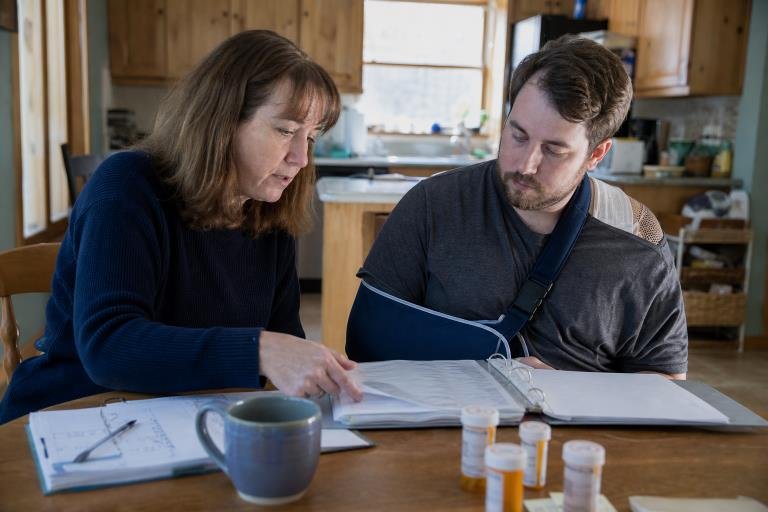
A simple organizational system can reduce confusion when several people are helping. Use a binder, secure digital folder, or both, and keep medical information separate from financial and personal notes. Include:
- Hospital summaries, test results, imaging reports, and prescriptions.
- Provider names, phone numbers, portal details, and after-hours contacts.
- Therapy schedules, goals, and notes about changes in ability.
- Insurance letters, bills, receipts, mileage, equipment costs, and home-modification expenses.
- A running list of questions for the next appointment.
One shared calendar for visits and one running list of questions can prevent important details from being lost in text messages, emails, and loose papers.
Days Eight Through Thirty: Coordinate the Care Team
Depending on the injury, recovery may involve physicians, nurses, physical therapists, occupational therapists, speech-language professionals, behavioral health providers, social workers, and home-care staff. Each person may address a different need. The family benefits from understanding how those pieces fit together and what the immediate goal is.
Questions to Ask the Care Team
- What is the main goal for the next two weeks?
- Which activities are safe at home, and which should be avoided?
- How will progress be measured?
- Who should be contacted if a problem develops?
- What equipment, therapy, or home changes should be considered?
- When should the plan be reviewed again?
Prepare the Home Before Problems Begin
Home changes should match the injured person’s abilities, not a generic online checklist. Clear walking paths, remove loose rugs, improve lighting near stairs and bathrooms, and keep frequently used items within easy reach. For some people, providers may recommend grab bars, a shower seat, a ramp, or a mobility device. Guidance on preventing falls at home also emphasizes clear pathways, secure handrails, and adequate lighting.
Do not purchase expensive equipment solely because it appears useful online. A physical therapist, occupational therapist, or treating provider can help determine whether an item fits the person’s needs and the home’s layout.
Days Thirty-One Through Sixty: Track Progress and New Needs
The second month often reveals challenges that were less visible during hospitalization. Track patterns rather than judging recovery by one difficult day. Useful observations include pain and fatigue, sleep, mood, memory, balance, daily activities, therapy attendance, caregiver help required, and readiness for work, school, or community activities.
For example, a person may be able to walk farther but need longer rest periods, or may have fewer physical limitations while still struggling to organize appointments or remember instructions. Sharing specific observations with the care team gives them a clearer basis for adjusting treatment.
Support the Whole Family
A serious injury can quickly change family roles. A spouse, parent, adult child, or friend may become a caregiver, driver, scheduler, advocate, translator, or financial organizer. Assigning responsibilities helps, but one person should not be expected to handle every task alone. Create a backup plan for appointments and emergencies, protect time for meals and sleep, and ask providers about counseling, caregiver support, respite options, or community services when needed.
Keep Medical, Insurance, and Legal Records Separate
- Medical file:diagnoses, test results, treatment instructions, and medication lists.
- Expense file:bills, receipts, transportation costs, equipment, and household changes.
- Communication file:dates, names, calls, emails, and promised follow-ups.
- Personal impact file:changes in work, school, routines, mobility, sleep, and family duties.
Do not alter medical records or guess about legal conclusions. If an insurance dispute or legal claim may be involved, ask a qualified attorney how to preserve documents and communicate with insurers.
Days Sixty-One Through Ninety: Review the Next Phase
By the third month, turn short-term observations into a plan for the next three to six months. Review which therapies should continue, whether the home remains safe, how transportation is working, and whether work, school, vocational, financial, or mental health support is needed. Revisit the plan after a fall, hospital visit, medication change, new diagnosis, or meaningful change in independence.
When a Care Coordinator May Help
Care coordination is not required for every recovery, but it may be useful when several specialists are involved, a person moves between facilities and home care, instructions conflict, therapy or equipment is delayed, or the family cannot safely manage every responsibility alone. The goal is not to replace the family’s voice, but to help everyone work from shared information and realistic goals.
Simple 90-Day Checklist
- Week One:Confirm medications, appointments, warning signs, emergency contacts, and immediate safety needs. Still, iteks Two Through Four: Organize records, attend follow-ups, and clarify gaps or conflicting instructions.
- Month Two:Track progress, address new barriers, and review caregiver responsibilities.
- Month Three:Set longer-term goals for therapy, home life, work or school, transportation, and support.
Conclusion
The first 90 days after a serious injury may feel disorganized, but families do not need to predict the entire future. Accurate records, safe routines, honest communication, and regular plan reviews create a practical foundation for recovery. When the injured person, providers, and support network share the same priorities, it becomes easier to identify what is working and what needs to change.