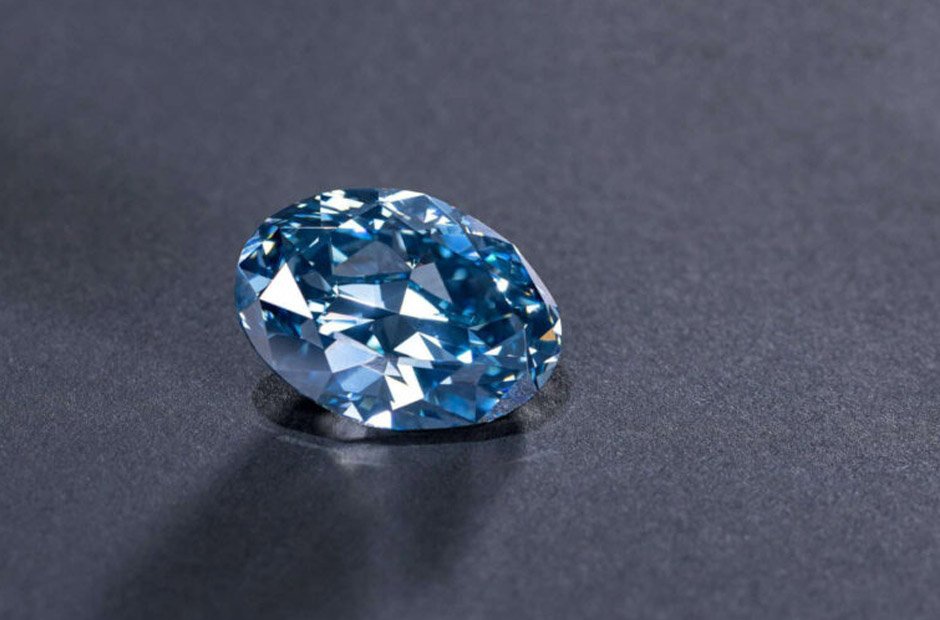
The deepest parts of the ocean hold mysteries we’ll never fully explore. But what if you could wear one of those secrets? The Blue Diamond carries within its crystalline structure a color so reminiscent of the deep sea that it’s almost impossible to look at one without thinking of water. Yet this gemstone has never touched a drop of ocean in its entire existence. It formed hundreds of miles beneath the surface, in conditions more extreme than any ocean trench, and somehow managed to capture the exact hue of water at its most mysterious.
Born in Fire, Colored Like Water
The connection between blue diamonds and the ocean is purely visual, but it runs deeper than simple color matching. When you gaze into a high-quality blue diamond, you’re seeing the same range of blues that exist in the ocean’s twilight zone. Steel blue. Slate blue. The blue-gray of storm clouds over deep water.
These stones formed between 90 and 450 miles below Earth’s surface, where temperatures exceed 2,000 degrees Fahrenheit and pressure reaches levels that would crush any submarine. They crystallized in the mantle, that semi-molten layer between the crust and core. The boron that gives them their oceanic color likely came from ancient seafloor dragged down through subduction.
The Color That Costs Millions
Not all blue diamonds carry the same oceanic resonance. The finest specimens possess a particular quality that gemologists struggle to quantify but recognize instantly. It’s a depth of color that seems to shift as you move the stone, revealing lighter and darker zones that mirror the way light behaves in actual water. One moment you see the pale blue of a Caribbean lagoon. Tilt the stone slightly, and you’re looking into the indigo depths of the Pacific.
This color variation isn’t a flaw. It’s what separates a good Blue Diamond from a transcendent one. The market recognizes this, pricing stones with superior color saturation at exponential premiums. A one-carat blue diamond of decent color might sell for hundreds of thousands of dollars. An exceptional stone of the same weight can command millions.
The auction houses have watched this market evolve over the past two decades. Collectors no longer simply want “a blue diamond.” They want the specific shade of blue that reminds them of something meaningful. Some seek the gray-blue of winter seas. Others pursue the pure, bright blue of shallow tropical water. Each preference drives different segments of an already exclusive market.
What You Should Know
If you’re considering a blue diamond, understand that you’re entering a highly specialized market. Not every jeweler handles these stones. Not every appraiser can accurately assess them. You need expertise specific to colored diamonds, professionals who understand the nuances that separate a good stone from a great one.
Color consistency matters enormously. The blue should be evenly distributed throughout the stone, not concentrated in certain areas. The saturation should be strong enough to be obviously blue, not gray with a blue tint. And the stone should exhibit that characteristic depth, that sense of looking into something rather than at something.
Certification from reputable gemological laboratories is non-negotiable. You want documentation of the stone’s characteristics, particularly confirmation that the color is natural rather than treated. The difference affects both value and long-term investment potential.
The ocean’s most expensive secret isn’t really a secret anymore. But it remains exclusive, mysterious, and deeply compelling. When you wear one, you carry a piece of Earth’s deepest mysteries, rendered in a color that humanity will never stop finding beautiful.